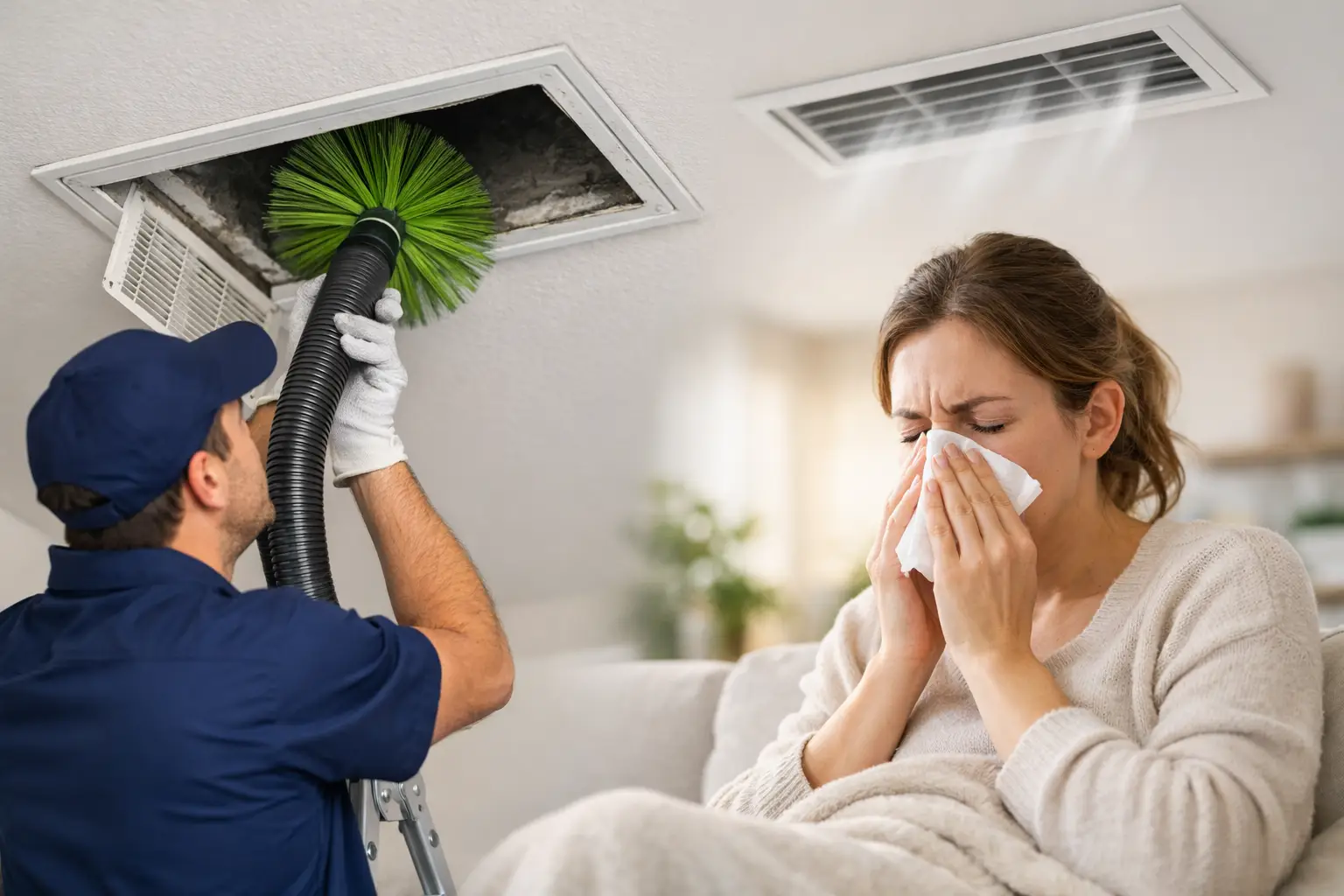
A family can keep windows closed, vacuum regularly, and still wake up congested or sneeze more when the heating or air conditioning starts. That does not automatically mean the ductwork is the cause, but it is a practical place to inspect. Air duct cleaning for allergies can help reduce the dust, pet dander, pollen, and debris that may collect inside a forced-air system and move through living or working spaces.
For Connecticut, Massachusetts, and New York properties, indoor air concerns often become more noticeable during long heating seasons, humid summers, renovations, or periods when windows stay shut. The goal is not to promise a cure for allergies. It is to remove avoidable buildup, improve airflow, and make the HVAC system a cleaner part of an overall allergy-control plan.
How Air Duct Cleaning for Allergies Can Help
Every time an HVAC system runs, it pulls air through return vents and sends conditioned air back through supply ducts. Filters catch a portion of airborne particles, but they do not stop all debris. Over time, ductwork can collect household dust, pet hair and dander, pollen tracked indoors, construction residue, and insulation fibers. In some properties, moisture issues can also contribute to mold-related contaminants and musty odors.
When ducts are heavily soiled, normal airflow can stir loose material near vents or recirculate fine particles that have entered the system. Professional cleaning removes buildup from the ducts, registers, and accessible HVAC components using specialized vacuum equipment and agitation tools. HEPA-filtered collection equipment matters because it helps contain what is removed rather than releasing it back into the room.
The result varies by property. A clean duct system may make a meaningful difference for a household with pets, visible dust around registers, recent construction, or occupants who are sensitive to airborne particles. In a well-maintained home with clean filters and little duct buildup, the improvement may be less noticeable. Duct cleaning works best as targeted maintenance, not as a substitute for medical care, proper filtration, moisture control, or routine housekeeping.
Signs Your Ducts May Be Adding to Indoor Allergy Problems
Allergy symptoms have many possible triggers, including outdoor pollen, dust mites in bedding, pet exposure, damp areas, and poor filtration. Still, a few property signs suggest it is time to look closer at the ventilation system.
Visible dust blowing from vents, dark buildup around registers, persistent stale or musty odors, and unusually fast dust accumulation after cleaning are worth investigating. So are renovations, drywall work, a recent move into an older property, and a history of water leaks or excess humidity near HVAC equipment.
Pay attention to system performance as well. Weak airflow in one or more rooms, noisy vents, frequent filter clogging, or higher-than-expected heating and cooling costs can point to dust and debris affecting the system. These issues do not always require full duct cleaning. A damaged duct, disconnected section, blocked return, dirty coil, or poorly sized filter can create similar symptoms. A proper inspection helps separate one problem from another before work begins.
For landlords and commercial property managers, recurring complaints from tenants or employees should not be ignored. An office, retail space, or multifamily building may have a larger and more complex duct system, with different areas collecting debris at different rates. Video inspection can show what is inside accessible ductwork and provide a clearer basis for maintenance decisions.
What a Thorough Duct Cleaning Should Include
Effective duct cleaning is more than vacuuming the vent cover. The work should address the system in a controlled way, with the technician creating negative pressure through the ductwork while using brushes or agitation tools to loosen adhered debris. The debris should then be captured by a high-powered, HEPA-filtered vacuum system.
A careful service commonly includes the supply and return ducts, registers, grilles, and accessible sections around the air handler. Depending on the system and condition, technicians may also inspect blower compartments, drain areas, and related components that affect airflow and cleanliness. Green cleaning solvents may be appropriate for specific surfaces, but no chemical treatment should be used as a shortcut for removing physical dust, debris, or a moisture source.
Post-cleaning inspection is just as valuable as the cleaning itself. It verifies that accessible areas were addressed and can reveal problems such as crushed flex duct, loose connections, damaged vent covers, or signs of moisture. Repairs or vent replacement may be the next sensible step if the inspection finds a condition that cleaning alone cannot fix.
Be cautious of unusually low offers that promise to clean every vent in a large home for a price that does not reasonably cover trained labor and professional equipment. Ask what areas are included, whether the company uses containment and HEPA filtration, and whether an inspection is provided. Clear scope and transparent pricing protect both the property and the people inside it.
When Duct Cleaning Is Not the Only Answer
A clean duct system cannot fix every allergy issue. If the home has high humidity, active water intrusion, visible mold growth, a dirty evaporator coil, or an HVAC filter that is overdue for replacement, those conditions need attention too. Cleaning ducts without correcting the source of moisture, for example, can allow contamination to return.
Start with the basics. Use the filter type recommended for your HVAC equipment and replace it on schedule. A very high-efficiency filter may capture more particles, but it can also restrict airflow if the system is not designed for it. Homeowners should confirm the right filter rating with an HVAC professional rather than assuming higher is always better.
Keep return vents unobstructed, vacuum floors and upholstered furniture regularly, and wash bedding frequently during allergy season. Manage humidity, especially in basements, bathrooms, and laundry areas. Bathroom vent cleaning or replacement may be needed when moisture lingers after showers, while a dirty dryer vent can create both airflow and fire-safety concerns. These are separate systems, but each affects the health and performance of the property.
Mini-split systems deserve attention as well. Their indoor heads can collect dust and biological buildup on filters, coils, and blower wheels. If a room smells musty when a mini-split runs, cleaning the ductwork elsewhere in the building will not solve that specific problem.
A Practical Schedule for Allergy-Conscious Properties
There is no single calendar that fits every home or business. A household without pets, smoking, renovation dust, or indoor air complaints may need duct cleaning less often than a busy property with several pets, children, frequent visitors, or occupants with respiratory sensitivities.
Consider an inspection after a major remodel, before moving into a previously occupied home, after evidence of pests, or when a water event has affected the HVAC area. Property managers may also schedule duct assessments between tenants or as part of planned building maintenance. The right timing depends on what the inspection shows, not on a one-size-fits-all sales pitch.
For more than 30 years, Pro Air Cleaners has helped property owners address hidden ventilation buildup with trained technicians, HEPA-filtered equipment, EPA-aligned cleaning practices, and post-cleaning inspections. A free video inspection can make the decision more straightforward by showing the condition of the system before recommending service.
If allergies are making home or work less comfortable, start with evidence rather than guesswork. Check filters, look for moisture and visible dust, and arrange a professional duct inspection when the system shows signs of buildup. Cleaner ductwork will not replace an allergy treatment plan, but it can remove one preventable source of indoor irritation and help the air in your property feel easier to live with.