A damaged-looking duct doesn’t automatically need to be replaced, and a duct that looks intact can still affect comfort. For Connecticut homeowners, deciding on air duct repair and replacement starts with understanding the condition and extent of the problem, rather than assuming every concern calls for a major project.
It’s reasonable to want clear evidence before agreeing to work, especially when uneven airflow, temperature changes, or unusual system performance could have more than one cause. Ductwork and HVAC equipment issues can produce similar symptoms, so a professional assessment can help identify what’s happening and whether the ducts are contributing.
This guide covers signs that may warrant a closer look, how targeted repairs differ from replacing part or all of the ductwork, and what to consider when choosing a practical next step. You’ll also find questions to ask a Connecticut service provider about the findings, proposed scope, and how the work addresses the problem. With a clearer picture of your ductwork, you can weigh your options without treating replacement as a one-size-fits-all solution.
Key Takeaways
- Learn how to distinguish ductwork concerns from issues with the HVAC equipment connected to it.
- Understand how access, duct material, and the extent of damage can shape an air duct repair and replacement recommendation.
- Compare localized repairs with replacing affected sections, and see why the right scope depends on a professional assessment.
- Use a practical checklist to describe symptoms and request a written scope before work begins.
- Find out how Pro Air Cleaners’ residential and commercial duct repair and replacement services fit into your next-step planning.
Air Duct Repair and Replacement: What Problems Can Ductwork Cause?
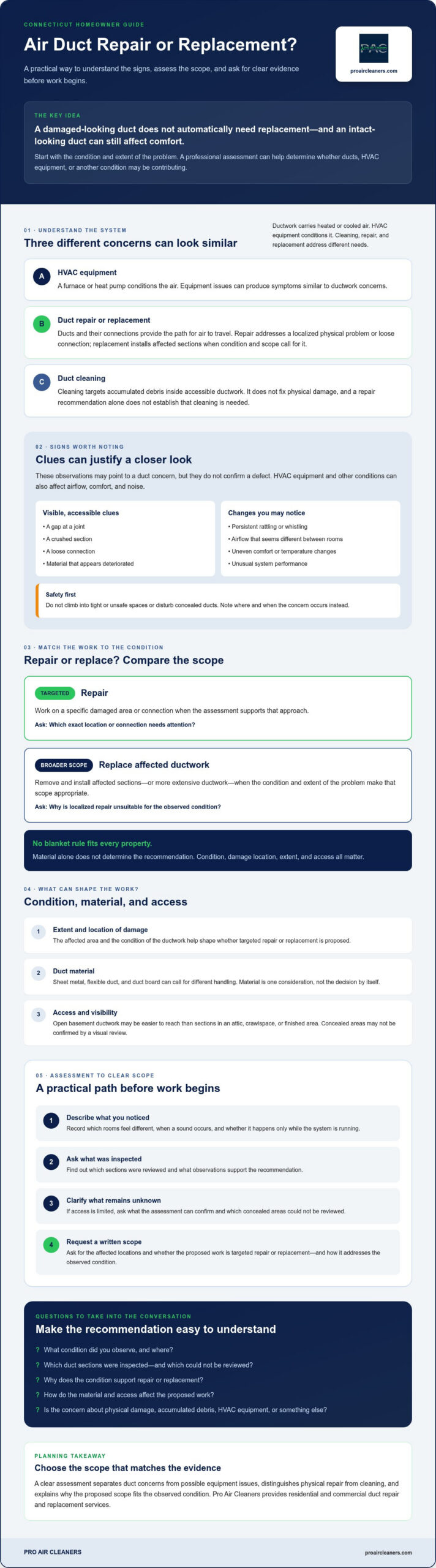
Ductwork carries heated or cooled air from HVAC equipment to the rooms in a home. It’s separate from the equipment itself: a furnace or heat pump conditions the air, while ducts and their connections provide a path for it to travel. This HVAC ductwork may run behind walls, ceilings, or floors, so a symptom in one room doesn’t necessarily reveal the condition of the entire system.
Air duct repair addresses a localized physical problem or loose connection. Replacement removes and installs affected duct sections, or more extensive ductwork, when the condition and scope call for it. Cleaning removes accumulated debris, not physical damage. Knowing the difference helps you understand what a recommendation is intended to address.
What signs may point to damaged or disconnected ducts?
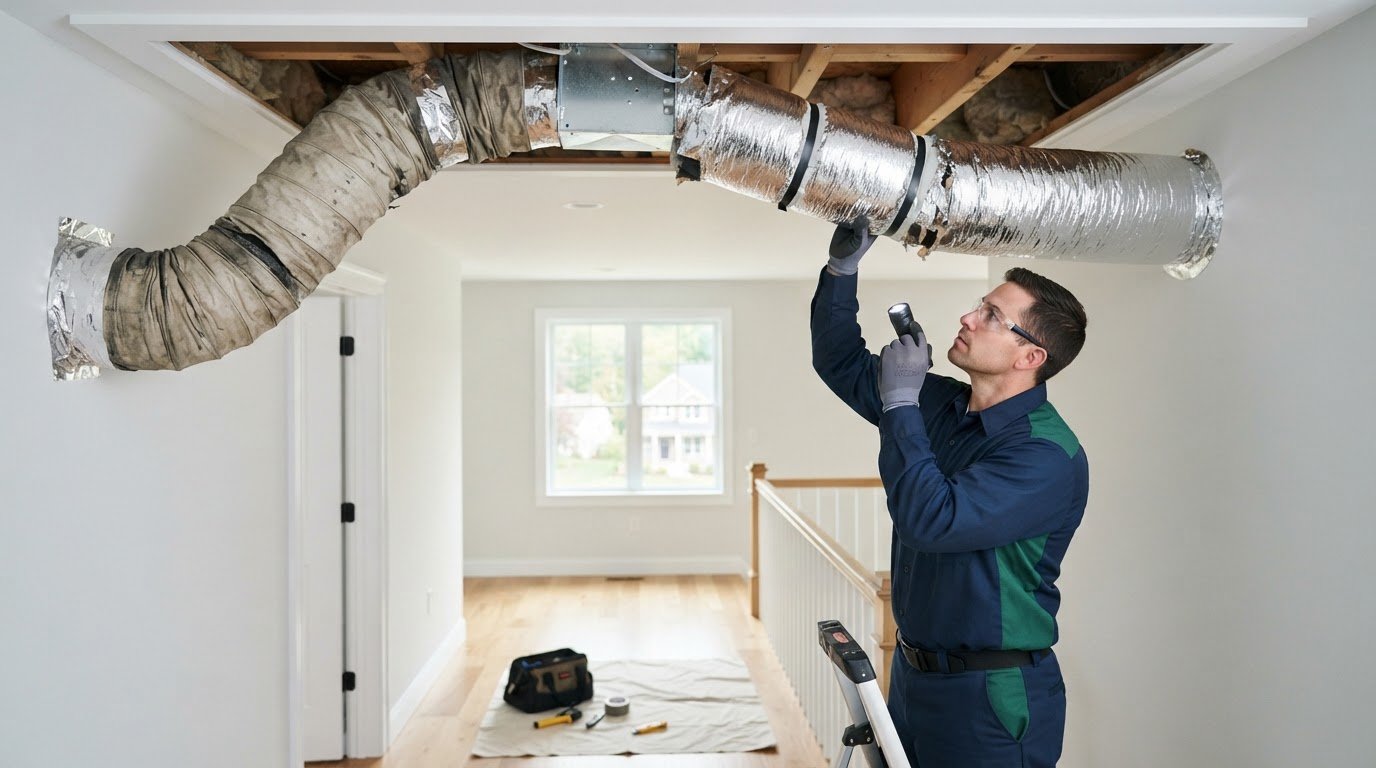
In a safe, accessible area, look for a gap at a joint, a crushed section, a loose connection, or material that appears deteriorated. Other clues may include a persistent rattle or whistle, or airflow that seems different from one room to another. These signs can justify an assessment, but they don’t confirm a duct defect. HVAC equipment and other conditions can also affect airflow, comfort, and noise.
Don’t climb into tight or unsafe spaces or disturb concealed ducts to investigate. Instead, note where the concern occurs and when you notice it. For example, record whether one room feels different from others or whether a sound occurs only while the system is running. These details give a service provider a useful starting point.
How ductwork problems differ from cleaning needs
Cleaning and physical repairs address different conditions. Cleaning targets accumulated debris inside accessible ductwork; repair addresses a physical issue such as damage or a disconnected joint. Replacement may be considered when the affected ductwork’s condition or extent makes a localized repair unsuitable. Cleaning isn’t a substitute for fixing damaged ducts, and a repair recommendation alone doesn’t establish that cleaning is needed.
If accumulated debris is your main concern, explore professional air duct cleaning services to learn more about that separate service. If you’re unsure what you’re seeing, describe the signs and ask for an assessment rather than guessing. A clear explanation of the observed condition and proposed scope can help you understand whether the recommendation is for cleaning, repair, replacement, or a separate HVAC equipment concern.
How Air Duct Repair and Replacement Work in Connecticut Homes
A clear assessment turns a concern into a defined scope of work. The process typically starts with a conversation about what you’ve noticed, such as which rooms have uneven airflow or when a sound occurs. A specialist can then review accessible ductwork, identify visible concerns, and explain which sections may need attention. Because duct condition can affect how air reaches living spaces, understanding how duct systems lose energy can help explain why a careful review matters.
Ask which sections were inspected and what observations support the recommendation. A visual review can describe accessible areas, but it may not establish the condition of ducts concealed behind finished walls or ceilings. If access is limited, ask what the assessment can confirm and what remains unknown. Before agreeing to work, request a clear scope that identifies the affected locations and whether the recommendation is for targeted repair or replacement.
How do repair and replacement differ?
Repair is targeted work on a specific damaged area or connection when the assessment supports that approach. Replacement involves removing and installing affected duct sections, with the extent determined by the condition and scope of the problem. Neither method is automatically right for every property. Ask why the proposed work addresses the observed condition, rather than relying on a blanket rule that all damage can be repaired or all older ductwork needs replacement.
Which duct materials and locations affect the work?
Sheet metal, flexible duct, and duct board can call for different handling, but material alone doesn’t determine whether repair or replacement is suitable. The condition, damage location, and extent also matter. Access can shape the work: ducts in an open basement may be easier to reach than sections in an attic, crawlspace, or finished area. Ask how the material and access affect the proposed scope, and whether any parts could not be reviewed.
Connecticut properties can vary, so don’t assume one requirement applies to every project. Before work is scheduled, ask the service provider whether state or municipal requirements may apply to your property and where to verify them with the relevant local authority. This helps clarify expectations without relying on general advice that may not fit your location or project.
For a practical next step, write down your observations and bring them to a ductwork assessment. Pro Air Cleaners provides air duct repairs and replacements. You can learn about air duct services as you consider what to ask a provider.
Repair or Replace Air Ducts? Compare Scope, Access, and Condition
The choice between repair and replacement depends on what an assessment finds, how much ductwork is affected, and whether the area can be accessed. A limited defect may be a candidate for targeted work, while deterioration across several sections may lead a professional to consider replacement. Use this comparison to prepare questions, not as a substitute for an on-site evaluation.
| What the assessment finds | Repair may be considered when | Replacement may be considered when |
|---|---|---|
| Localized damage | A specific, accessible area or connection is affected, and the professional determines it can be suitably addressed. | The affected section’s condition makes a suitable repair impractical. |
| Repeated or widespread damage | The issue is limited and the remaining ductwork is assessed as serviceable. | Concerns extend across multiple sections or indicate broader deterioration. |
| Access constraints | The damaged area can be reached for a clearly defined repair. | Access, material, or surrounding conditions affect whether repair is appropriate; the provider should explain the proposed approach. |
| Extent of affected ductwork | Work can be limited to a specific location. | One or more affected sections need to be removed and replaced. This doesn’t automatically mean replacing the entire system. |
When might a targeted air duct repair make sense?
A professional may evaluate a limited, accessible problem, such as a loose connection or damaged section, for targeted repair. These examples aren’t diagnoses: the material, condition, and surrounding ductwork all matter. Ask what the repair is intended to address, which area is included, and how the provider will check the completed work. For background on why sealing leaks can matter, see ENERGY STAR’s Benefits of Duct Sealing.
When might duct replacement be considered?
Replacement may be considered if deterioration is extensive or a section can’t be suitably repaired. The recommendation should account for the duct material, location, accessibility, and condition, rather than rely on a universal age threshold. Clarify whether the proposal covers one damaged section, several sections, or the full duct system. For air duct repair and replacement decisions, a written explanation of the affected areas helps you compare the recommendation with the assessment findings. Connecticut homeowners evaluating similar decisions about other home ventilation systems may also find it useful to review what’s involved in dryer vent replacement near me searches, since the same principle applies: an inspection should determine whether cleaning, repair, or replacement is warranted before work begins.
Planning Air Duct Repair in Connecticut: Questions to Ask Before Work
A little preparation can make an assessment more useful and help you compare recommendations without guessing at the cause. Before scheduling air duct repair and replacement, gather the details you’ve noticed and ask the provider to explain the proposed work in writing. The goal is to understand what was observed, which areas are included, and what falls outside the scope.
What should Connecticut property owners ask a ductwork provider?
Use these questions to clarify the assessment and next steps:
- What did you observe, and which duct sections did you inspect?
- Which affected sections are included in the proposed repair or replacement, and what is excluded?
- How will access be managed, and how will the work area be protected and cleaned up?
- Could separate HVAC, electrical, or remediation work be needed, and who should handle it?
- Do local permit or code questions need to be confirmed with the appropriate authority?
Ask for a written scope that names the affected areas and describes the proposed work. If parts of the ductwork weren’t accessible, ask what that limitation means for the recommendation. Connecticut property owners should also confirm service availability for their specific location, including whether the provider serves their town near New Britain.
How should you prepare for an assessment?
Before the visit, note which rooms seem affected, what airflow changes you’ve observed, whether you’ve seen visible damage, and when any symptoms occur. Mention relevant prior ductwork or HVAC work and share basic property information, such as whether the building is residential or commercial.
- Identify accessible attic, basement, or crawlspace areas, but don’t enter spaces that feel unsafe.
- Gather relevant system or property records if they’re readily available.
- Describe what you notice without trying to diagnose the cause.
Clear observations can help a provider focus the review, while a defined scope gives you something concrete to consider before approving work. If the recommendation includes tasks outside the provider’s services, ask who is responsible for those tasks and whether they need to be completed before the ductwork work proceeds.
For a ductwork assessment or to ask about service availability, contact Pro Air Cleaners about duct repair and replacement.
Choosing Air Duct Repair and Replacement Services from Pro Air Cleaners
Once you’ve recorded what you’ve noticed, a clear service scope can help you understand and compare recommendations. Look for an explanation of which duct sections are involved, what work is proposed, and whether it addresses your specific concern. This keeps the decision focused on the observed ductwork rather than assumptions about the HVAC equipment or the entire system.
Pro Air Cleaners provides air duct repair and replacement services for residential and commercial properties. The company is based in New Britain and serves Connecticut, Massachusetts, and New York. Its ductwork services are separate from full HVAC system installation, so homeowners seeking new heating or cooling equipment should confirm that need with an appropriate provider. Pro Air Cleaners does not provide mold remediation.
What Pro Air Cleaners can help assess
If you’ve noticed visible duct damage, loose connections, or other concerns, share those observations and ask what the proposed repair or replacement would cover. The appropriate work depends on the condition and scope identified for your property, so avoid assuming a specific outcome before the ductwork is reviewed. A written description of the affected sections and recommended work can make the next step easier to evaluate.
Cleaning is a separate service from repairing physical damage. If accumulated debris is also a concern, learn about professional air duct cleaning services. Cleaning does not replace repair or replacement when ductwork is physically damaged.
How to take the next step with a local provider
When you reach out, mention the affected rooms, whether the property is residential or commercial, and what you’ve observed. Include relevant details about access or previous ductwork work, but leave diagnosis to the service provider. Connecticut property owners can ask whether service is available for their location and request a clear explanation of the proposed scope before deciding how to proceed.
A straightforward conversation can help establish whether the concern fits the provider’s services and what information is needed to discuss it further. Contact Pro Air Cleaners to discuss air duct repair and replacement.
Take the Next Step With a Clear Ductwork Plan
The right air duct repair and replacement plan depends on the condition and extent of the affected ductwork, not a blanket rule. Note the rooms and symptoms involved, then ask a provider to explain what was observed, which sections are included, and why repair or replacement is recommended. A clearly defined scope helps you understand the work and make a more informed decision.
Pro Air Cleaners provides air duct repair and replacement services and is based in New Britain, serving Connecticut. The company has more than 30 years of experience. Its ductwork services are separate from full HVAC system installation, so make sure the provider you contact fits the work you need.
If you’re ready to discuss your concerns, share your property type, affected rooms, and what you’ve noticed. Contact Pro Air Cleaners to discuss your air duct repair and replacement needs. A thoughtful assessment and clear explanation can help you move forward with greater confidence.
Frequently Asked Questions
How do I know if my air ducts need repair or replacement?
Visible gaps, crushed sections, loose joints, unusual noise, or uneven airflow can be reasons to request an assessment. These signs don’t confirm a duct defect, since HVAC equipment or other conditions may also affect comfort and airflow. Note which rooms are affected and when you notice the issue. A professional can review accessible ductwork and explain whether repair, replacement, or another next step may be appropriate.
Can damaged air ducts affect airflow in my home?
Yes, damaged or disconnected duct sections can interfere with how air travels to rooms, so you may notice uneven airflow or comfort. But those symptoms don’t prove duct damage; HVAC equipment or other factors may be involved. Record where airflow seems different and whether the pattern changes while the system runs. A ductwork assessment can help determine whether the ducts are contributing to the concern.
Is it better to repair or replace damaged ductwork?
Neither option is always better. The right choice depends on the location, extent, material, accessibility, and condition of the affected ductwork. A professional may consider targeted repair for limited damage if the assessment supports it. Replacement may be considered for extensive deterioration or sections that can’t be suitably repaired. Ask for a written scope that identifies the affected areas and explains why the proposed work fits the findings.
How does a professional inspect air ducts for damage?
A professional typically begins by discussing your concerns, then reviews accessible ductwork for visible damage, loose connections, or other issues. Ask which sections were inspected and what observations support the recommendation. Ducts concealed in walls, ceilings, or other hard-to-reach areas may not be fully assessed through a visual review. The provider should describe any access limitations and explain the proposed work before you decide how to proceed.
Can air duct cleaning fix a damaged duct?
No, cleaning doesn’t repair physical damage or reconnect loose duct sections. It addresses accumulated debris, while repair or replacement addresses the condition of the ductwork itself. If you’re concerned about both debris and damage, ask which service addresses each issue and whether both are warranted. A clear assessment can help distinguish cleaning needs from physical defects, so one type of service isn’t mistaken for a substitute for the other.
Does Pro Air Cleaners provide air duct repair in Connecticut?
Yes, Pro Air Cleaners offers air duct repairs and replacements and serves Connecticut. The company is based in New Britain and also serves Massachusetts and New York. Service availability may depend on your specific location, so confirm coverage when you inquire. To help discuss the work, share your property type, affected rooms, and what you’ve observed, then ask which sections and tasks would be included in a proposed scope.
Does air duct replacement include a new HVAC system?
No, air duct replacement concerns the ductwork, not automatic replacement of the furnace, heat pump, or other HVAC equipment. A project may involve replacing affected duct sections or, depending on the assessment, more extensive ductwork. Pro Air Cleaners provides duct repair and replacement, not full HVAC system installation. If equipment work may also be needed, ask which provider handles that separate work and how the scopes relate.