
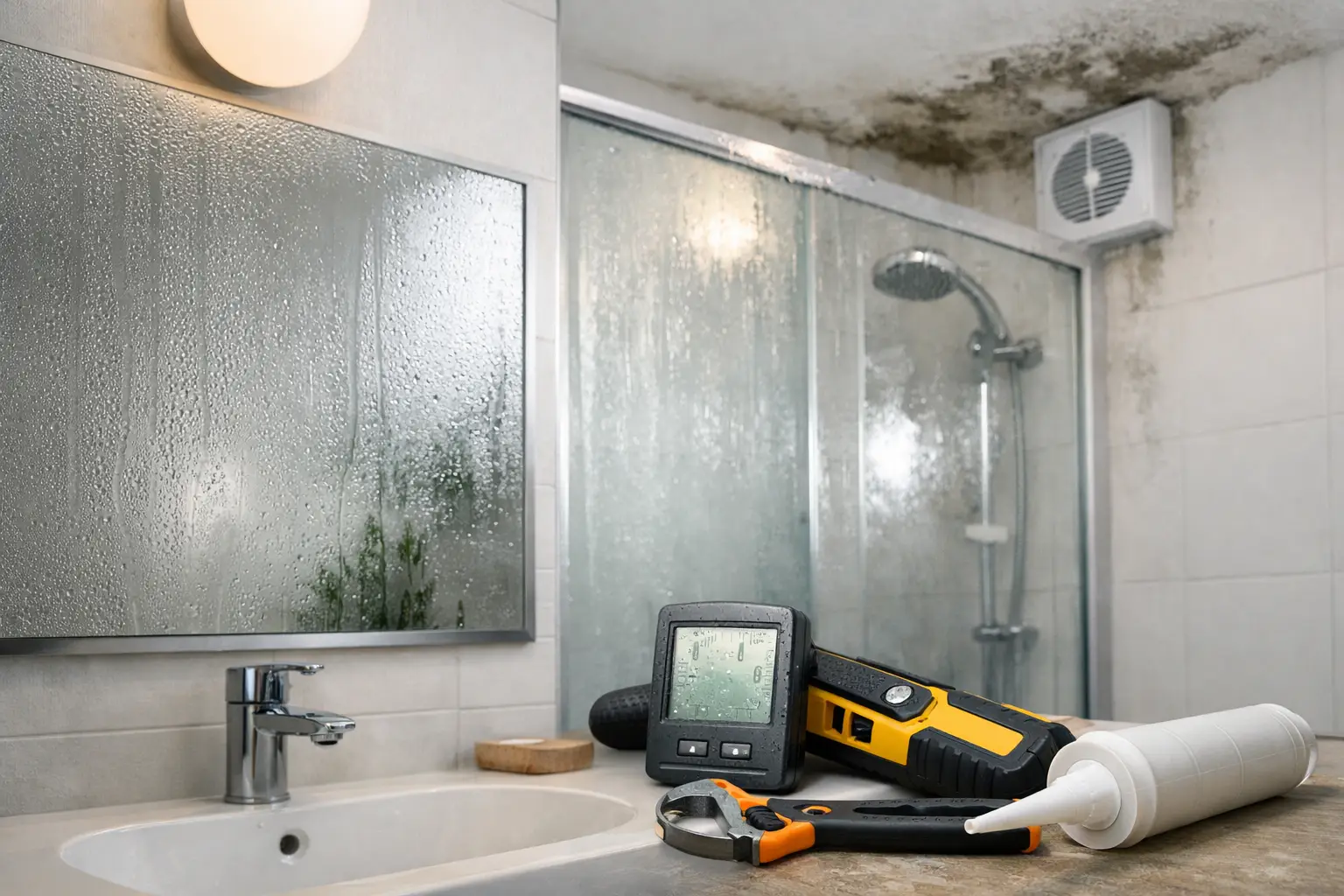
A mirror that stays fogged long after a shower, peeling paint above the tub, or a musty smell near the vanity are not just cosmetic annoyances. Bathroom humidity causes can affect indoor air quality, encourage mold growth, damage finishes, and put added stress on nearby ventilation equipment. In Connecticut, Massachusetts, and New York, cold-weather homes can be especially prone to condensation when warm shower air meets cool walls, windows, and ceilings.
The good news is that most bathroom moisture problems are preventable once the source is clear. The right solution may be as simple as using the fan correctly, but recurring dampness can also point to a clogged exhaust vent, an undersized fan, a hidden plumbing leak, or a broader building ventilation issue.
Common Bathroom Humidity Causes
Showers and baths add moisture quickly
A hot shower releases a surprising amount of water vapor into a small, enclosed room. If the door is closed and the exhaust fan is off, weak, or dirty, that vapor has nowhere to go. It settles on cooler surfaces as condensation, including mirrors, painted drywall, tile grout, window frames, and cabinet faces.
Long showers, frequent baths, and several people using the same bathroom in a short period can make this worse. This does not mean a busy household is doing anything wrong. It means the bathroom needs enough airflow to match the amount of moisture being produced.
The exhaust fan is not moving air outside
An operating fan is not always an effective fan. Bathroom exhaust systems can lose performance when dust coats the fan grille and motor, when debris collects in the duct, or when the exterior vent hood is blocked. In some properties, the duct run is too long, crushed, disconnected, or improperly routed, which limits the fan’s ability to remove humid air.
There is another issue that often goes unnoticed: a fan may exhaust into an attic, crawlspace, or ceiling cavity instead of outdoors. That simply relocates the moisture. Over time, humid air in these enclosed areas can contribute to insulation damage, wood deterioration, odors, and mold-related contamination.
A quick check can be useful. Turn the fan on and hold a single square of toilet paper near the grille. A working fan should create enough pull to hold it in place. This is not a full airflow test, but it can reveal a clear lack of suction.
The fan is too small for the room
A compact fan may be adequate for a small powder room but not for a large primary bathroom with a shower, soaking tub, and enclosed toilet area. Fan capacity is measured in CFM, or cubic feet per minute. The higher the CFM, the more air the unit can move.
Sizing depends on the room’s square footage, ceiling height, layout, and fixtures. A bathroom with a separate shower enclosure may need stronger or more targeted ventilation than an open room of the same size. Noise also matters. A loud fan is often ignored, while a quieter unit is more likely to be used every day.
Cold surfaces create condensation
Condensation is most common when warm, humid bathroom air contacts a cold surface. Older windows, poorly insulated exterior walls, uninsulated ductwork, and cold water pipes can all become collection points for moisture. You may see water droplets on the window glass, darkened caulk, rust around metal fixtures, or a damp ceiling corner.
This is why bathroom humidity can seem worse during winter. The shower habits may be unchanged, but the temperature difference between indoor air and exterior-facing surfaces is greater. Improving ventilation remains the first priority, although insulation, air sealing, or window upgrades may be part of the long-term fix.
Hidden plumbing leaks raise moisture levels
Not all bathroom moisture comes from the air. A slow leak behind a toilet, under a sink, around a shower valve, or beneath a tub can keep surrounding materials damp for weeks. Unlike normal shower steam, a plumbing leak may create a persistent musty odor even when the bathroom has not been used.
Watch for soft flooring, loose tiles, stained ceilings below an upstairs bathroom, swollen baseboards, unexplained water bills, or recurring mildew in one specific area. A fan cannot solve a water leak. The leak must be located and repaired before damaged materials and ventilation components can be properly addressed.
Poor whole-home airflow contributes
Bathrooms are small, but they are part of a larger indoor air system. Tightly sealed homes, closed interior doors, blocked return vents, or HVAC systems with poor airflow can make it harder for replacement air to enter the room while the bath fan runs. If a bathroom door has no undercut or transfer grille, the fan may struggle to pull air from the space.
This is also common in commercial restrooms, multifamily buildings, and renovated properties where ventilation changes were made without considering the full air path. A professional inspection can identify whether the issue is limited to the bathroom vent or connected to broader airflow conditions.
What Excess Humidity Can Damage
Humidity does not need to create visible mold before it causes trouble. Repeated condensation can loosen wallpaper, blister paint, crack caulk, warp wood trim, and corrode metal components. Moisture can also feed mildew in grout lines, on shower curtains, behind stored towels, and inside vanity cabinets.
For families with allergies, asthma, or sensitivity to odors, damp conditions can make a bathroom less comfortable. Property managers and business owners face additional concerns, including tenant complaints, surface damage, maintenance costs, and the need to protect shared ventilation systems.
The risk depends on how often the bathroom stays damp and how quickly it dries. A fogged mirror after a shower is normal. Walls that remain wet, mildew that returns soon after cleaning, or a stale odor that never fully leaves are signs that moisture control needs attention.
How to Reduce Bathroom Humidity
Start by running the exhaust fan before turning on the shower and leave it on for at least 20 minutes afterward. This gives the fan time to remove moisture that remains in the air and on surfaces. If the fan is controlled by a timer or humidity sensor, make sure the setting allows for a sufficient run time.
Keep the bathroom door slightly open after bathing if privacy allows, and avoid covering the fan grille with dust or lint. Hang wet towels so they can dry rather than bunching them in a hamper. Squeegeeing shower walls may feel like an extra step, but it reduces the amount of water that has to evaporate into the room.
For bathrooms with windows, opening one briefly can help when outdoor conditions are dry. However, this is not a reliable substitute for mechanical ventilation, especially during humid summer weather or cold winter conditions. An open window can also introduce outdoor humidity, pollen, or cold air depending on the season.
A portable dehumidifier can provide short-term relief in a large or poorly ventilated area, but it should not be used to hide a failed exhaust system or a plumbing leak. If the bathroom repeatedly feels damp despite reasonable habits, the fan, ductwork, and exterior discharge should be inspected.
When Bathroom Vent Cleaning or Replacement Makes Sense
A fan that rattles, runs loudly, has weak suction, or leaves the room steamy may need more than a grille wipe-down. Dust and debris inside the housing and duct can restrict airflow. Exterior louvers can also become stuck or clogged, preventing moist air from leaving the building.
Cleaning can help when the existing fan and duct layout are in good condition but buildup is limiting performance. Replacement may be the better option when the motor is failing, the unit is undersized, the housing is damaged, or the duct is disconnected or improperly installed. The best approach depends on the age of the equipment, the room size, and what an inspection finds.
Pro Air Cleaners provides bathroom vent cleaning and replacement with trained technicians, HEPA-filtered equipment, and post-service inspections designed to confirm cleaner airflow. A video inspection can be especially helpful when the problem is hidden inside ductwork or above a ceiling.
A Dry Bathroom Is Easier to Maintain
Do not wait for peeling paint or visible mold to make ventilation a priority. If your bathroom stays foggy, smells musty, or develops recurring mildew, treat it as a maintenance signal. A properly vented bathroom dries faster, protects finishes, and helps keep the air in your home or property more comfortable.