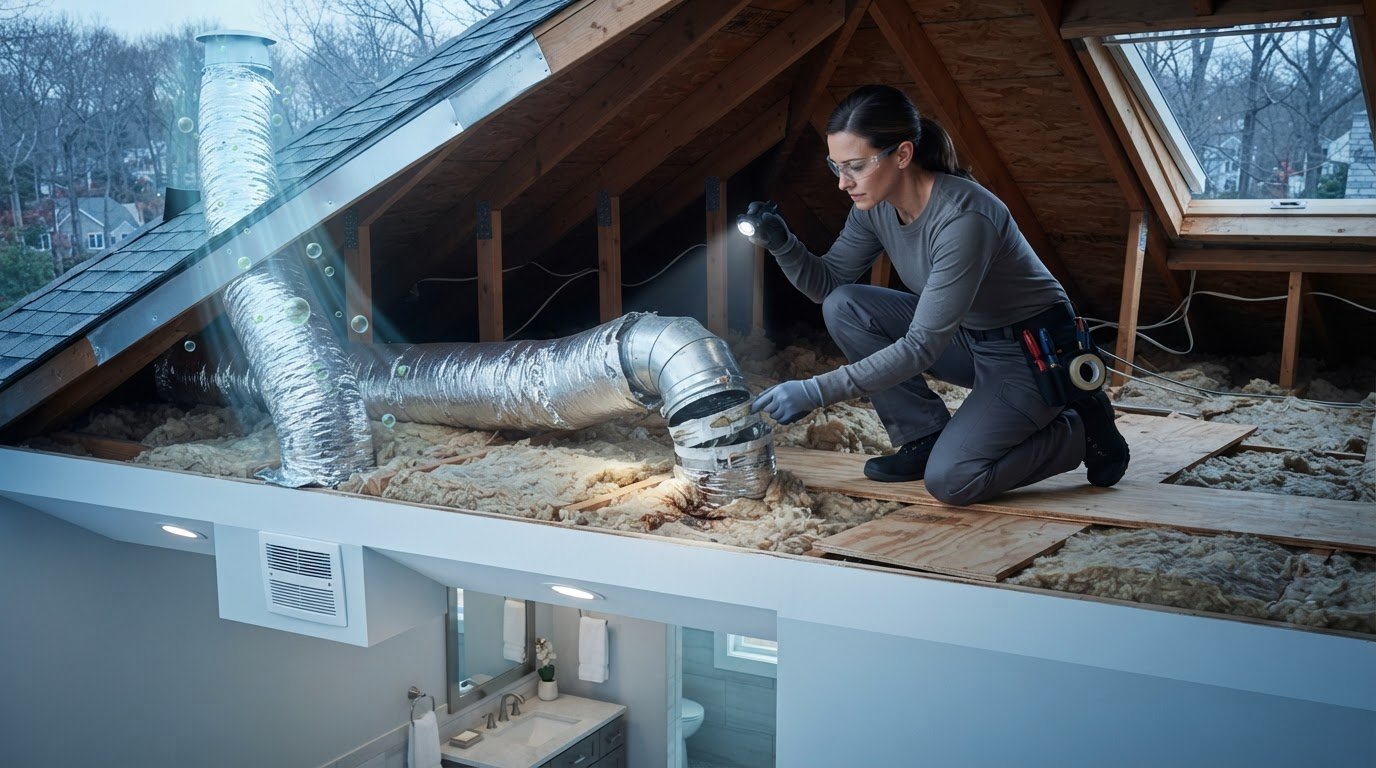
What if the exhaust fan is running, but the real problem is hidden farther along the vent route? If bathroom moisture or odors linger, a damaged, disconnected, or blocked pipe may be keeping damp air from reaching the outdoors. Bathroom vent pipe repair addresses the full exhaust path, not just the fan you can see.
It’s understandable to suspect the fan first, especially when the bathroom still feels damp after a shower. But cleaning, repairing, and replacing a vent pipe solve different problems, so identifying the cause helps you choose a practical next step and avoid overlooking concealed damage.
This guide explains the common signs of a vent pipe issue, how to distinguish cleaning from repair or replacement, and when professional inspection makes sense. For Connecticut homeowners and property managers, Pro Air Cleaners provides bathroom vent cleaning, repair, and replacement, backed by more than 30 years of experience. You’ll learn what to look for and how restoring the complete exhaust route can help manage bathroom moisture.
Key Takeaways
- The fan and the full vent route must work together to carry moist air outdoors, so a running fan alone doesn’t confirm effective exhaust.
- Loose connections, crushed sections, obstructions, and worn materials can affect vent performance; a long or bent route isn’t automatically damaged.
- Choose cleaning, repair, or replacement based on the condition of the vent, while keeping in mind that concealed problems may need professional assessment.
- With bathroom vent pipe repair, simple visual checks can help you describe the issue, but concealed routes, electrical components, and hard-to-reach spaces call for added care.
- A professional assessment can help identify the right scope of work based on access, pipe condition, route, and property layout.
Bathroom Vent Pipe Repair: What the Pipe Does and Why It Matters
A bathroom exhaust vent pipe is the duct or passage that carries humid air from the bathroom fan to a discharge point outdoors. The fan creates airflow, but the connected route must remain clear and intact for that air to leave the building. If the route is blocked, disconnected, or damaged, the fan may run without effectively removing moisture from the room.
How a bathroom exhaust fan and vent pipe work together
Air moves from the bathroom through the grille and fan, then travels along the connected duct or pipe to an exterior outlet. Each part has a role: the fan moves air, and the vent route directs it outside. A running fan alone doesn’t confirm that the air is making the full trip. A blockage or separation along the route can interrupt exhaust, while a discharge into an attic or another enclosed space leaves damp air inside the building rather than releasing it outdoors.
This exhaust route is different from a plumbing vent pipe. Plumbing vents are part of the drain-waste-vent system, which serves plumbing drainage and helps prevent sewer gases from entering the home. For background, see this overview of the Drain-waste-vent system (DWV). A bathroom exhaust fan’s duct carries room air; it isn’t the pipe that vents plumbing drains.
Signs the bathroom vent pipe may need attention
Lingering mirror condensation or surfaces that take longer than usual to dry can be clues that bathroom air isn’t clearing well. Weak airflow at the grille, unfamiliar rattling or whistling sounds, and persistent odors may also warrant a closer look. These symptoms don’t identify the cause on their own. A dirty grille, fan issue, blocked route, or concealed disconnection can produce similar signs, so avoid treating one symptom as a diagnosis.
- Notice a pattern: Pay attention to whether moisture or odors persist after the fan has been used.
- Listen for changes: New or unusual sounds may point to a problem with the fan or connected route.
- Look without dismantling: Visible damage near accessible sections can be useful to note, but hidden parts may need assessment.
Because effective exhaust depends on the entire route, bathroom vent pipe repair may involve more than the visible fan area. Noting what you observe can help guide the next step, while inspection can distinguish a cleaning need from a damaged or disconnected section.
What Causes Bathroom Vent Pipe Damage, Disconnection, or Poor Exhaust?
A bathroom can stay humid even when its exhaust fan is switched on, but that symptom doesn’t identify the cause. A loose joint, crushed or sagging section, obstruction, or deteriorated duct may restrict airflow or allow it to escape before reaching the outlet. Long routes and sharp bends can also make it harder for air to move, though a bend alone doesn’t prove a defect. The effect depends on the route as a whole.
Symptoms can suggest an exhaust problem, but only an inspection can confirm whether the cause is the vent path, the fan, or another component. A weak fan motor, a dirty grille, or an electrical issue may produce signs similar to a restricted or disconnected duct. Separating these possibilities helps prevent unnecessary work on the pipe when the problem lies elsewhere.
How routing and connections affect exhaust
Secure joints help keep air inside the intended route from the fan to the outdoor discharge point. If a connection loosens, air may leak into a concealed area; if a section is compressed or sags, airflow may be restricted. The right approach depends on the existing route, materials, access, and property layout, so there’s no single duct material or routing plan that suits every home. The linked International Residential Code (IRC) chapter addresses plumbing vents, not bathroom exhaust ducts, and shouldn’t be treated as an exhaust-duct specification.
Some problems are easy to miss from the bathroom. A professional assessment can help locate concealed disconnections or damage and determine whether the fan, grille, or vent route needs attention. If you’re considering bathroom vent cleaning and repair, evaluating the full exhaust path helps focus the work on the cause rather than just the visible symptom.
When moisture symptoms point beyond the fan
Persistent humidity, mirror condensation, slow-drying surfaces, odors, or staining may point to poor exhaust, but they can also have other causes. For example, an obstruction could restrict airflow, while staining may need separate investigation to understand its source. Don’t assume that one sign confirms pipe damage; note where and when it appears, then have concealed sections assessed if the issue continues. For broader prevention tips, read this bathroom fan moisture control guide.
Bathroom Vent Pipe Repair or Replacement: How to Compare the Options
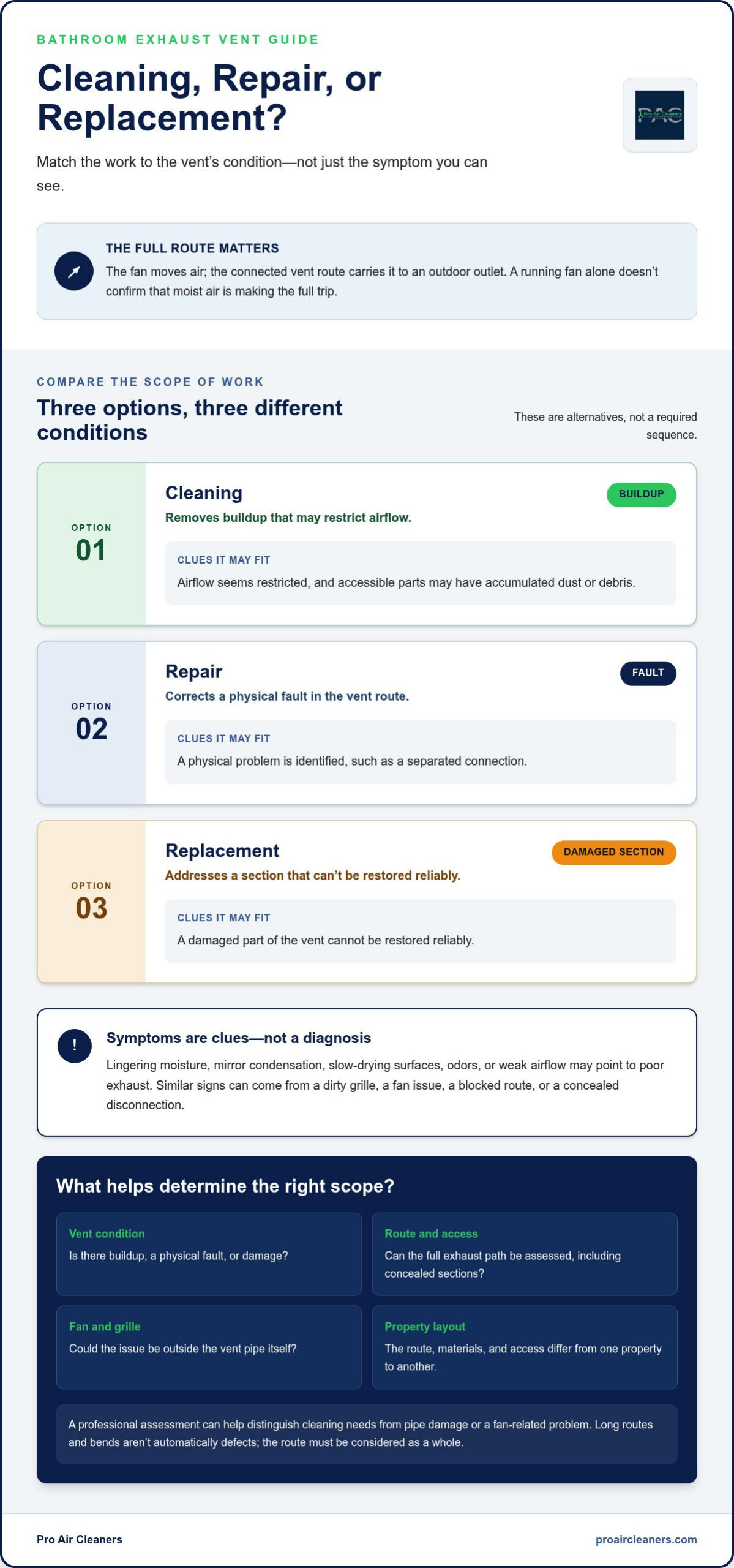
Cleaning, repair, and replacement address different conditions. Cleaning removes buildup that may restrict airflow; repair corrects a physical fault, such as a separated connection; replacement addresses a damaged section that can’t be restored reliably. The clues below can help frame the next step, but they can’t confirm what’s happening inside a concealed vent route.
| Option | Clues it may fit | What it addresses |
|---|---|---|
| Cleaning | Airflow seems restricted, and accessible parts may have accumulated dust or debris. | Removes buildup from the vent path; it won’t reconnect a separated joint or restore damaged pipe. |
| Reconnect or repair | An accessible connection appears loose, or a limited section shows a localized fault. | Corrects a specific physical problem when the remaining route is serviceable. |
| Replace a damaged section | A section appears deteriorated, crushed, or extensively compromised. | Replaces the affected portion when repair isn’t an appropriate way to restore the route. |
These are starting points, not a diagnosis. A symptom such as weak airflow can have more than one cause, and hidden sections may not be visible from the bathroom. An assessment helps determine whether the issue is buildup, a connection fault, damage, or a problem elsewhere in the exhaust system.
When cleaning may address the problem
Buildup inside accessible parts of the route can contribute to restricted airflow, making professional vent cleaning a reasonable option to consider. Cleaning targets deposits; it doesn’t secure a disconnected joint or repair a damaged section. For details on what a cleaning service involves, see this professional bathroom vent cleaning overview.
When repair or replacement is the better fit
A localized repair may suit an accessible, limited fault if the rest of the route remains serviceable. Replacement may be considered when a section is damaged, unsuitable for continued use, or compromised across a larger area. The condition of the pipe, how easily it can be reached, and the surrounding layout all influence the appropriate scope. For a broader upgrade, consult the bathroom vent replacement guide for Connecticut.
With bathroom vent pipe repair, matching the work to the actual condition helps avoid relying on cleaning to solve physical damage, or replacing sections that only need attention to buildup. Pro Air Cleaners provides bathroom vent cleaning, repair, and replacement; explore bathroom vent services for support with restoring the exhaust route.
Can You Repair a Bathroom Vent Pipe Yourself, or Should You Call a Professional?
A visible symptom doesn’t mean the concealed vent pipe is simple or safe to repair. Moisture that lingers, weak airflow, or an unusual sound can have several causes, and the underlying issue may be beyond reach behind a ceiling or wall. Homeowners can make useful observations, but work on hidden routes, electrical components, or inaccessible spaces calls for professional assessment.
What homeowners can safely observe before service
Start with what you can see and check without taking equipment apart. Note whether the fan turns on, listen for changes in its sound, and look for obvious obstruction at the visible grille. Don’t open the fan housing or handle wiring.
- Record when humidity, odors, or other concerns occur, such as after a shower.
- Notice whether conditions change after the fan runs, without treating that observation as a diagnosis.
- Avoid entering an unsafe attic or ceiling space, and don’t disturb concealed wiring or building materials.
These observations can help explain the problem clearly, but they can’t show whether a hidden connection has separated or a pipe section is damaged. If the route is concealed, visibly damaged, disconnected, or difficult to access, avoid attempting a repair based on the symptom alone.
What a professional assessment can clarify
An assessment can include examining accessible vent sections and connections, considering airflow clues, and looking at the visible fan assembly. Those findings help distinguish buildup that may call for cleaning from a physical fault that may need repair or replacement. The appropriate work depends on the vent’s condition and access, rather than on a single sign such as condensation or a noisy fan.
For Connecticut homeowners and property managers, Pro Air Cleaners provides bathroom vent repair and replacement for residential and commercial properties. With more than 30 years of experience, the team can assess accessible components and help determine a practical scope for restoring the exhaust route. Bathroom vent pipe repair is most useful when it addresses the cause, not just the part that’s easiest to see.
If the vent route is hidden or you can’t identify the source of the problem, connect with Pro Air Cleaners for bathroom vent repair and replacement.
What to Expect from Professional Bathroom Vent Pipe Repair in Connecticut
Professional bathroom vent pipe repair starts with understanding what’s happening in the room and follows the exhaust path to identify a suitable next step. For Connecticut homeowners and property managers, that process helps focus on the cause instead of assuming the fan itself is the problem. The scope can vary with the pipe’s condition, how much of the route is accessible, its layout, and the property’s construction.
How the repair visit moves from symptoms to a plan
Start by describing the changes you’ve noticed. Lingering moisture, odors, unusual fan noise, or weaker airflow can help guide the assessment, especially if you can explain when the symptoms occur and whether they change after the fan runs.
The assessment can include the visible fan assembly, accessible connections, and the fan-to-exterior exhaust path. From there, the findings help distinguish a cleaning need from a disconnected or damaged section that may call for repair or replacement. Recommended work should reflect observed conditions, not assumptions based on one symptom. After the work, reviewing what was addressed and any relevant findings helps clarify the outcome and any remaining concerns.
How proper exhaust supports ongoing bathroom moisture control
A clear, connected route gives the fan a path to move humid bathroom air outdoors, supporting everyday moisture management. It can’t guarantee that every moisture issue will be prevented, since other conditions in the room or property may also contribute. The aim is to restore the exhaust route where needed so the fan can do its part effectively.
Pro Air Cleaners is based in New Britain and provides bathroom vent cleaning, repair, and replacement for residential and commercial properties across Connecticut. With more than 30 years of experience, the team can help assess the accessible components and identify a practical scope based on the route and property layout.
If persistent moisture, odors, noise, or weak airflow point to a possible vent problem, schedule bathroom vent repair with Pro Air Cleaners. A clear assessment is a reassuring first step toward restoring ventilation and supporting a drier, more comfortable bathroom.
Restore the Full Exhaust Path for Better Bathroom Ventilation
A bathroom fan can run while moisture and odors linger if the connected vent route isn’t carrying air outdoors effectively. The right next step depends on what’s causing the issue: cleaning can address buildup, while a loose connection or damaged section may call for repair or replacement. Since similar symptoms can have different causes, inspecting the accessible components and considering the full exhaust path helps guide a practical solution.
For Connecticut homeowners and property managers, Pro Air Cleaners provides bathroom vent cleaning, repair, and replacement services, backed by more than 30 years of experience. The team serves residential and commercial properties across Connecticut. Addressing bathroom vent pipe repair based on the actual condition of the route can support more reliable exhaust and everyday moisture management.
Schedule bathroom vent repair with Pro Air Cleaners to take the next step toward a properly functioning exhaust route. With the right assessment and service, you can move forward with greater confidence in your bathroom ventilation.
Frequently Asked Questions
How do I know if my bathroom vent pipe needs repair?
Possible signs include weak airflow at the grille, lingering condensation after showers, slow-drying surfaces, persistent odors, or unusual sounds. These clues can point to a restricted or disconnected route, but they don’t confirm the cause. A dirty grille, fan problem, or another airflow issue may create similar symptoms. Note what you observe, and consider bathroom vent pipe repair assessment if the symptoms persist or the route may be concealed.
Can a bathroom fan work if the vent pipe is disconnected?
Yes, the fan may still switch on and make noise if its duct is disconnected, but it won’t move air through the intended route to the outdoor outlet. Exhaust could instead escape into an enclosed space, depending on where the separation is. A fan that runs doesn’t prove the vent is connected. If you suspect a disconnection, avoid reaching into hidden areas and have the route assessed.
Is bathroom vent pipe repair a DIY job?
Basic observation is reasonable: check whether the fan turns on, look for an obvious obstruction at the grille, and note when moisture or odors occur. Don’t open electrical components or enter an unsafe attic or ceiling space. Repairs involving concealed ductwork, wiring, or hard-to-reach areas are better assessed professionally, since a visible symptom doesn’t reveal the condition or accessibility of the full route.
What is the difference between bathroom vent pipe cleaning and repair?
Cleaning removes dust or other buildup that may restrict airflow inside accessible vent components. Repair addresses a physical fault, such as a loose connection or damaged section. Cleaning won’t reconnect a separated joint or restore a crushed or deteriorated pipe. If it’s unclear which issue is present, an assessment can help distinguish buildup from damage and guide whether cleaning, repair, or replacement is appropriate.
Can a damaged bathroom vent pipe cause moisture problems?
It can contribute to excess bathroom moisture if a damaged, blocked, or disconnected route prevents humid air from exhausting outdoors. You might notice condensation that lingers or surfaces that take longer to dry. These signs can have other causes too, so they don’t prove pipe damage by themselves. A review of the fan and accessible vent route can help determine whether ventilation is part of the problem.
How long does bathroom vent pipe repair take?
There isn’t one timeframe for every repair. The work can depend on the location and accessibility of the pipe, the extent of the damage, the route, and the property layout. A straightforward accessible connection differs from a problem in a concealed area. In Connecticut, an assessment can clarify the likely scope before work begins, so the expected process reflects the actual vent conditions rather than a guess.
Should I repair or replace a bathroom vent pipe?
Repair may suit a localized fault when the affected area is accessible and the rest of the route is serviceable. Replacement may be a better fit for a damaged or extensively compromised section. The condition of the full exhaust path should guide the decision. Pro Air Cleaners, based in New Britain, provides bathroom vent cleaning, repair, and replacement across Connecticut, backed by more than 30 years of experience.