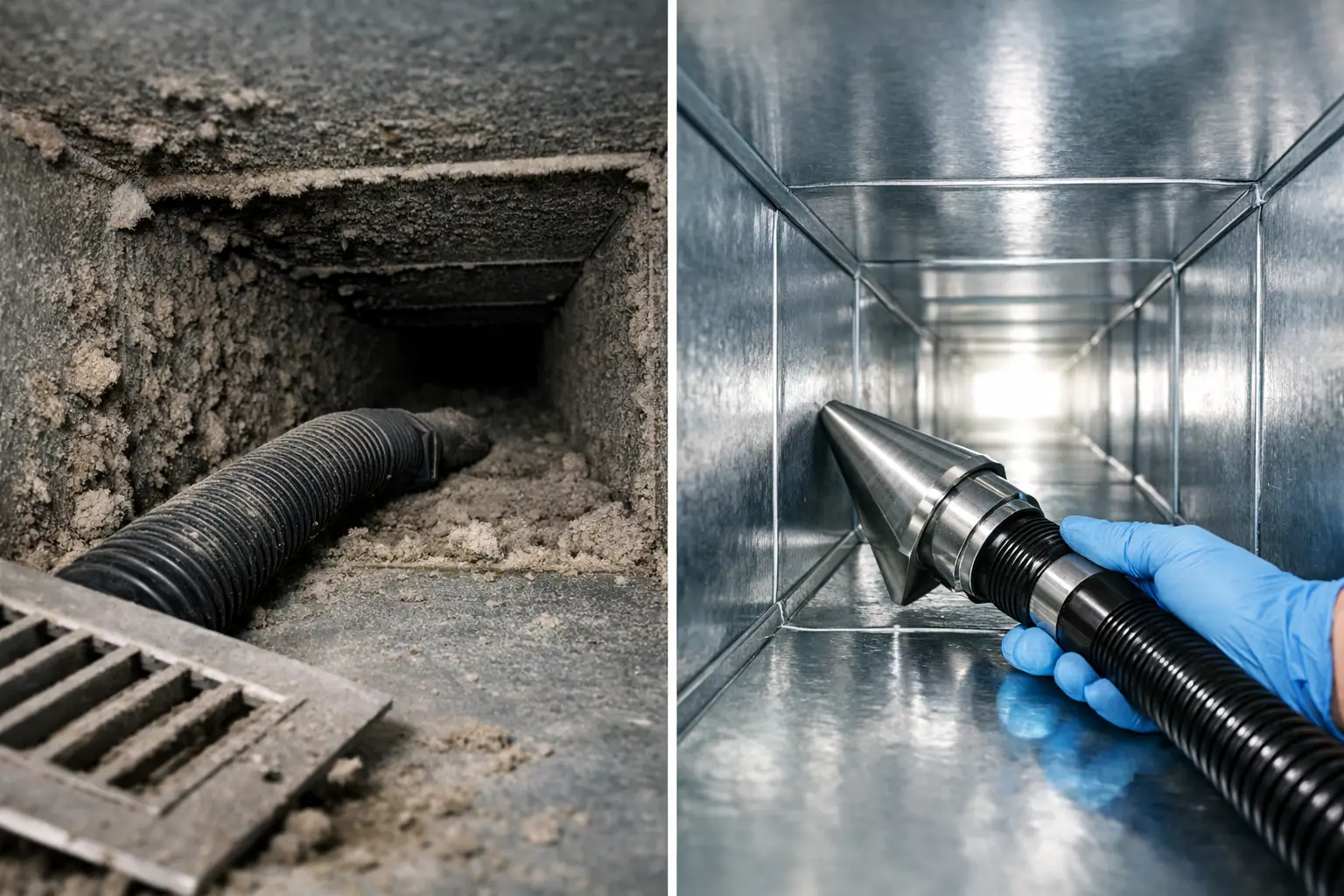
Before and after duct cleaning, the biggest change is not always something you can see from across the room. It may be the reduced dust settling on furniture, a fresher smell when the heat or air conditioning starts, steadier airflow at distant vents, or less visible debris around registers. For families, property managers, and business owners, those changes can mean a cleaner, healthier, better-performing building.
Air ducts are out of sight, but they move air through nearly every occupied room. Over time, they can collect household dust, pet dander, pollen, construction debris, fibers, and other airborne particles. When moisture, leaks, or poor ventilation are involved, odors and microbial growth concerns may also need professional attention. A thorough cleaning addresses the buildup inside the system while helping identify conditions that should be repaired rather than ignored.
Before and After Duct Cleaning: What You May Notice
Before service, many customers notice symptoms rather than the ducts themselves. Dust seems to return soon after cleaning. Certain rooms feel stuffy or receive weaker airflow. A musty, stale, or burnt-dust odor appears when the HVAC system runs. Allergy or asthma triggers may feel more noticeable indoors, especially during heating and cooling seasons.
After professional duct cleaning, it is reasonable to expect cleaner supply and return vents, removal of accumulated debris from accessible ductwork, and a cleaner air path through the system. In homes with heavy dust accumulation, pet hair, renovation residue, or long-deferred maintenance, the difference can be especially noticeable.
Still, a reputable company will set realistic expectations. Duct cleaning is not a cure for every indoor air quality problem. It will not fix a leaking roof, active mold source, dirty carpeting, poorly maintained HVAC equipment, or outdoor pollen entering through open windows. It is one practical part of maintaining a cleaner indoor environment and an efficient ventilation system.
The visible proof matters
A quality before-and-after duct cleaning service should provide more than a verbal assurance. Customers deserve to see what was found and what was cleaned. Video inspections can document buildup inside duct runs, around vents, and in areas that are otherwise difficult to access.
Photos or video are particularly valuable for landlords, property managers, and commercial facility operators who need clear records of completed work. They also help homeowners understand whether a concern is limited to dust and debris or whether vent damage, moisture issues, disconnected ductwork, or other repairs should be addressed next.
Cleaner Ducts Can Support Healthier Indoor Air
Every home and commercial building has its own air quality challenges. A family with pets may deal with dander and hair. A property near a busy road may collect more fine particles. A recently renovated office may have drywall dust and construction debris in the system. Older buildings can have years of accumulated material in ductwork that has not been professionally inspected.
When the HVAC system cycles, air travels through these pathways repeatedly. Removing built-up dust and debris can reduce the amount of material that may be disturbed and recirculated. For people sensitive to dust, seasonal allergens, pet dander, or odors, a cleaner ventilation system can support a more comfortable living or working environment.
Professional methods matter here. HEPA-filtered equipment helps contain fine particles during the cleaning process rather than allowing debris to spread into occupied spaces. When cleaning agents are needed, baby-safe green solvents offer a more responsible option for households, schools, offices, and properties where occupants’ health is a priority.
If there is visible mold, water damage, or a persistent musty odor, cleaning should begin with an inspection. The source of moisture must be corrected. Otherwise, even a well-cleaned duct system can become affected again.
Better Airflow and HVAC Performance
Duct cleaning is often discussed as an air quality service, but it also has a mechanical side. Dust and debris around registers, return vents, blower areas, and duct pathways can contribute to restricted airflow. That may leave some rooms less comfortable and make the HVAC system work harder to circulate conditioned air.
A clean duct system cannot compensate for an undersized unit, failing blower motor, damaged duct design, clogged coil, or neglected filter. But when debris is part of the airflow problem, professional cleaning can help the system operate with fewer obstructions. That can support more consistent heating and cooling and may reduce unnecessary strain on equipment.
The best time to assess duct cleanliness is often before a high-use season. Cleaning before summer cooling demand or winter heating demand gives the system a fresh start when it will be running most often. For businesses, scheduling service during lower-occupancy hours can help protect employee comfort without disrupting operations.
Do not overlook return vents and dryer vents
Supply vents get attention because they deliver air into rooms, but return vents are equally important. They pull air back toward the HVAC equipment and can collect a substantial amount of dust, especially in homes with pets or high foot traffic. A complete evaluation should consider both sides of the air circulation system.
Dryer vent cleaning is a separate but closely related safety service. Lint buildup can reduce dryer performance, increase drying times, and create a fire hazard. If a laundry room feels unusually warm, clothes take more than one cycle to dry, or the exterior vent flap barely opens, the dryer vent should be inspected promptly.
What a Professional Cleaning Appointment Should Include
A proper duct cleaning is not a quick vacuuming of the vent covers. The work should begin with an assessment of the HVAC system, duct access points, vents, and any visible concerns. Technicians should explain what they find, identify any damaged or disconnected vent sections, and outline the work before it begins.
During cleaning, professional equipment is used to loosen and remove debris from the duct system while controlling dust with HEPA filtration. Registers, returns, and accessible components should be addressed as appropriate for the property. If a vent is crushed, leaking, improperly connected, or beyond cleaning, repair or replacement may be the safer recommendation.
Afterward, a post-cleaning inspection provides accountability. EPA-standard inspection practices and video documentation give customers a clearer picture of the finished work. This is especially useful when comparing before-and-after duct cleaning results, because the cleanest areas are usually hidden behind walls, ceilings, and grilles.
Pro Air Cleaners brings more than 30 years of experience to residential and commercial duct and vent service across Connecticut, Massachusetts, and New York. Experienced, insured technicians can also assess bathroom vents, dryer vents, and damaged vent connections when a broader ventilation concern is affecting the property.
When Is It Time to Schedule Service?
There is no single schedule that fits every building. A lightly occupied home with no pets may need service less often than a busy household with multiple pets, smokers, recent renovations, or family members with respiratory sensitivities. Commercial properties may need a more regular plan because of larger systems, higher occupancy, and operational requirements.
Consider an inspection when you move into a previously occupied home, complete remodeling work, notice unexplained dust or odors, see debris at vents, experience uneven airflow, or discover signs of moisture near ductwork. It is also wise to inspect after fire, flood, pest activity, or major HVAC repairs.
The goal is not to clean ducts unnecessarily. The goal is to make an informed decision based on the condition of the system, the building’s use, and the people who live or work inside it.
A free estimate and video inspection can replace guesswork with clear evidence. If your vents, ducts, or dryer system have not been evaluated in years, a professional assessment is a practical next step toward cleaner air, safer operation, and a building that feels better to occupy.