A commercial building can look clean at floor level while its ventilation system is quietly collecting dust, debris, moisture, and odors overhead. The best commercial vent cleaning schedule is not one fixed date on a calendar. It is a maintenance plan based on how your building is used, who occupies it, and how hard its HVAC, exhaust, dryer, and bathroom vent systems work.
For property managers and business owners, regular vent cleaning protects more than air quality. It can help reduce allergy and asthma triggers, support efficient airflow, limit odor complaints, lower strain on mechanical equipment, and address fire risks in high-use dryer and kitchen exhaust systems. The right schedule gives you a practical way to stay ahead of problems instead of reacting after employees, tenants, or customers notice them.
What Is the Best Commercial Vent Cleaning Schedule?
Most standard commercial offices benefit from professional air duct and vent cleaning every three to five years, with inspections in between. That range works for buildings with normal occupancy, maintained HVAC filters, no unusual dust exposure, and no active moisture concerns.
However, many commercial properties need service more often. A medical office, daycare, school, fitness center, salon, restaurant, manufacturing space, or multi-unit property may have heavier traffic, higher humidity, more airborne particles, or systems that run for extended hours. In those settings, a one-size-fits-all schedule can leave too much time between cleanings.
A professional inspection is the best starting point. A trained technician can assess visible buildup, airflow conditions, vent damage, filter performance, signs of moisture, and areas where debris may be affecting the system. Video inspection provides clear proof of the condition inside ducts and vents, so building decision-makers can schedule service based on facts rather than guesswork.
Recommended Cleaning Frequency by System
Commercial ventilation is not a single system. The appropriate timing depends on which vents are involved and what they serve.
HVAC Air Ducts and Supply Vents
For a typical office, retail space, or low-traffic commercial suite, plan a professional cleaning every three to five years. A shorter interval of every two to three years may be more appropriate when the property has pets, frequent construction dust, renovation activity, high foot traffic, smokers near entrances, or occupants with allergies and respiratory sensitivities.
Buildings with multiple tenants should also consider turnover. When one tenant moves out and another moves in, it is a sensible time to inspect the air ducts. Dust, odors, and debris from prior occupancy can carry into a new lease term and create avoidable complaints from the start.
Commercial Dryer Vents
Commercial dryer vents need much closer attention than standard HVAC ducts. Laundry facilities, salons, hotels, gyms, healthcare properties, apartment buildings, and businesses that wash uniforms or linens should generally schedule professional dryer vent cleaning at least once a year.
High-volume operations may need cleaning every three to six months. Lint buildup restricts airflow, makes dryers work harder, lengthens drying cycles, and raises fire risk. If staff members report hot laundry areas, clothes taking longer to dry, a burning smell, or unusually warm dryer exteriors, do not wait for the next planned appointment. Those are signs that the vent path should be inspected promptly.
Bathroom Exhaust Vents
Bathroom vents should usually be inspected annually and cleaned every one to two years, depending on use. Restrooms in office buildings, restaurants, schools, medical facilities, and multi-unit properties can generate constant humidity. When exhaust airflow is weak, moisture remains in the space longer and may contribute to lingering odors, peeling paint, mildew, and mold concerns.
A vent that runs loudly, does not clear steam, or has visible dust around the grille may need service sooner. Bathroom exhaust repairs or replacement may also be necessary when the issue is damaged ductwork, a failed fan, or an improperly vented system rather than buildup alone.
Kitchen Exhaust and Hood Systems
Commercial kitchens operate under a separate and more demanding maintenance schedule. Cleaning frequency depends on the volume and type of cooking, especially grease-producing equipment. Heavy-use kitchens may require monthly service, while moderate operations may need quarterly cleaning and low-volume facilities may qualify for a longer interval.
Kitchen hood and exhaust cleaning is a safety issue as much as a cleanliness issue. Grease buildup can create a significant fire hazard and may affect compliance requirements. A professional maintenance plan should account for hood surfaces, filters, ductwork, and the exhaust path, not just what is visible above the cooking line.
Factors That Can Shorten Your Cleaning Interval
Your building may need a more frequent commercial vent cleaning schedule if it has recurring dust, odor, humidity, or airflow problems. New construction and renovation are also major factors. Drywall dust, sawdust, insulation fibers, and other fine particles can move through a system quickly, even when contractors make an effort to contain the work area.
Consider moving up your schedule if your property has any of the following conditions:
- Heavy daily occupancy, including schools, gyms, clinics, retail stores, and shared office environments
- Allergy, asthma, odor, dust, or air quality complaints from tenants, employees, or customers
- Water intrusion, visible mold concerns, condensation, or persistent humidity
- Nearby construction, recent remodeling, or industrial activity that creates airborne debris
- HVAC systems that run long hours or show reduced airflow and rising energy use
These conditions do not automatically mean the ducts are the source of the problem. They do mean the system deserves a professional inspection. Cleaning without identifying the cause of repeated buildup can result in the same issue returning sooner than expected.
Why Filter Changes Are Not Enough
A quality HVAC filter is essential, but it does not clean every part of a commercial ventilation system. Filters catch a portion of airborne particles before they reach equipment, yet dust can still collect on registers, grilles, return ducts, blower components, and other areas over time. Filters also cannot correct torn flex duct, disconnected vent sections, blocked dryer runs, or moisture entering the system.
Routine filter replacement should be part of your building maintenance program, typically every one to three months depending on filter type and operating conditions. It works best alongside periodic vent inspection and professional cleaning. When both are handled properly, the system has a better chance of maintaining consistent airflow and operating efficiently.
What a Professional Commercial Vent Cleaning Visit Should Include
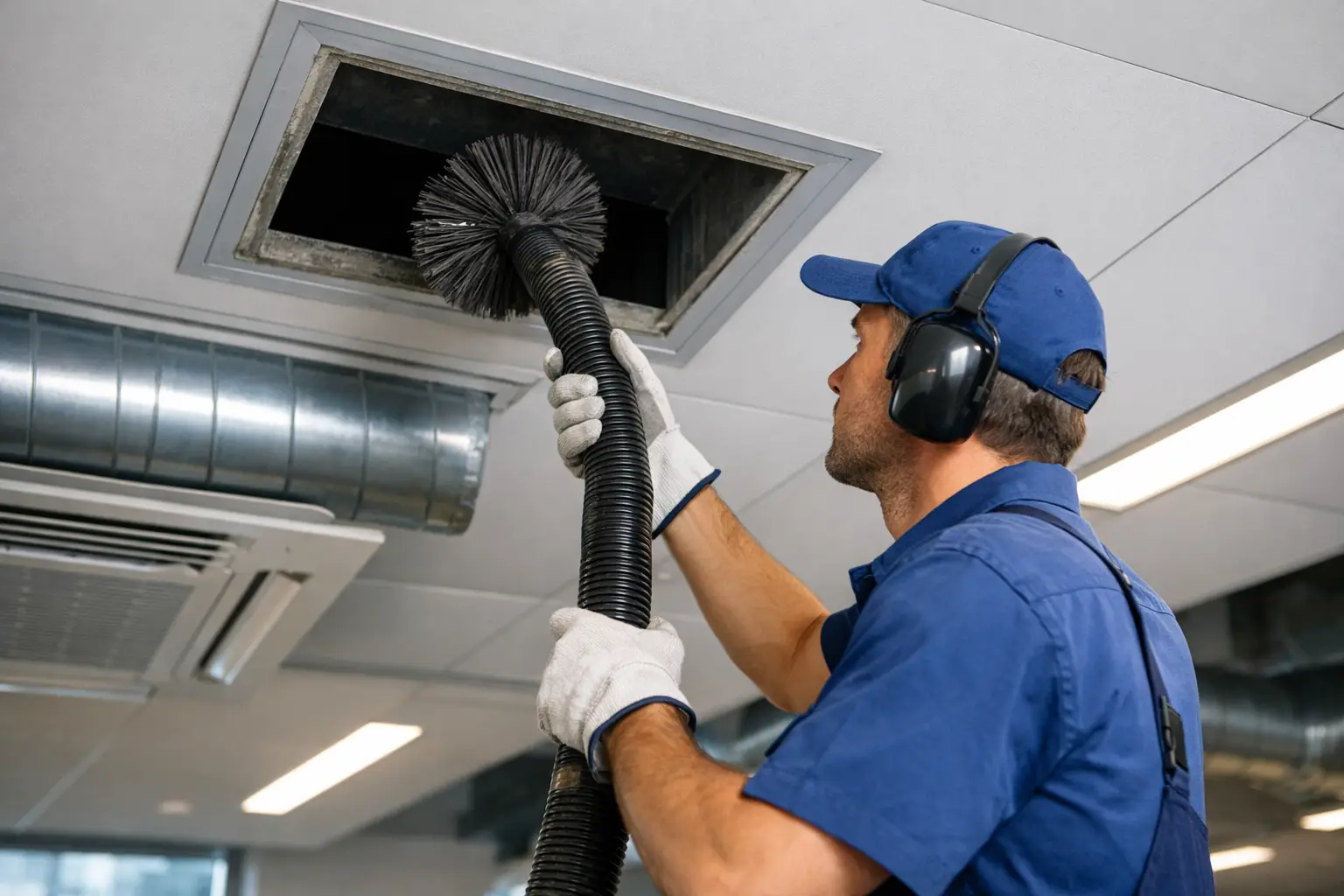
Commercial properties need more than a quick vacuum at the vent cover. A thorough service begins with an inspection of accessible system components and a discussion of building use, past maintenance, complaints, and any changes to the property.
The cleaning process should use specialized equipment designed to capture debris rather than release it back into occupied areas. HEPA-filtered methods are particularly valuable in workplaces, tenant spaces, and facilities serving children, older adults, or people with respiratory conditions. If solvents are needed for certain surfaces, green, baby-safe options help support a healthier indoor environment.
After cleaning, documentation matters. Post-cleaning inspection practices, including video when appropriate, give property managers visible evidence of the work completed and help identify repairs that may be needed. This is especially useful for multi-tenant properties, lease records, maintenance planning, and internal safety documentation.
Build the Schedule Around Your Building, Not a Generic Reminder
A calendar reminder every few years is a useful starting point, but it should not replace condition-based maintenance. Keep records of filter changes, tenant complaints, HVAC repairs, construction work, dryer performance, and prior cleaning dates. Patterns in those records can reveal when a system is becoming less efficient or when a particular area needs closer attention.
For many businesses in Connecticut, Massachusetts, and New York, seasonal timing is also practical. Scheduling an inspection before heavy heating or cooling demand can help uncover airflow restrictions before the system is working at full capacity. Properties with busy seasonal operations may prefer service during slower periods to reduce disruption.
Pro Air Cleaners provides commercial vent, duct, dryer vent, bathroom vent, and exhaust cleaning with experienced technicians, HEPA-filtered equipment, and clear inspection findings. A free estimate and video inspection can help you set a maintenance interval that fits your property instead of paying for unnecessary service or waiting too long.
Clean vents are not simply a line item on a maintenance checklist. They are part of how your building protects the people inside it, controls operating costs, and keeps essential equipment performing as it should.