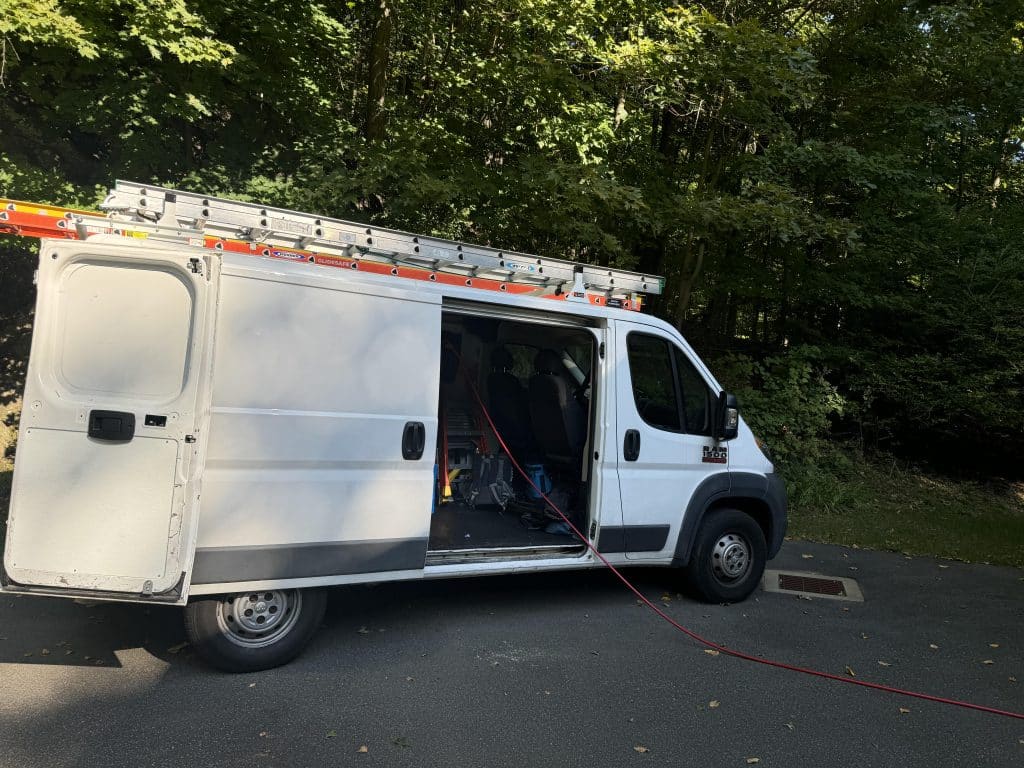

The dumpster-only option can be slower on a multi-story renovation. For construction debris removal in Waterbury, CT, a dumpster can collect material without a chute, but manual loading can extend a multi-story project timeline by 15-30%. The right setup depends on how much debris you have, where it’s generated, and how easily it can be moved to the container.
It’s reasonable to compare a dumpster with a chute before work begins, especially when you’re balancing access, labor, and disposal costs. This guide explains how weight-based pricing works, which additional charges may apply, and when a chute or a series of debris pickups may suit a Waterbury renovation better than keeping a dumpster on site.
You’ll also learn what the Mark Lane Transfer Facility accepts, how to plan for mixed construction debris, and which local removal options suit different project sizes. With those details, you can plan a practical route from demolition to a cleared work area.
Key Takeaways
- Compare dumpster-only loading with a chute by considering floor access, debris volume, and the time needed to move material.
- Expect construction-debris pricing to depend on the actual pile; a written estimate before loading helps clarify the cost.
- Waterbury households can use two free bulky-waste dumps each year, but the transfer facility’s accepted materials have limits.
- Separate debris removal from indoor vent maintenance: air duct and dryer vent cleaning address different needs after renovation work.
Written estimates and weight-based pricing
For construction debris removal in Waterbury, the cost depends on the pile, its materials, and site access. A removal estimate can account for volume, weight, loading effort, and disposal requirements. Pro Air Cleaners provides a firm price before loading, based on the debris at the property rather than an assumed pile. Describe what needs to be removed and where it is to get a useful estimate.
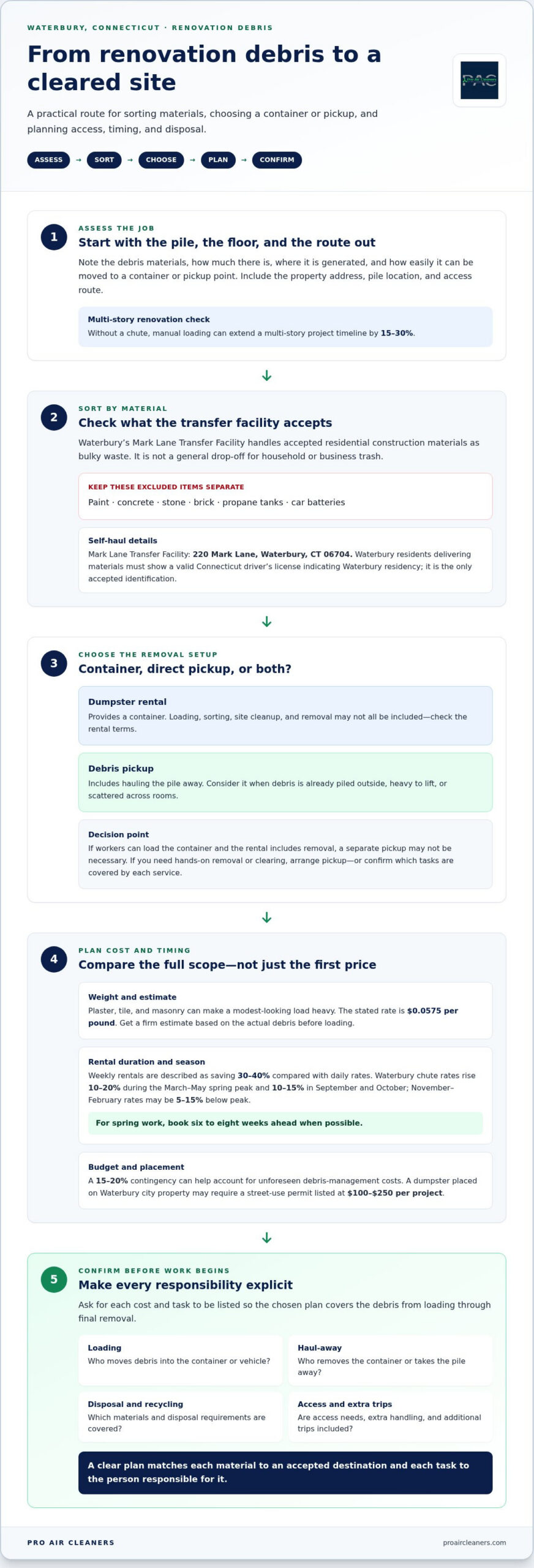
Weight matters because plaster, tile, and masonry can make a modest-looking load heavy. After that, the rate is $.0575 per pound. For example, estimate the load’s weight carefully before comparing a self-haul trip with a pickup. A five-gallon bucket of plaster or tile can be deceptively heavy, so carry heavy material in safe loads.
Container and chute rentals have separate pricing structures. Weekly rentals are described as saving 30-40% compared with daily rates. Compare rental duration with the project schedule, not just the daily charge.
Season affects planning. Waterbury chute rates rise 10-20% during the March-May spring peak, and fall rates rise 10-15% in September and October. Rates may drop 5-15% below peak during November-February. For spring work, book six to eight weeks ahead when possible. A 15-20% contingency can help account for unforeseen debris-management costs, such as extra disposal or access needs.
Online scheduling can make the estimate process more organized. Enter the Waterbury address, project type, debris materials, pile location, and preferred timing when a booking form requests them. Add clear photos if the form allows them. Then confirm that the estimate covers loading, haul-away, disposal, and any extra handling. A street-use permit for a dumpster on Waterbury city property is listed at $100-$250 per project, so placement affects the total.
Before choosing a dumpster rental, compare its terms with the removal estimate. A rental may provide a container but not loading or site cleanup, which can be separate charges. Ask for each cost to be clearly listed, including disposal, recycling, access, and extra trips. This makes it easier to compare the full scope rather than an initial price that excludes necessary work.
Do rental companies handle dumpster haul-aways, or do I need a separate waste contractor?
A dumpster rental provides a container, while debris pickup includes hauling the pile away. The difference matters: a container does not automatically include loading, sorting, or clearing scattered material. For a Waterbury renovation, first decide whether you need a container, hands-on debris removal, or both.
Waterbury’s Mark Lane Transfer Facility accepts residential construction materials as bulky waste, but it does not accept household or business trash. It also excludes paint, concrete, stone, brick, propane tanks, and car batteries. Separate these items from ordinary renovation debris before planning a trip, since a mixed load may contain materials the facility refuses.
Accepted residential construction materials are handled as bulky waste, not as a general drop-off for every kind of building waste. The facility’s distinction matters during cleanup: lumber or other residential construction material may fit its bulky-waste category, while concrete and brick are specifically excluded. Connecticut homeowners should sort by material type and intended destination, rather than assuming every demolition remnant belongs in one dumpster or transfer-station load.
Permits depend on where a dumpster will sit. Placing a roll-off dumpster on a Waterbury street may require a city permit. A container entirely on private property raises different access considerations than one occupying city property, so map the intended location before delivery. Keep sidewalks, driveways, and loading routes in mind: a convenient spot can reduce carrying distance and lifting during demolition.
For a clear plan, divide the work into three steps:
- List the materials, such as residential construction debris, paint, or masonry.
- Decide whether the load goes into a rented container or needs direct pickup.
- Confirm who handles loading, haul-away, disposal, and any final cleanup.
This breakdown helps show when a rental alone may be enough. If workers can load the container and the rental includes removal, a separate pickup may not be necessary. If debris is already piled outside, heavy to lift, or scattered across rooms, arrange pickup instead. Keep excluded items separate, especially propane tanks and car batteries, and do not put them in a construction dumpster.
Mark Lane accepts residential construction materials as bulky waste, but its exclusions mean it is not suitable for every load. Match each material to an accepted disposal route, then choose a dumpster rental or direct pickup based on who will load and clear the debris.
Waterbury-area service coverage
Plan coverage around the job address and the debris location. A Waterbury renovation and a project in Naugatuck are separate sites, even if crews work in both communities. Record each address, the debris location, the access route, and the requested removal task. These details help plan a pickup without assuming nearby towns have identical coverage.
For municipal drop-off, Waterbury’s Mark Lane Transfer Facility is at 220 Mark Lane, Waterbury, CT 06704. Waterbury residents delivering materials must present a valid Connecticut driver’s license indicating Waterbury residency. It is the only accepted form of identification. That residency rule matters to homeowners and contractors planning a self-haul from a Waterbury property.
Contractors managing several properties can organize jobs by address and cleanup stage. For example, list demolition debris at one Waterbury house separately from furniture removal at another site. Note whether each load is indoors, curbside, or beside a driveway. This helps crews plan lifting, vehicle access, and the expected finish at each property.
- Record the municipality and complete address for every job.
- Describe debris type, pile location, and access obstacles.
- Separate construction material from household furniture or unrelated cleanup items.
For recurring projects, keep a shared site log with the project contact, access instructions, debris description, and preferred pickup sequence. A renovation across Waterbury and Naugatuck, for example, may need different arrival routes and staging plans. An organized log helps crews match each load to the right address and avoid confusion between active sites.
Safe collection also depends on where debris is located. A pile inside a building requires a different carrying route than material staged beside a driveway. Record stairs, narrow entrances, parking constraints, and shared access areas. These details help determine how crews can reach the debris and whether the planned pickup suits the site.
Waterbury’s Mark Lane facility is a municipal option, not a destination for every household or contractor load. Waterbury residents must meet its identification requirement, and its accepted-material rules still apply. For projects outside Waterbury, including Naugatuck-area sites, plan pickup around the property address and debris location. Clear details help bring the removal plan to a clean finish.
Extra-fee disposal items
Some disposal charges apply by item rather than by load. Count these items separately before planning a trip, since several bulky items can add fees beyond construction debris handling. Keep mattresses and box springs apart from renovation material while preparing the load.
Mark Lane has specific exclusions that affect disposal planning. It does not accept household or business trash, paint, concrete, stone, brick, propane tanks, or car batteries. Don’t treat a renovation pile containing tile, flooring, paint, and lumber as one accepted load. Identify each material first, then plan a suitable route for anything the facility excludes.
For recycling near Waterbury, clean metal is separated for scrap recycling, and accepted reusable materials are directed to donation. This can reduce the amount sent for disposal, but items must be suitable for recycling or reuse. Keep clean metal apart from mixed debris, and set reusable items aside in usable condition. Damaged or contaminated material may not qualify.
Before hauling, use a simple sorting process:
- Pull out excluded materials, including paint, concrete, stone, brick, propane tanks, and car batteries.
- Set clean metal aside for scrap recycling and reusable items for possible donation.
- List flooring and other mixed materials by type when arranging disposal.
Material weight also affects how safely a load can be handled. A bucket of plaster or tile can be deceptively heavy. Carry heavy material in manageable loads instead of overfilling large containers. This matters especially when debris must be moved from an upper floor or through a narrow route.
Mark Lane accepts eligible residential construction materials as bulky waste, but that does not mean every renovation remnant belongs there. Keep household trash separate and plan another route for excluded items. Sorting materials first helps prevent a rejected load and avoids carrying prohibited items to the facility.
Plan disposal before demolition begins. List item counts and material types, and note which pieces may qualify for recycling or donation. For example, a bathroom project might produce tile and clean metal fixtures, while another room has a mattress to remove. Sorting items separately clarifies disposal needs, keeps extra fees visible, and supports a cleaner finish at the Waterbury property.
Construction and renovation debris pickup
Before arranging construction debris pickup, identify the materials, pile location, and access route. Keep prohibited items separate. Mixed construction debris does not need to be pre-sorted before pickup.
The practical choice is often between a dumpster rental and direct pickup. A dumpster stays at the job site while workers load it, which suits demolition spread over several workdays. For some Waterbury renovations, a week-long rental may cost more than a couple of pickups. Compare the expected volume and pace of work, not just the container size.
Project size helps determine the right approach. Debris from one room or bathroom may amount to a quarter or half a load. If it is ready in one accessible pile, pickup may avoid leaving a container on site. A larger renovation that generates debris over time may benefit from a container staged near the work area.
Manual loading affects more than convenience on multi-story projects. Dumpster-only loading can extend construction timelines by 15-30%, because workers carry debris down rather than using a chute. Consider how many floors separate the work from the pickup point. Heavy plaster or tile also needs safe loads, since a five-gallon bucket can be deceptively heavy.
Prepare the pickup area with a few clear steps:
- Gather debris in an accessible location without blocking the work route.
- Separate excluded items, such as paint, concrete, stone, brick, propane tanks, and car batteries.
- Keep reusable materials and clean metal apart when they’re suitable for donation or scrap recycling.
- Share the job-site address, pile location, and access details when arranging service.
Mark Lane accepts residential construction materials as bulky waste, but it excludes household and business trash. This distinction matters when renovation debris sits beside ordinary garbage. Identify both material types and their destinations rather than treating everything as construction waste.
Street placement of a roll-off dumpster in Waterbury may require a city permit. A private driveway and a city street therefore create different placement considerations. Decide where the container or debris pile will sit before demolition begins; this helps protect access and keeps loading organized. For debris already piled at the property, arrange construction debris pickup as part of the cleanup plan.
Match the removal method to the debris schedule. Choose a dumpster when material builds up during ongoing work; consider pickup when a smaller pile is ready. Keep access clear, separate excluded items, and plan lifting routes before loading begins.
Pro Air Cleaners: Air Duct Cleaning
After renovation debris is cleared, Pro Air Cleaners offers Air Duct Cleaning as a practical next step. Demolition and remodeling can leave dust around the work area, so homeowners may include duct cleaning in their post-project plans. Pro Air Cleaners also provides Air Duct Vent Replacements & Repairs when vents need attention, along with Dryer Vent Cleaning and Bathroom Vent Cleaning & Replacements for those systems.
Consider these services when renovation work has affected vents or indoor maintenance is part of restoring the space. Air duct cleaning addresses ductwork; vent repairs and replacements address damaged or aging components. Contact Pro Air Cleaners to discuss the service that fits your home.
Plan the Next Step for a Cleaner Home
Once renovation debris is removed, consider what the home needs beyond pickup. For construction debris removal in Waterbury, CT, a clear plan starts at the job site. The next step can focus on maintaining the spaces and systems used every day. Choose services based on the areas you want addressed, rather than treating cleanup as one broad task.
Pro Air Cleaners offers Air Duct Cleaning, Dryer Vent Cleaning, and Air Duct Vent Replacements & Repairs. These services address different parts of the home, from ductwork to vent components, so you can focus on the maintenance that fits your needs. A well-organized transition from renovation to ongoing upkeep helps prepare the home for its next chapter.
Contact Pro Air Cleaners to discuss your project, and take the next step toward a refreshed home.
Frequently Asked Questions
Can I use a dumpster alone instead of renting a chute on a multi-story Waterbury property?
A dumpster can work if your crew can carry debris to it safely and consistently. For a second-floor bathroom renovation, consider the stairs, carrying route, and distance to the container before choosing. A chute moves debris downward more directly, while a dumpster-only setup requires manual transport. The right fit depends on whether workers can manage that routine without disrupting other tasks.
Which companies handle construction debris removal in Waterbury, CT?
For construction debris removal in Waterbury, CT, distinguish dumpster rental from dump removal: renting provides a container, while dump removal hauls debris away. Pro Air Cleaners provides dump removal in Connecticut. The material types, pile location, and access route help define the work. A curbside pile, for example, differs from debris that still needs to be carried out of an interior room.
How is construction debris removal priced by volume, weight, or truckload?
Disposal costs can depend on the pile’s size, weight, or disposal method. That calculation applies to facility disposal, not a removal service’s price. Heavy materials such as tile can weigh more than their pile size suggests.
What construction materials can be hauled away in Waterbury, CT?
Mark Lane accepts residential construction materials as bulky waste, but that does not mean every demolition material is accepted. Concrete, stone, brick, and paint are excluded. For a bathroom renovation, identify tile, fixtures, and other materials separately before deciding where each load goes. A simple material list helps prevent a mismatch between debris and its intended destination.
Where can Waterbury, CT residents dispose of construction and demolition waste?
Waterbury residents can bring eligible residential construction materials to Mark Lane Transfer Facility at 220 Mark Lane. Summer hours run Tuesday through Saturday, 7 a.m. to 3 p.m., from March 1 through November 30; vehicles must be on the scale by 2:30 p.m. Residents need a valid Connecticut driver’s license showing Waterbury residency. The facility’s winter operating period runs December 1 through February 29.
How should I compare construction debris removal companies in Waterbury, CT?
Start by defining the work: is the debris already gathered, or must it be carried out from inside the property? Then compare the service scope, including loading, hauling, disposal, and site cleanup. Note access details such as stairs, narrow hallways, and where a vehicle can stop. A written scope describing the actual pile makes it easier to compare direct pickup with container rental.
Are hazardous construction materials like asbestos or paint accepted for removal in Waterbury, CT?
Mark Lane does not accept paint, so keep it out of a routine drop-off load. Do not mix material suspected of containing asbestos with ordinary renovation debris. Keep it separate and arrange an appropriate handling and disposal route before demolition proceeds. This helps ensure hazardous or excluded material is not treated as standard construction waste.
What do Waterbury, CT construction debris removal reviews and service areas tell me?
Reviews are most useful when they discuss work similar to yours; feedback about duct cleaning, for example, doesn’t describe debris hauling. Pro Air Cleaners serves residential and commercial customers across Connecticut and offers dump removal. For a Waterbury project, the relevant details are whether the service matches the debris task and the property’s access needs. No particular customer rating or review outcome is implied here.