A second-floor bedroom that never cools, a basement that feels overly warm, and utility bills that climb without a clear reason can all point to the same hidden problem: leaking ductwork. So, does duct sealing save energy? In many homes and commercial buildings, yes. When conditioned air escapes through gaps, loose connections, or damaged ducts, the HVAC system has to run longer to deliver the comfort you are already paying for.
Duct sealing is not a cure-all for every comfort or energy issue. Insulation levels, aging HVAC equipment, thermostat settings, window leakage, and system sizing also affect energy use. But when duct leaks are present, sealing them can reduce waste, improve room-to-room comfort, and ease unnecessary strain on heating and cooling equipment.
How Leaky Ducts Waste Heated and Cooled Air
Your furnace, heat pump, or air conditioner creates conditioned air. Ductwork carries that air to each room, then returns air to the system to be heated or cooled again. If sections of that ductwork run through an attic, crawl space, garage, basement, utility area, or ceiling cavity, leaks can release valuable conditioned air into spaces where it does little good.
A supply-side leak lets heated or cooled air escape before it reaches a register. A return-side leak can pull dusty, humid, musty, or unconditioned air into the system. That air then needs to be treated before your home or building reaches the thermostat setting.
The result is longer equipment run times. In summer, the air conditioner may struggle to manage humidity and maintain a consistent temperature. During a Connecticut winter, a furnace or heat pump may cycle more often because warm air is disappearing into an unconditioned area instead of reaching occupied rooms.
Even small gaps can add up when they occur at multiple duct joints, boots, plenums, and connections. Flexible duct runs are especially vulnerable when they are kinked, sagging, disconnected, or poorly supported.
Does Duct Sealing Save Energy in Every Building?
Duct sealing delivers the best value when ducts travel outside the conditioned portion of the building. For example, leaks in an attic duct system generally matter more than leaks in ducts located entirely within a conditioned basement. Air lost into a hot attic in July or a cold attic in January is a direct efficiency problem.
It also tends to help when there are clear signs of airflow loss. These can include rooms that are consistently too hot or cold, weak airflow from certain vents, high energy bills, excessive dust near registers, whistling noises, or an HVAC system that seems to run for long periods.
The savings vary because no two properties have the same duct layout, insulation, equipment condition, or leakage level. A newer, tightly installed duct system may need only a minor repair. An older home, a remodeled property with altered duct runs, or a multifamily building with aging connections may have more substantial leakage to address.
That is why a proper inspection matters more than a one-size-fits-all promise. A technician should look for disconnected runs, damaged sections, loose joints, missing insulation, failing tape, crushed flex ducts, and gaps where ducts connect to registers or equipment.
Comfort Often Improves Before You Notice the Savings
Lower energy waste is a major reason to seal ducts, but comfort is often what property owners notice first. When more conditioned air reaches the rooms it is intended to serve, temperatures can become more consistent from one area to another.
Sealing return leaks may also reduce the amount of dusty or humid air pulled from attics, crawl spaces, wall cavities, garages, and utility areas. This does not replace air duct cleaning, filtration, or moisture control, but it can help prevent the system from drawing contaminants from places where they do not belong.
For families managing allergies, pets, persistent dust, or odors, this distinction matters. A leak in return ductwork can contribute to indoor air quality concerns while making the system work harder. Finding the source is more useful than repeatedly adjusting the thermostat or closing vents in unused rooms.
Commercial properties can see similar benefits. Offices, retail spaces, apartment buildings, and facilities with long duct runs may experience uneven temperatures that lead to comfort complaints from tenants, employees, or customers. Repairing accessible duct issues can support more dependable airflow and reduce avoidable equipment strain.
What Professional Duct Sealing Usually Involves
Effective sealing begins with locating the problem. Visible gaps at accessible joints may be straightforward, but much of a duct system is concealed behind ceilings, walls, soffits, or insulation. A visual inspection and video inspection can help identify accessible damage and determine whether further evaluation is needed.
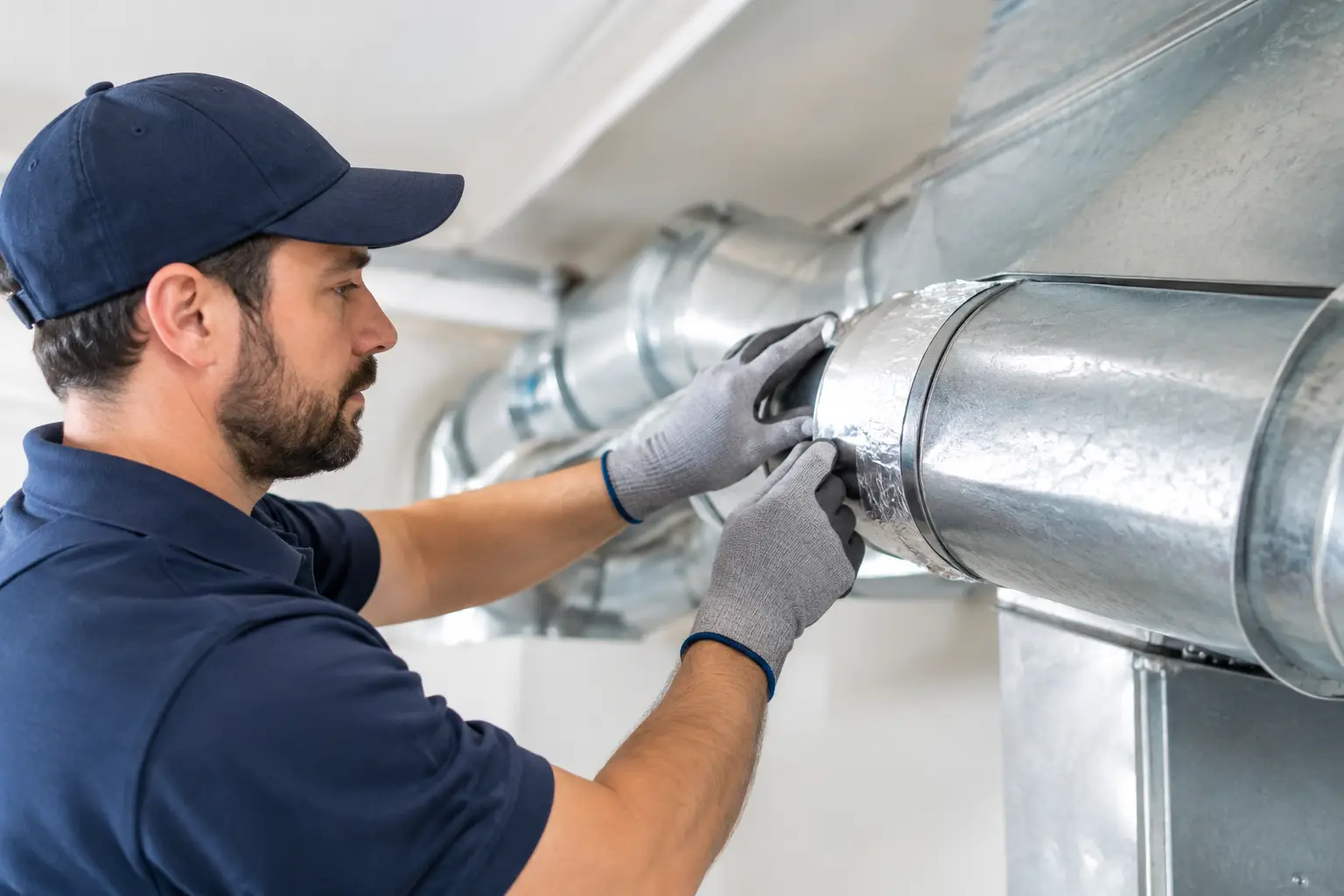
Technicians may repair or replace damaged duct sections, reconnect separated runs, secure loose fittings, and seal joints with materials designed for HVAC ductwork. Mastic sealant and approved foil tape are commonly used for appropriate applications. Ordinary cloth-backed duct tape is not a long-term repair material. Despite its name, it can dry out and fail under heat, cold, and changing humidity.
In some cases, sealing is paired with duct insulation. These services solve related but different problems. Sealing stops air from escaping or being pulled in. Insulation slows heat gain and heat loss through the duct walls. Ducts in unconditioned attics, crawl spaces, and garages may benefit from both when their condition and location justify the work.
A qualified professional should also assess whether the ductwork is clean, damaged, or contaminated. Debris buildup, mold-related concerns, pest activity, or severely deteriorated duct materials may call for cleaning, repair, or replacement rather than sealing alone.
Duct Sealing Is Not the Same as Duct Cleaning
This is an easy point to miss. Air duct cleaning removes dust, debris, and other buildup from accessible parts of the ventilation system. Duct sealing addresses leaks and failed connections. One service focuses on cleanliness and airflow pathways, while the other focuses on keeping conditioned air inside the system.
A well-maintained system may need both at different times. For example, a property owner may schedule HEPA-filtered duct cleaning after renovation dust, pet buildup, or years of accumulated debris. During the inspection, the technician may find a loose boot or damaged duct run that should be repaired to protect airflow and efficiency.
Neither service should be sold as a shortcut for a failing HVAC unit. If a system is improperly sized, low on refrigerant, has a damaged blower, or has poor building insulation, those issues require their own diagnosis. Honest recommendations start with identifying the actual source of the problem.
When to Schedule an Inspection
It makes sense to have ductwork evaluated after a renovation, water event, pest issue, HVAC replacement, or when moving into an older property. It is also wise to investigate if energy costs rise unexpectedly and your heating or cooling system seems to be operating normally but comfort has declined.
Pay attention to practical clues: a vent that suddenly has weak airflow, a room that is difficult to heat or cool, visible duct damage in a basement or attic, rattling near duct connections, or dust and odors that return quickly after cleaning. These signs do not automatically mean your ducts are leaking, but they are worth checking before the issue causes more wasted energy or equipment wear.
For homeowners and property managers across Connecticut, Massachusetts, and New York, Pro Air Cleaners can inspect accessible ductwork, document concerns with video when appropriate, and recommend practical repair, cleaning, or replacement options. The goal is not to sell unnecessary work. It is to help your ventilation system move cleaner air where it needs to go.
If your HVAC system is working harder than your comfort level suggests it should, start with the hidden pathways behind the walls and ceilings. A careful duct inspection can turn a vague energy concern into a clear maintenance plan.