
The oldest ducts in a Connecticut home don’t automatically need cleaning, and cleaning may not be the right first step. With ductwork cleaning for old houses, the decision depends on the ducts’ condition, material, and layout, not simply the home’s age.
It’s reasonable to wonder whether cleaning could disturb fragile or suspect materials, especially when duct sections are hidden behind walls, ceilings, or insulation. A review of accessible ductwork can help identify visible debris or damage and clarify whether cleaning, repair, or replacement may be appropriate. If a material raises concern, arrange a separate assessment before work that could disturb it.
This guide explains what age can and can’t tell you, what to look for in an older duct system, and how to distinguish cleaning from repairs, replacement, or a separate materials assessment. Pro Air Cleaners brings more than 30 years of duct cleaning and repair experience to homes across Connecticut, including the New Britain area. Use the details below to choose a practical next step for your home.
Key Takeaways
- For ductwork cleaning for old houses, visible condition and system design matter more than age alone.
- A review and scope discussion can clarify which duct sections are accessible and what work may be appropriate.
- Cleaning removes accumulated debris, while repair addresses damaged or disconnected ductwork. Replacement may be a separate consideration.
- Sharing renovation history and keeping registers and return grilles clear can help prepare for an evaluation.
- Pro Air Cleaners serves Connecticut homeowners from New Britain, with over 30 years of experience and insured technicians.
Why ductwork cleaning for old houses starts with the system’s condition
Ductwork cleaning removes accumulated debris from accessible air pathways that carry heated or cooled air through a home. For an older house, the key question isn’t how long the building has stood. A well-maintained system may not need cleaning just because it’s old, while a section may warrant attention after remodeling or visible damage. Base the decision on the ducts’ observable condition and the system’s layout.
A home’s age is a reason to look more carefully, not proof that its ducts are contaminated. Older systems may include concealed runs, extensions added during renovations, or routes changed when rooms were divided or repurposed. Supply and return registers show only the openings into the system, not the path or condition of every duct section.
A general overview of Duct (HVAC) systems can help explain how ducts connect with other heating and cooling components. In an older home, the specific layout is what guides a useful cleaning decision.
What can make an older home’s duct system different?
Renovations can leave a home with mixed duct routes. An original run may serve one part of the house while later additions use a different path. Some sections may be visible near equipment or in an unfinished space; others may be concealed behind walls or ceilings and difficult to inspect directly. Dust and construction debris can also enter ducts during remodeling if registers or open duct ends are left unprotected. Knowing where work took place helps identify areas that may merit a closer look.
Which signs justify a closer look at old ductwork?
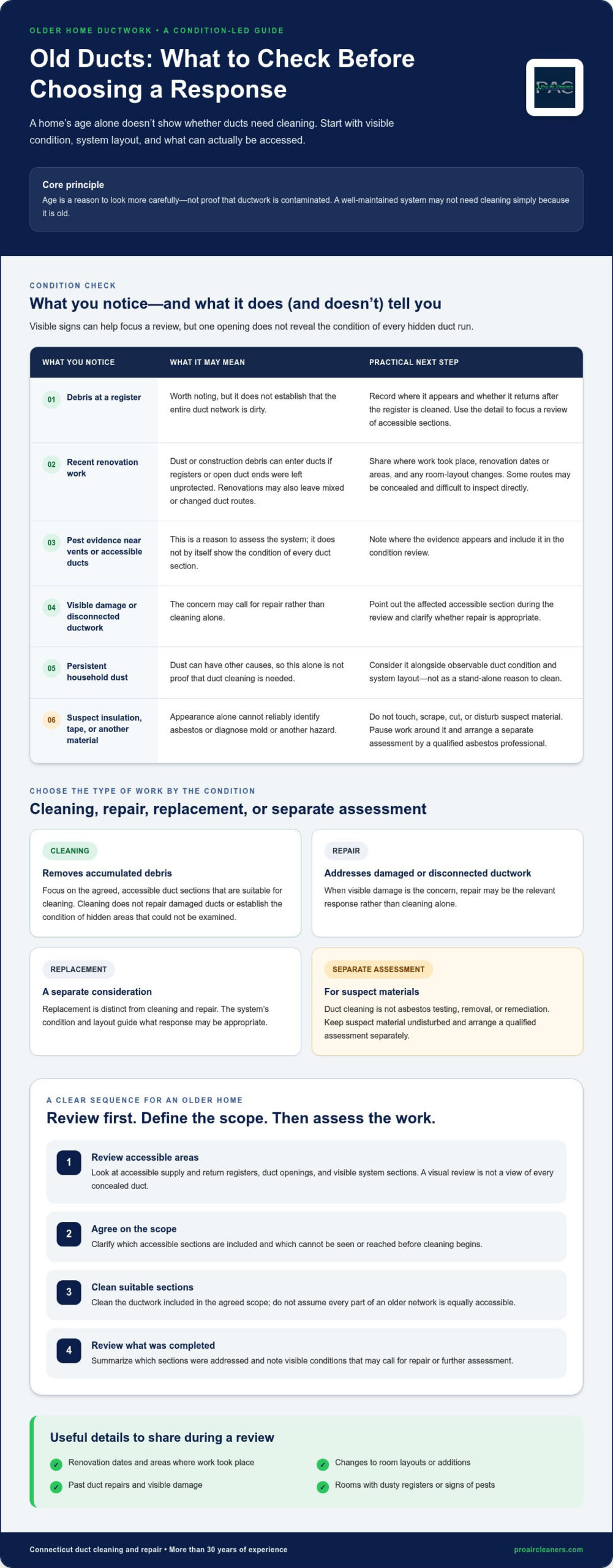
Visible debris at a register is worth noting, but it doesn’t establish that the entire duct network is dirty. Record where it appears and whether it returns after the register is cleaned. Recent renovation work, signs of pests near vents or accessible duct sections, and visibly damaged or disconnected ductwork are also reasons to assess the system. Persistent household dust can have other causes, so don’t treat it on its own as proof that duct cleaning is needed.
Before deciding on ductwork cleaning for old houses, note what you can see without opening walls or disturbing materials. Record which rooms have dusty registers, where renovation work occurred, and whether you’ve noticed visible damage or pest evidence. These details can help focus a review on accessible parts of the system and identify areas where visibility is limited.
Cleaning is a condition-led step, not a substitute for understanding the duct layout. Debris visible at one opening doesn’t show what lies farther along the run. If a section appears damaged, the concern may call for repair rather than cleaning alone. Separating these possibilities helps Connecticut homeowners choose a measured next step instead of assuming that every old system needs the same treatment.
How inspection and ductwork cleaning work in an older house
For an older home, ductwork cleaning should follow a clear sequence: review what’s accessible, agree on the work’s scope, clean appropriate sections, then review what was completed. A condition review before cleaning can identify visible concerns and access limits before work begins. In an older home, review the ducts first so cleaning addresses suitable sections without disturbing materials or damage that need a different response.
What happens during a condition review?
A review can include accessible supply and return registers, duct openings, and visible system sections. Access varies. Some runs may be visible near the heating or cooling equipment, while others are concealed in walls or ceilings. A visual review shouldn’t be presented as a view of every hidden duct. The Environmental Protection Agency’s guidance on air duct cleaning can also help homeowners understand when cleaning may be appropriate and what to expect from the process.
Your knowledge of the house adds useful context. Share renovation dates or areas, changes to room layouts, past duct repairs, and concerns such as visible damage or pest evidence. For example, if an addition was built over an existing room, noting where the work occurred can help clarify which routes may need attention and which are concealed.
How do scope, cleaning, and review fit together?
Before cleaning starts, the scope discussion should identify the accessible sections included in the work and note areas that can’t be seen or reached. That distinction matters in older houses, where one visible opening may lead into a longer, partly concealed route. Cleaning should focus on the agreed ductwork, rather than assume every part of the network is equally accessible.
Afterward, a review of the work can summarize which sections were addressed and note visible conditions that may call for repair or further assessment. This clarifies what cleaning did and did not cover. Cleaning removes accumulated debris from the sections included in the work, but it doesn’t repair damaged ducts or establish the condition of hidden areas that couldn’t be examined.
When should cleaning pause for a separate assessment?
If you suspect insulation, tape, or another material may contain asbestos, don’t touch, scrape, cut, or otherwise disturb it as part of routine cleaning. Stop work around the suspect material and arrange a separate assessment by a qualified asbestos professional. Duct cleaning isn’t asbestos testing, removal, or remediation, and appearance alone can’t reliably identify asbestos or diagnose mold or another hazard.
That pause is a practical boundary, not a reason to assume the whole system is unsafe. Once any separate material concern is addressed, consider the ductwork based on its condition and accessibility. For a Connecticut home where cleaning is appropriate, Pro Air Cleaners provides air duct cleaning with professional-grade equipment, helping homeowners take a measured next step based on the system rather than its age.
Cleaning, repair, or replacement: choosing the right response for old ducts
Older ductwork can raise more than one concern, but cleaning, repair, and replacement address different conditions. Start with what’s visible and accessible, then match the work to the issue. Age alone doesn’t determine whether ducts should be replaced, and cleaning shouldn’t be expected to fix physical damage or correct a poorly arranged system.
| Option | Purpose | Condition cue | Likely next step |
|---|---|---|---|
| Cleaning | Remove accumulated debris from accessible duct sections. | Visible buildup or debris inside sections included in the work. | Set a clear scope for which areas will be cleaned. |
| Repair | Address damaged, separated, or disconnected duct sections. | A visible gap, crushed section, or deterioration. | Determine the extent of the damage and which sections need repair. |
| Replacement | Replace duct sections that are no longer suitable to keep in service. | Condition or damage makes continued use impractical. | Assess the affected area and the project scope before deciding. |
| Separate assessment | Evaluate a suspected material concern outside routine duct cleaning. | Insulation or surface material is suspected to contain asbestos. | Avoid disturbing it and arrange a qualified materials assessment. |
When does cleaning address the concern?
Cleaning may be appropriate when an assessment finds accumulated debris within accessible duct sections. A documented scope helps distinguish targeted cleaning from assumptions about the entire system. It can identify which areas are included and which remain concealed or inaccessible. That clarity matters in older homes, where a visible opening doesn’t establish the condition of every connected run.
Cleaning removes debris, but it doesn’t close leaks, reconnect separated joints, restore crushed ductwork, or change the system’s design. If dust is present near a register and an accessible section is damaged, those observations point to different needs. Match the work to the condition rather than expecting one service to resolve every concern.
When might repair or another assessment matter more?
Visible separation, physical damage, or deterioration calls for attention to the duct itself. Repair addresses damaged or disconnected sections. Replacement may be considered when the condition and scope make repair unsuitable. Neither decision follows automatically from a home’s age. A sound section may remain serviceable, while a damaged section may need attention regardless of when the house was built.
Suspected insulation or surface materials require a separate safety assessment, not routine cleaning or a visual diagnosis. Don’t disturb material you’re concerned about. For more detail on evaluating those options, see the guide to air duct repair and replacement. This condition-led approach to ductwork cleaning for old houses helps homeowners distinguish debris removal from work that addresses the ducts themselves.
How Connecticut homeowners can prepare and maintain older ductwork
A little preparation can make an evaluation or cleaning visit more useful, especially when an older home has had additions or several rounds of remodeling. You don’t need to identify every duct route yourself. Sharing what you know and making accessible areas easy to reach can help clarify the system’s condition and the work being considered.
What should homeowners do before a cleaning visit?
Before the visit, gather useful details and clear the work areas. This short checklist can keep important context from being overlooked:
- Note remodeling history, including which rooms were renovated or added and, if known, when the work occurred.
- Describe recurring debris near particular registers, visible duct damage, or other known system concerns.
- Move furniture and stored items away from registers, return grilles, and the HVAC equipment area.
- Review the proposed work scope, including which areas can be accessed and which will remain out of view.
This information separates what you’ve observed from what remains unknown. For example, noting that debris appears near one register after remodeling gives useful context without assuming the entire duct network needs the same work.
How can homeowners reduce avoidable duct debris?
Keep supply registers and return grilles open to the room. Furniture, boxes, rugs, or curtains placed over them can obstruct the openings and make them harder to inspect and clean. Regularly remove loose dust from grille surfaces, but don’t push tools or materials into a duct run, especially if the route or its condition is unclear.
Choose an HVAC filter that’s compatible with the system, then follow the filter and equipment manufacturers’ instructions for inspection and replacement. There isn’t one schedule that fits every older house. Filter type, system requirements, and household conditions vary. If you’re unsure which guidance applies, consult the equipment documentation rather than relying on a universal interval.
After remodeling, manage dust and debris in the work area before returning to normal heating or cooling use. Keep construction materials and dust away from open registers, and avoid running the system while nearby work is actively creating debris. These precautions can reduce the chance of introducing additional dust through exposed openings.
For broader household measures that can support air movement, explore these practical steps to improve home airflow. For older homes, ductwork cleaning decisions still depend on accessible condition and a clearly defined scope, not age or a fixed calendar alone.
When you’re ready to address observed buildup in accessible ductwork, schedule air duct cleaning with Pro Air Cleaners for your Connecticut home.
Professional ductwork cleaning for older homes in Connecticut
Older homes often have a history that isn’t obvious from the registers. Rooms may have been added, layouts changed, or duct sections repaired over time. Based in New Britain, Pro Air Cleaners serves Connecticut homeowners with air duct cleaning and duct repair and replacement. With over 30 years of experience and insured technicians, the company helps homeowners consider these services in light of the system’s observed condition and accessible areas.
A condition-led approach matters. Cleaning addresses accumulated debris within the scope of work, while repair or replacement addresses duct sections with physical problems. Neither service is an automatic response to a home’s age. For homeowners weighing ductwork cleaning for old houses, the useful question is whether the proposed work matches what’s been observed and can be accessed.
What a service conversation should clarify
Share the home’s approximate age, known renovation history, and the specific concern that prompted you to look into the ductwork. Mention where you’ve noticed recurring debris or visible damage, and point out which areas have been remodeled. These details provide context without assuming every concealed section has the same condition.
A proposed cleaning scope should relate to accessible system conditions and make clear which areas the work covers. If the concern is a visibly separated or damaged section, duct repair may be more relevant than cleaning alone. Pro Air Cleaners offers both cleaning and duct repair and replacement, so the next step can be guided by the issue rather than a blanket assumption about older systems. Homeowners looking for a broader overview can explore professional air duct cleaning services.
If cleaning appears to fit the observed concern, reviewing the service details can help you understand how the work relates to your home’s duct system.
A practical next step for Connecticut homeowners
Before discussing service, jot down what you’ve observed, where it occurs, and any renovation history that could provide context. If you’ve noticed damage, describe its location without trying to open a concealed section or disturb suspect material. Clear access around registers and the HVAC equipment area so the conversation can focus on the available information and appropriate scope.
New Britain is Pro Air Cleaners’ Connecticut base, and the company serves homeowners across the state. A clear description of the concern helps connect the right service to the condition: cleaning for accessible debris, or duct repair and replacement when the ductwork itself needs attention. The goal is a sensible, specific next step, not work based on age alone.
Ready to discuss the condition of your older home’s ductwork? Discuss ductwork cleaning for your older home with Pro Air Cleaners.
Make your next ductwork decision with confidence
Older homes often reveal their history one detail at a time. A remodel may have changed a duct route, a room may feel different from the rest of the house, or a register may show a concern worth investigating. Use those observations to guide a focused conversation instead of treating the home’s age as a diagnosis. That’s a practical way to approach ductwork cleaning for old houses while keeping the system’s condition at the center of the decision.
Before taking the next step, write down what you’ve noticed and where, along with renovation history that could provide context. A clear description can help frame whether cleaning or duct repair is relevant. If a material seems suspect, don’t disturb it as part of routine cleaning. Seek a separate assessment first.
When you’re ready to discuss the ductwork in your Connecticut home, talk with Pro Air Cleaners about your next step. A thoughtful, condition-led decision can help you move forward with greater clarity and care for your home.
Frequently Asked Questions
How often should ductwork in an old house be cleaned?
There’s no fixed cleaning schedule based solely on a house’s age. Consider observed debris, renovation history, household conditions such as pets or ongoing projects, and the accessible duct condition. For example, if a previous owner remodeled but left no records, an assessment can help establish whether cleaning is useful now. General time intervals can prompt a closer look, but they shouldn’t replace an evaluation of your specific Connecticut home.
Can old ductwork be cleaned without damaging it?
It depends on the duct material, its condition, and how easily the relevant sections can be reached. A condition review helps define a suitable scope, but no approach can promise damage-free results for every system. If insulation, tape, or another surface material looks suspect, don’t disturb it during routine cleaning. Duct cleaning is separate from identifying or addressing hazardous materials, which require a qualified assessment of their own.
Should I clean the ducts after buying an older house?
Buying an older home doesn’t automatically mean its ducts need cleaning. Review available maintenance or renovation records, then consider whether you’ve found debris, pest evidence, or other concerns near accessible ductwork. For instance, a seller’s record of a recent kitchen remodel may help explain dust near a nearby register. Use the information to decide whether an assessment makes sense, rather than treating cleaning as a required step after every purchase.
Can air duct cleaning remove mold from an old house?
Air duct cleaning isn’t mold remediation and shouldn’t be treated as a solution to a mold problem. If you see suspected growth or notice persistent moisture near a vent, avoid disturbing the area and seek an appropriate assessment to determine the cause. Appearance alone can’t confirm what a substance is. Cleaning addresses debris, not mold identification or the source of moisture, so those concerns need to be assessed separately from routine duct service.
Does cleaning old ductwork improve airflow or lower energy bills?
Removing debris may help if accumulation is obstructing airflow in the sections being cleaned, but the result depends on what’s causing the issue. Cleaning won’t fix leaking connections, damaged or crushed ducts, or a system-design problem, and it doesn’t guarantee lower energy bills or better performance. If one room stays uncomfortable while others feel normal, note where and when it happens. That detail can help distinguish a cleaning concern from a repair or system issue.
What should I do if I suspect asbestos around old ductwork?
Don’t touch, scrape, sample, or disturb material you suspect may contain asbestos. Routine duct cleaning isn’t asbestos testing or removal, and appearance alone can’t confirm what a material contains. Pause work around the suspect area until a qualified asbestos professional has assessed it and advised on appropriate next steps. This precaution lets you address the material concern separately before deciding whether ordinary duct cleaning or repair is suitable for your Connecticut home.