The fastest-looking clearing method may not leave your property ready for what comes next. With forestry mulching in Connecticut, the right choice depends on the vegetation, terrain, site access, and the finished condition you want, not just how quickly an area can be cleared.
It’s reasonable to ask whether mulching suits your land and what happens to cut material afterward. This guide compares forestry mulching with other land-clearing approaches, explains how vegetation and ground conditions affect the result, and identifies site details to consider before planning work.
Boundaries, access routes, drainage, and town requirements belong in the plan from the start. Pro Air Cleaners provides land clearing for residential and commercial properties across Connecticut. A clear description of your goals and site conditions helps shape a practical project scope.
Key Takeaways
- Forestry mulching cuts and processes vegetation into mulch left onsite. It may suit overgrown areas when keeping the material is acceptable.
- Compare clearing methods by how they handle vegetation, the finish they leave, and the goals and limitations of your site.
- Use this forestry mulching Connecticut guide to assess vegetation, terrain, access, and the finished condition you want before planning work.
- Prepare for property clearing by defining goals, boundaries, access routes, ground conditions, and local site constraints.
- Pro Air Cleaners provides land clearing and dump removal for residential and commercial properties, with project scope shaped around the site and its intended use.
Forestry mulching in Connecticut: what it does and when it may fit
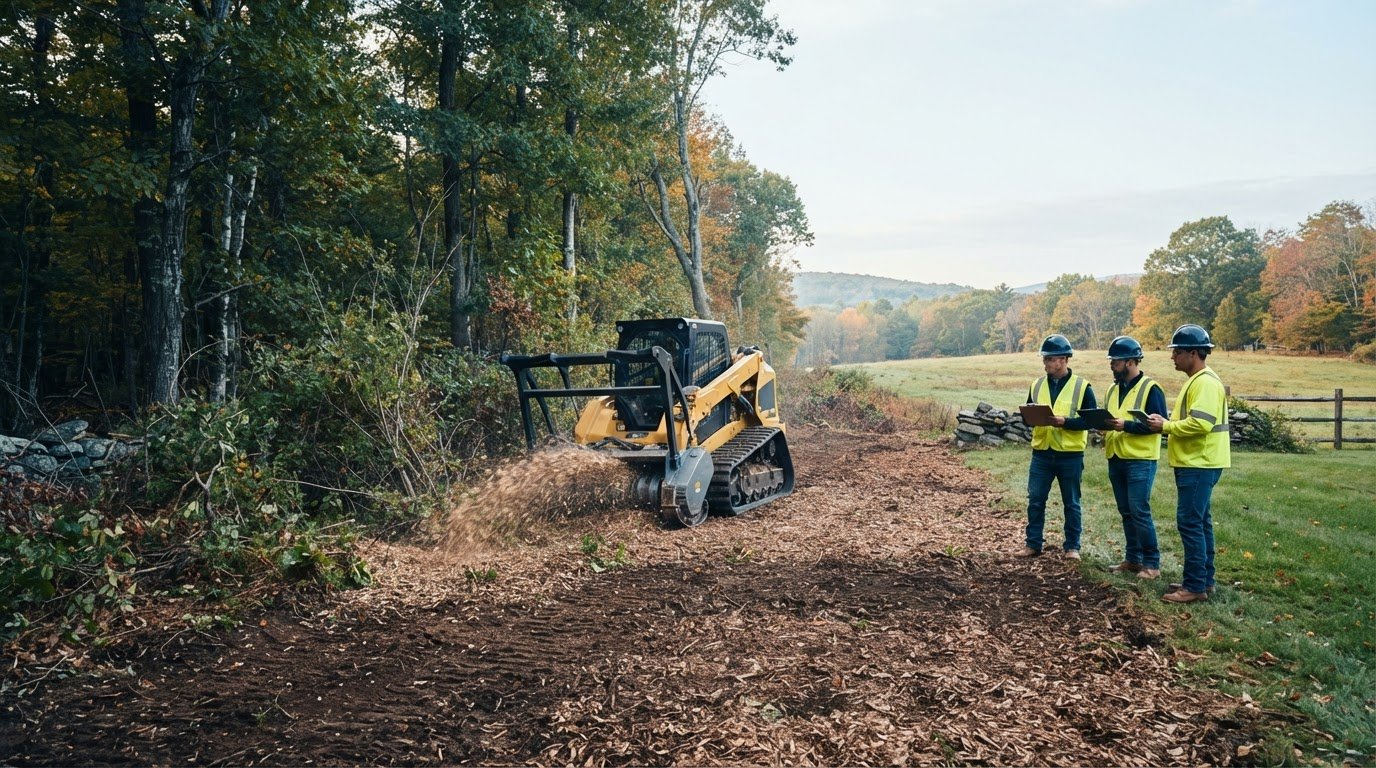
Forestry mulching is a land-clearing method that cuts and processes vegetation into mulch left onsite. Instead of automatically hauling away the cut vegetation, the method reduces and spreads it across the work area. This can suit an owner who wants to manage overgrowth without making debris removal the main goal. In short, forestry mulching turns standing vegetation into mulch that remains on the property.
Whether forestry mulching Connecticut projects are a good fit depends on what’s growing, how the site can be accessed, and what you want the land to become. Clearing brush along a field edge is different from preparing a level building area or leaving a debris-free surface. What is forestry mulching? This overview explains the general practice, but the property’s conditions and intended use should guide your decision.
What vegetation and property goals can forestry mulching address?
Mulching may suit goals such as managing dense brush, reducing overgrowth, or making part of a lot easier to access and maintain. It is worth considering when leaving processed vegetation onsite is acceptable. The size and density of the vegetation matter, as does the space available to reach and work in the area. A narrow entrance, closely spaced trees, or a mix of brush and larger vegetation can affect the work plan.
Be specific about the end use. Managing vegetation can make an area more usable, but it does not necessarily prepare the site for construction. A planned building area may need additional work to achieve the required grade, address stumps, or create the intended surface. Treat these as separate project needs when defining the scope.
When might another land-clearing approach make more sense?
If you want cut vegetation removed, an approach that gathers or hauls material may better match the desired finish than leaving mulch onsite. Clearing vegetation also does not automatically remove unrelated debris already on the property. Identify what should remain, what should be taken away, and whether the finished area needs further preparation.
Slopes, wet ground, restricted access, and wooded edges deserve attention during site planning because they can affect access and ground conditions during the work. They do not automatically rule out a method, but they make a site-specific plan more useful than a one-size-fits-all choice.
- Consider mulching when the main goal is managing vegetation and leaving processed material onsite is acceptable.
- Consider material removal when the desired result requires cut vegetation to leave the property.
- Plan for additional preparation when the end use requires a specific grade, surface, or building area.
The most practical approach is the one that matches the property’s vegetation, access, terrain, and intended finished condition. Define those priorities first so you can compare clearing methods without assuming one approach suits every Connecticut lot.
How forestry mulching works, from site review to the finished ground
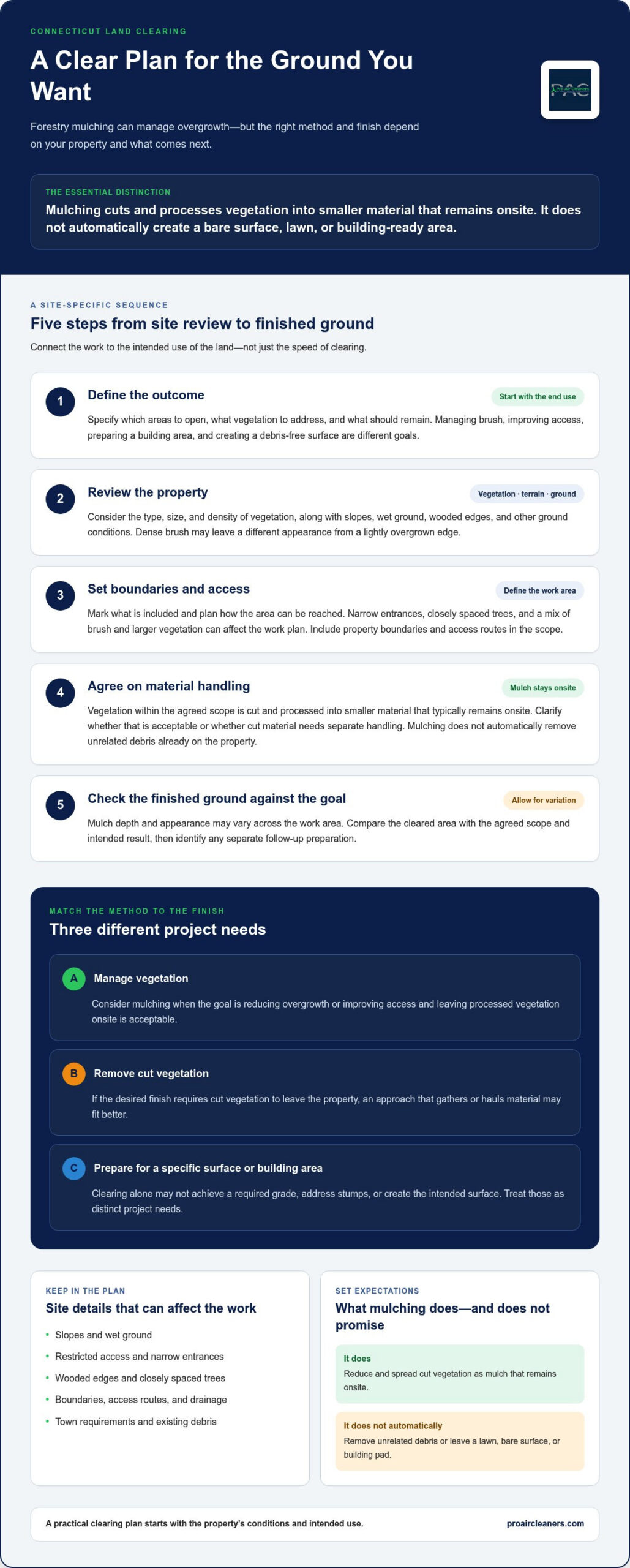
A forestry-mulching project is easier to plan when the desired result is clear before work starts. The planning process generally covers five points: define the goal, review the property, plan the work area and access, process vegetation, and assess the finished ground. Each step connects the work to the land’s intended use instead of assuming one method or finish fits every site.
What happens during a forestry-mulching project?
First, identify which areas should be cleared and what should remain. A site review considers vegetation, terrain, ground conditions, boundaries, and available access. These details help define the work area and how it can be reached. Vegetation within the agreed scope is then cut and processed into smaller material that typically remains onsite. At the end, compare the cleared area with the planned scope and intended result.
Processing vegetation is not the same as removing all debris. Mulching reduces and spreads cut vegetation, while unrelated debris and material intended for hauling need separate consideration. Results can vary with the type, size, and density of vegetation, as well as ground conditions. A dense patch of brush may leave a different appearance from a lightly overgrown edge, so plan around what is actually on the property.
What does the finished site look like?
After processing, mulch remains on the ground, and its depth and appearance may vary across the work area. The result is not automatically a lawn, building pad, or bare surface. For a path or maintained field edge, the priority may be improved access and managed vegetation. A future building area may require a different scope and further site preparation. Describe the intended use in practical terms to set clear expectations about what clearing itself will accomplish.
Before work begins, use this sequence to keep the plan focused:
- Define the outcome. Describe which areas to open, what vegetation to address, and what should remain.
- Review site conditions. Note access points, slopes, wet ground, wooded edges, and other features that may affect the work.
- Set the scope. Mark the work boundaries and clarify whether cut material can remain onsite or needs separate handling.
- Inspect against the goal. Compare the finished area with the agreed scope and identify any distinct needs for follow-up preparation.
This step-by-step approach helps forestry mulching Connecticut property owners connect the method to the actual site, especially when planning work on an overgrown lot. If your goals call for a broader clearing scope or removal of accumulated material, Pro Air Cleaners’ land-clearing service can help shape the project around the property and its intended use.
Forestry mulching vs. traditional land clearing: compare the outcomes
Clearing methods differ in what happens to vegetation after it is cut. Mulching processes vegetation into smaller material that stays on the property, while other approaches may cut and pile it or haul it away. Neither outcome suits every project. Compare how each method handles material and whether its finished condition matches your plans for the land.
How does leaving mulch onsite compare with hauling debris away?
With mulching, processed vegetation remains spread across the work area, so the ground will not look debris-free. That may work for vegetation management when retaining the material is acceptable. A hauling-focused approach gathers and removes cut vegetation, which may better suit a goal of clearing material from the property. Existing household or construction debris is a separate concern: forestry mulching processes vegetation, while dump removal addresses material that needs to be taken away.
The key distinction is simple: mulching leaves processed vegetation onsite, while hauling removes material from the property. This affects both the immediate appearance and what may need to happen next. An owner seeking a more open, manageable area may be comfortable with mulch remaining. Someone preparing a space that needs to be clear of cut material may prioritize removal. Pro Air Cleaners provides dump removal as a separate service for properties with material to remove.
Which clearing method fits your land-use goal?
Start with the intended outcome, then compare how each approach handles vegetation and the site. The table below is a planning guide, not a universal ranking. Suitability depends on vegetation, access, terrain, and the finished condition you want.
| Project priority | Mulching may fit when… | Cutting, piling, or hauling may fit when… | Practical consideration |
|---|---|---|---|
| Managing brush | The goal is to process vegetation and leave it onsite. | Brush needs to be gathered or removed from the area. | Consider how much material will remain and where. |
| Improving access or maintenance | Opening an overgrown area is the primary goal. | A clearer surface or removal of cut material matters more. | Define which paths or areas need to be usable afterward. |
| Preparing for future site use | Vegetation processing is one part of a broader plan. | The work also needs to address material removal. | Construction preparation may require work beyond vegetation clearing. |
For forestry mulching Connecticut property owners, the best choice depends on how material handling fits the next use of the land. If the project calls for a building area or a specific finished grade, do not assume vegetation processing alone will provide it. Define the desired result first, then shape the clearing scope around that outcome.
Planning forestry mulching on a Connecticut property
A useful clearing plan starts with the property, not the equipment or method. Before planning forestry mulching in Connecticut, define how the cleared area will be used and what condition you want it left in. This keeps the scope grounded in practical needs, whether you’re opening access, managing brush, or preparing for a later project.
What should Connecticut property owners prepare before requesting clearing?
Mark the work area and identify what should remain untouched. Property lines, wooded edges, planting areas, fences, and neighboring land can all affect where clearing should stop. If boundaries are not obvious on the ground, clarify them before defining the scope. A property sketch or marked-up aerial image can help show which areas are included.
Access matters, too. Note gate and driveway locations, narrow passages, slopes, soft or wet ground, and obstacles along the route to the work area. These details help show how the site can be reached and where conditions may require extra care. Be precise about the desired finish: a manageable brush area is different from a cleared surface for future construction.
- Work area: Mark the sections to clear and the vegetation or features to preserve.
- Boundaries: Identify property lines, neighboring edges, and sensitive areas.
- Access and terrain: Note entrances, slopes, wet ground, and other site conditions.
- End use: Describe how you plan to use the area and the finished condition you want.
How do local site constraints affect project planning?
Drainage patterns, wetlands, watercourses, and nearby properties can influence where and how clearing should be planned. Sloped ground may affect access and runoff, while wet areas can change how the site is approached. Define wooded edges and neighboring boundaries carefully so the work area is clear.
Local requirements can vary by municipality and property location. Before setting a work plan, check current town requirements with the appropriate local office, such as the town’s wetlands or land-use authority, and consult Connecticut DEEP guidance where relevant. Do not assume that a rule or approval process in one town applies in another. Verify what applies to the specific property and proposed scope.
Use a Connecticut land-clearing planning guide alongside these site-specific notes, and bring your intended use, access details, boundaries, and desired finish together. A clear scope makes it easier to plan the project as a whole rather than focusing only on vegetation.
Ready to discuss a Connecticut property-clearing project? Talk with Pro Air Cleaners about land clearing and shape the scope around your site conditions and goals.
Plan your Connecticut land-clearing project with Pro Air Cleaners
After comparing clearing methods, define a scope that fits your property and what you want to do with it. The right plan depends on the vegetation, access, terrain, boundaries, and desired finish. Forestry mulching may suit some goals, while another land-clearing approach or separate debris removal may better match others. A clear project description keeps the work focused on the outcome you need.
What information helps define a useful project scope?
Start with the property location and the parts of the site you want addressed. Describe the vegetation concerns, such as overgrown brush or areas that have become difficult to use, then explain how you intend to use the area after clearing. Improving access to one section of a lot, for example, calls for a different plan than preparing an area for a future project.
Include practical site details. Gates, driveways, slopes, soft or wet ground, wooded edges, and nearby boundaries can shape how the work area is approached. Note what should stay in place, where clearing should stop, whether cut vegetation may remain, and whether other debris needs removal. These details distinguish vegetation management from removing accumulated material from the property.
- Location and boundaries: Identify the property and define areas to include or preserve.
- Vegetation and intended use: Describe what needs attention and how you plan to use the cleared area.
- Access and terrain: Mention entrances, slopes, wet or soft ground, and other conditions that may affect the project.
- Desired finish and material handling: Explain what you want the site to look like and whether debris removal is part of the goal.
Pro Air Cleaners shapes land-clearing scope around project details rather than assuming every lot needs the same work. The company provides land clearing and dump removal for residential and commercial properties. Explain whether your priority is opening an area, addressing overgrowth, or removing debris to give the project a practical starting point.
What is the next step for a Connecticut property owner?
Use your site notes to choose an approach that matches the property and the intended finished condition. If processing vegetation and leaving mulch onsite suits the goal, that differs from a plan centered on hauling material away. Construction preparation may also involve work beyond clearing vegetation. Spell out these distinctions as you define the scope, and consult the Connecticut land-clearing services guide for related planning context.
Based in New Britain, Pro Air Cleaners serves customers across Connecticut and brings more than 30 years of general service experience. When planning a project, organize the location, site conditions, work area, and desired outcome into a clear description. Discuss your Connecticut land-clearing project.
Turn your clearing goals into a clear next step
Before choosing a method, write down what success should look like on your property. A simple site sketch can show the area to address, places to preserve, and how you plan to use the cleared space. Add notes about access and any material you want removed so the scope accounts for more than vegetation alone.
This preparation makes decisions about forestry mulching Connecticut projects more practical. You can compare the proposed approach with the condition you want afterward instead of focusing only on how the work begins. If your preferred finish changes during planning, revise the scope before work starts. Clear expectations provide a sound basis for moving forward.
Pro Air Cleaners provides land clearing and dump removal for residential and commercial properties. With more than 30 years of experience overall, the team can help shape a project scope around your property’s needs. Start planning your property-clearing project and take the next step toward a more usable site.
Frequently Asked Questions
Is forestry mulching a good choice for every Connecticut property?
No. Forestry mulching Connecticut projects should be planned around the vegetation, terrain, access, drainage, and intended use of the area. It may suit a brushy section you want to manage, but not a site where you need cut material removed or a bare surface. Consider the future use of the area, then identify what should remain and what needs separate attention.
Can forestry mulching remove trees and stumps?
Not necessarily. Forestry mulching processes vegetation, but whether particular trees can be addressed depends on their size, type, site conditions, and the equipment used. Do not assume stumps and root systems will be removed as part of vegetation processing. If you’re planning a driveway, planting area, or building project, list tree and stump requirements separately so the intended finish is clear.
How much does forestry mulching cost in Connecticut?
There isn’t one price that applies to every Connecticut property. The area to be cleared, vegetation density, terrain, access, and desired finish all affect the project scope, as can additional preparation or debris removal. To support a tailored assessment, describe the approximate work area, vegetation, and site challenges. A general per-acre figure may not reflect the conditions or work required on your lot.
What happens to the vegetation after forestry mulching?
Processed vegetation is generally left onsite as mulch rather than removed like hauled debris. Its appearance can vary across the property depending on the vegetation and ground conditions. If you plan to install a garden, establish a lawn, or use the space for another purpose, consider how retained material fits that next step. Identify household or construction debris separately because it is not the same as vegetation processed during clearing.
Can forestry mulching be done on wet or sloped land?
It may be possible, but wet ground and slopes can affect access, equipment movement, and the site’s condition during and after work. A soft area that becomes wetter after rain may need a different plan from a firm slope beside a wooded edge. Point out drainage patterns, soft spots, and steep areas during planning, and account for seasonal ground conditions when defining the work area.
Do I need town approval before forestry mulching in Connecticut?
Requirements depend on the town, property, and proposed work, so do not assume the same process applies across Connecticut. Before setting a start date, describe the work area to the relevant municipal office and ask which current local requirements apply. If wetlands or a watercourse may be nearby, contact the town’s wetlands or land-use authority and review relevant Connecticut DEEP guidance. Verify the requirements for your specific project.
How long does forestry mulching take on a property?
Project duration depends on the size and layout of the work area, vegetation density, access, terrain, and requested finish. A compact, accessible section with clearly marked boundaries may be simpler to plan than scattered areas separated by narrow passages or soft ground. Additional work beyond vegetation clearing can also affect the schedule. Share these details when defining the project scope.