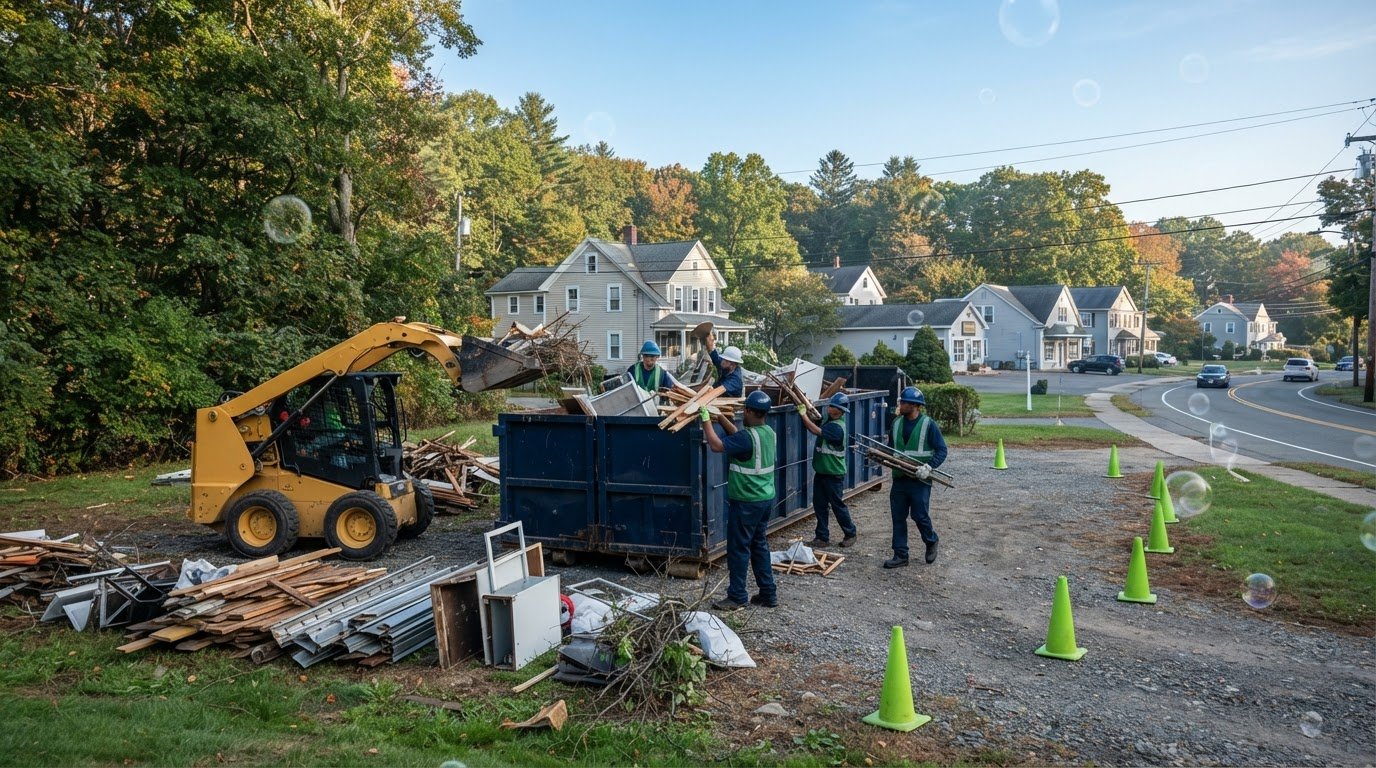
When bulky or accumulated materials are difficult to manage, heavy duty dump removal can help restore usable space on a residential or commercial property. A practical plan starts with the cleanup area, the amount and location of material, site access, and what you want the property to support afterward.
Pro Air Cleaners, based in New Britain, provides dump removal and land clearing across Connecticut, with more than 30 years of company experience. This guide explains what heavy-duty removal can involve, how it differs from land clearing and owner-managed hauling, and what to prepare before work begins. Use the steps below to define the project, flag access constraints, and set priorities for your Connecticut property.
Key Takeaways
- Heavy duty dump removal depends on the amount to clear, where it is located, and how people and vehicles can reach it.
- Define the cleanup goal and identify the areas involved before planning the work.
- Compare professional removal, owner-managed hauling, and land clearing by considering physical effort, coordination, site conditions, and your role.
- Mark access routes and areas that need to stay usable to help reduce avoidable disruption.
- Pro Air Cleaners provides dump removal and land clearing for residential and commercial properties across Connecticut, Massachusetts, and New York.
What Heavy Duty Dump Removal Means for Connecticut Properties
Definition: Heavy-duty dump removal is professional help clearing a substantial accumulation of material from a residential or commercial property. The project scope depends on the size of the cleanup, the material’s location, access to the work area, and how you plan to use the property afterward.
It’s more involved than routine decluttering. A small household cleanup may mean moving a few manageable items. A larger project could involve material across a garage, storage areas, or outdoor work zones. There is no universal item count that defines heavy-duty removal. Consider the full area, the amount to move, and how difficult it is to reach and clear.
Site conditions matter, too. An open driveway and clear work area present different planning needs from a narrow entrance, limited maneuvering room, or material far from an accessible route. Dump trucks come in different forms for different hauling needs; types of dump trucks offers general background, but a vehicle alone doesn’t define a project’s scope. The property layout and the result you want are central.
When a property cleanup becomes a heavy-duty project
Assess the amount to clear, how widely it is spread, and how easily you can reach it. A homeowner preparing a garage and nearby areas for regular use may face a larger task if material has accumulated over time or is difficult to move. On a commercial property, clearing material from several work areas may help restore usable space and support ongoing maintenance.
These are planning examples, not fixed thresholds. If the cleanup feels too extensive to manage through ordinary household sorting and hauling, describe the full area, the accumulation, and the access conditions as part of a larger property-clearing project.
Dump removal and land clearing address different needs
Dump removal focuses on clearing accumulated material from a property. Land clearing addresses outdoor areas that need to be opened or prepared for a planned use. The services are related, but they solve different problems: one removes material already on site, while the other focuses on the condition and usability of outdoor space.
A property owner might need dump removal alone to reclaim a storage or work area. Another project may call for land clearing alone, or both services if accumulated material and an outdoor area each need attention. Start with the end goal, such as maintaining the property or preparing an area for future use, then identify which parts of the site need to change. For outdoor planning, land clearing services in Connecticut can be considered alongside broader property goals.
How Heavy Duty Dump Removal Projects Take Shape
A well-planned heavy duty dump removal project starts with a clear description of the result you want, not assumptions about how the work will unfold. The amount to clear, property layout, access, and nearby activity all affect the scope. Sharing those details early helps focus planning on the areas that matter and makes it easier to discuss the work.
Use this sequence to organize the project:
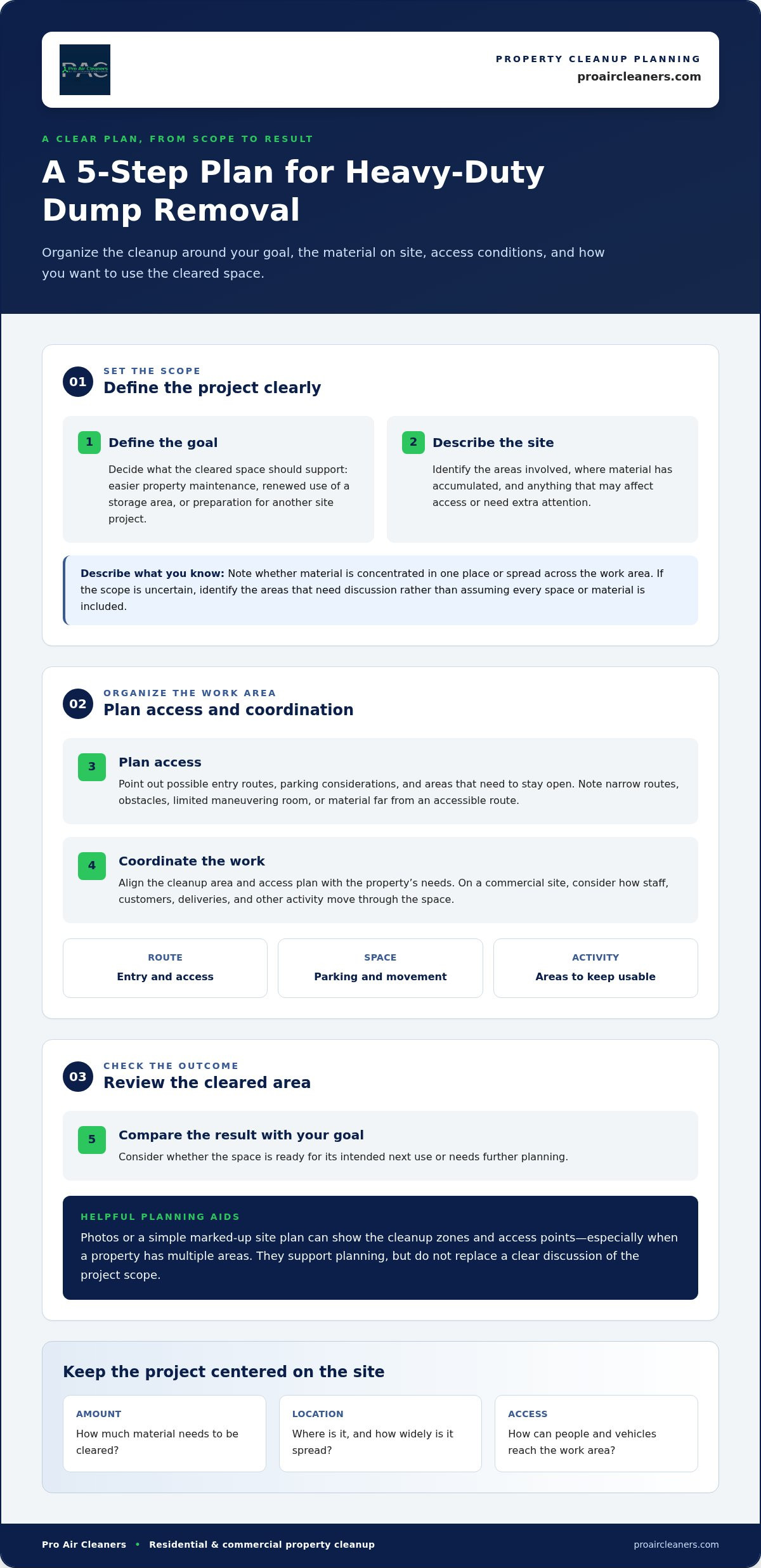
- Define the goal. Decide what the cleared space should support, such as easier property maintenance, renewed use of a storage area, or preparation for another site project.
- Describe the site. Identify the areas involved and where material has accumulated. Note anything that may affect access or need extra attention.
- Plan access. Point out possible entry routes, parking considerations, and areas that need to stay open. Site conditions can affect how the work area is organized.
- Coordinate the work. Align the cleanup area and access plan with the property’s needs. On a commercial site, consider how staff, customers, deliveries, or other activity move through the space.
- Review the cleared area. Compare the result with your original goal and consider whether the space is ready for its intended next use or needs further planning.
Describe the project and the property
Be specific about the location and extent of the cleanup. For example, identify a defined section of a residential property or several areas within a commercial site. Describe what has accumulated and whether it is concentrated in one place or spread across the work area. If the scope is not yet clear, identify what you know and which areas need discussion rather than assuming every material or space is included.
Plan access and the work area
Consider how people and vehicles approach the site, where parking may affect movement, and which entrances or areas must remain accessible. Note narrow routes, obstacles, or nearby activity in your site description. For a business, think through operating hours and customer or staff movement so the work area can be planned with day-to-day operations in mind.
Photos or a simple marked-up site plan can help show the areas involved, especially when a property has multiple access points or cleanup zones. These are useful planning aids, but they do not replace a clear discussion of the project scope. Pro Air Cleaners provides dump removal for residential and commercial properties, with the work planned around the site. Learn about Pro Air Cleaners dump removal and how to organize the project details.
Compare Heavy Duty Dump Removal Options for Connecticut Sites
The right approach depends on what needs clearing, how much physical work is involved, and how much time you can devote to coordination. For Connecticut homeowners and commercial property owners, compare the options by labor, equipment planning, site conditions, and owner involvement to see which best fits the project.
| Option | Labor and equipment coordination | Site conditions and owner involvement |
|---|---|---|
| Professional removal | A service team takes on the removal work, reducing the physical handling the owner must manage. The project scope and site access still need to be discussed. | Useful to consider when the cleanup is substantial, access needs planning, or the owner has limited time or capacity to manage the work. |
| Owner-managed hauling | The owner organizes the labor and hauling method, then oversees the work from preparation through completion. | Can suit a manageable project when the owner has the time, help, and ability to coordinate around the property’s layout and access. |
| Land clearing | Focuses on preparing or opening outdoor areas rather than simply removing accumulated material. Planning depends on the site and its intended use. | Consider it when the goal is to make an outdoor area more usable or prepare it for a future purpose. Define which areas are involved and what the site needs to support. |
Professional removal versus handling the cleanup yourself
The scale of the job can change what feels manageable. A limited cleanup with straightforward access may be easier for an owner to organize, while a larger accumulation or difficult route can increase the physical effort and coordination involved. Consider not only moving the material, but also the time needed to arrange help, plan access, and keep the rest of the property functioning.
Professional removal is a practical option when the project exceeds the time or capacity you can reasonably provide. Owner-managed hauling offers more direct control, but puts more responsibility for organizing labor and the hauling approach on you. Compare the scope, site conditions, and time you can commit before choosing an approach.
Removal versus land clearing
Choose removal when the central goal is clearing accumulated material. Choose land clearing when the goal is preparing or opening an outdoor area. A Connecticut property may need one service or both, depending on whether the challenge is existing material, outdoor site preparation, or a combination. Consider the site’s future use before deciding how broad the project should be. If outdoor preparation is part of the goal, land clearing services in Connecticut are relevant to explore alongside removal planning.
Use heavy duty dump removal as a planning category when the work is substantial, then compare the options against your actual property needs. A clear goal and realistic assessment of your available time can help you choose a manageable path without assuming every cleanup requires the same approach.
Prepare a Connecticut Property for Heavy Duty Dump Removal
Preparation can make heavy duty dump removal easier to coordinate and help reduce avoidable interruptions. Before work begins, clarify which areas are part of the cleanup, how people and vehicles move through the property, and what needs to remain accessible. A short checklist or marked site sketch makes these priorities easier to communicate.
Create a clear site and access plan
Walk the property and note the route from the entrance to the work area. Include details that may affect access, such as narrow passages, slopes, gates, parked vehicles, or other obstacles. Mark the areas to be cleared and those that should remain undisturbed. Clear boundaries help keep the project focused on your priorities.
For a commercial property, consider normal operations as part of the plan. Identify pedestrian routes, customer entrances, staff movement, and work areas that need to stay available. Sharing these details ahead of time helps coordinate cleanup activity with how the site is used.
- Work areas: Identify the specific zones included in the cleanup and any boundaries to preserve.
- Access routes: Note entrances, narrow spots, slopes, and places where parking or other activity may affect movement.
- Property priorities: List the spaces or routes that need to remain accessible during the work.
- Site conditions: Describe anything that could change access, including weather-related ground conditions.
Set priorities before the cleanup begins
Start with the main outcome. You might want to clear a work area, restore usable outdoor space, or make routine property maintenance more manageable. Separate that immediate goal from optional improvements that could be considered later. This distinction helps keep the scope clear, especially when several parts of a residential or commercial property need attention.
Connecticut weather is another practical planning factor. Rain, snow, or thawing ground may affect how accessible parts of the property feel at the time of the cleanup. Note current conditions and any areas that become difficult to reach in wet or icy weather. Include these observations in the site plan instead of assuming the same season creates the same conditions everywhere.
Keep preparation sensible: mark boundaries clearly, communicate access concerns, and avoid assumptions about material handling or disposal requirements. If local handling rules apply to your project, use current guidance relevant to the property and location. For clearer site debris removal planning, write down the intended result, included areas, and any conditions that may affect access.
Once your priorities are clear, learn about planning your property’s dump removal with Pro Air Cleaners, serving residential and commercial properties across Connecticut.
Choose Pro Air Cleaners for Heavy Duty Dump Removal in Connecticut
A substantial property cleanup starts with a clear understanding of what needs attention and what you want the space to support afterward. Pro Air Cleaners provides dump removal and land clearing for residential and commercial properties. Defining the outcome helps frame the project, whether you’re reclaiming a work area or addressing a broader property-clearing need.
Based in New Britain, Pro Air Cleaners serves properties across Connecticut, Massachusetts, and New York. Site layouts and access conditions vary, so planning starts with the specific property rather than assuming every location has the same needs. The company brings more than 30 years of experience to its property-clearing work.
A local property-clearing service for residential and commercial needs
For homeowners, dump removal can address a substantial accumulation that limits how part of the property can be used. For commercial owners, clearing a designated area may support more functional site use or ongoing maintenance. Land clearing serves a different purpose: preparing or opening outdoor space. Depending on the property’s goals, one service may fit the need, or both may be relevant to separate parts of a larger project.
Plan heavy duty dump removal around the property’s actual scope and desired result. The cleanup area, access conditions, and any parts of the site that need to remain usable all help inform the work. Describing these details gives the project a practical starting point without assuming every property requires the same approach.
Take the next step toward a clearer property
A defined scope and access plan help keep priorities clear as the project takes shape. Before discussing the work, consider which areas need attention, what outcome matters most, and whether site activity or access may affect planning. This gives the conversation a useful focus for either a residential or commercial property.
Pro Air Cleaners brings its experience as a Connecticut-based property-clearing provider to projects across its regional service area. Its dump removal and land clearing services support property owners working toward a cleaner, more usable site, with the project shaped around the property and the desired outcome.
Explore dump removal and land clearing with Pro Air Cleaners to take the next step toward a clearer property.
Make Room for What Comes Next
A cleared property is more than an empty space. It can make room for a more useful routine, a better-organized work area, or a future improvement. Before starting heavy duty dump removal, picture how you want the site to function afterward. That future use can keep the project focused and make decisions about scope more purposeful.
You don’t need to have every detail solved before taking the next step. Start with the area that matters most, describe what you hope to change, and note property conditions that could affect the work. A conversation about your goals can help turn a daunting cleanup into a defined property-clearing project.
Pro Air Cleaners provides dump removal and land clearing for residential and commercial properties. A clear goal is a strong place to begin, and the project can be shaped around the property and the outcome you want.
Frequently Asked Questions
What qualifies as heavy-duty dump removal?
Heavy-duty dump removal generally describes a cleanup whose scale or site conditions make ordinary, owner-managed hauling difficult to coordinate. There is no universal threshold based on a specific number of items or material type. For example, a property owner may consider it for an extensive accumulation spread across several parts of a site. Describe the full scope and access conditions to define the project.
Can heavy-duty dump removal help with a commercial property cleanup?
Yes. Heavy-duty dump removal can support commercial property cleanup when accumulated material affects how part of the site is used. A business might be preparing an area for routine operations or making space more functional. Identify the sections involved and how staff, customers, or deliveries use nearby areas, so those operating needs are included in the project discussion.
Is dump removal the same as land clearing?
No. Dump removal addresses accumulated material on a property, while land clearing focuses on opening or preparing outdoor areas. If the goal is to clear an existing accumulation from a defined part of a site, dump removal may fit. If the goal is to prepare outdoor space for a future use, land clearing may be relevant. The intended result helps distinguish the services.
What should I do before a dump removal project begins?
Identify the areas involved and note what should stay accessible or undisturbed. Share relevant site details, such as an entrance that is difficult to reach or activity near the work area. A simple sketch or photos can help show the layout. Clear information helps establish a shared understanding of the project scope.
Can a property cleanup include both dump removal and land clearing?
Yes. A property cleanup can involve both services if the site has accumulated material to remove and an outdoor area that needs preparation. These are distinct goals, so describe them separately rather than treating them as one task. For example, identify which part of the property needs material cleared and which outdoor section is intended for another use.
What happens if the site has limited access for removal work?
Limited access is a site condition to describe early in the project discussion. Note which entrance or route is restricted, what makes movement challenging, and whether the limitation affects only part of the property. Photos or a marked site plan can clarify the layout and help account for the conditions in project planning.
Which areas does Pro Air Cleaners serve for dump removal?
Pro Air Cleaners serves residential and commercial properties in Connecticut, Massachusetts, and New York from its base in New Britain, Connecticut. Access, layout, and other site conditions differ from one property to another, so location alone doesn’t define a project’s scope. Include the property location and a clear description of the cleanup to focus the discussion on the site’s needs.