A layer of dust around supply vents, rooms that smell stale when the heat or AC turns on, and allergy symptoms that seem worse indoors can all raise the same question: how often should air ducts be cleaned? There is no single schedule that fits every home or building. For many properties, a professional duct inspection every few years is sensible, while certain conditions call for cleaning much sooner.
The goal is not to clean ductwork on a calendar just for the sake of it. It is to remove accumulated debris when it is affecting indoor air quality, airflow, HVAC performance, or the comfort of the people using the space.
How Often Should Air Ducts Be Cleaned in a Typical Home?
A practical starting point is to have residential air ducts professionally inspected every 3 to 5 years. Some homes can go longer without a full cleaning, especially if they have a well-maintained HVAC system, high-quality filters changed on schedule, no pets, and no unusual dust or moisture concerns.
Other homes need service closer to every 2 to 3 years. Families with pets, young children, allergy or asthma concerns, smokers, heavy outdoor pollen exposure, or frequent construction dust often see faster buildup. Connecticut, Massachusetts, and New York homes also spend long stretches closed up during heating and cooling seasons, which can make indoor dust and odors more noticeable.
A visual inspection is more useful than guessing. Ducts are largely hidden, and a vent cover alone does not tell the whole story. A trained technician can inspect accessible components, look for debris, check airflow concerns, and use video inspection when appropriate to show what is inside the system.
Situations That Call for Duct Cleaning Sooner
Certain events can put more dust and contaminants into a duct system in a short period. If any of the conditions below apply, it is worth scheduling an inspection rather than waiting for a routine interval.
- After remodeling, repairs, or new construction. Drywall dust, sawdust, insulation fibers, and other fine debris can move through return vents and settle in ductwork.
- After moving into a previously occupied property. You may not know whether the prior owner maintained filters, had pets, smoked indoors, or addressed moisture problems.
- When there is visible mold-related growth or water damage. Moisture must be corrected first. Cleaning without solving a leak, drainage problem, or humidity issue can allow the problem to return.
- When pests have entered ductwork. Rodent droppings, nesting materials, insect activity, and unusual odors require prompt attention and proper cleanup.
- When dust returns quickly after cleaning. Some household dust is normal, but heavy buildup near registers or on furniture may point to a dirty system, leaky ducts, inadequate filtration, or another HVAC issue.
- When airflow has noticeably changed. Weak airflow in certain rooms can be caused by debris, but it can also come from damaged ducts, closed dampers, a failing blower, or an undersized system. Inspection helps identify the real cause.
Not every odor or allergy symptom means ducts are the source. Carpets, upholstery, damp basements, pets, filters, and outdoor air can all play a role. That is why a professional evaluation should focus on evidence instead of making broad promises.
Signs Your Ductwork May Need Attention
The clearest sign is visible debris around registers combined with a dusty, stale, or musty smell when your system runs. You may also notice more frequent filter clogging, dust blowing from vents, inconsistent room temperatures, or family members feeling uncomfortable indoors.
For property managers and commercial facility operators, complaints from occupants can be an early warning. An office, retail space, or multifamily building may have dusty vents, uneven cooling, recurring odors, or equipment that seems to run longer than it should. These issues deserve an inspection because poor airflow can affect both occupant comfort and operating costs.
If you see signs of suspected mold, do not simply spray a fragrance or cover the vent. Mold-related contamination requires a careful approach that includes finding and correcting the moisture source. Duct cleaning can be part of the solution, but it is not a substitute for repairing leaks, controlling humidity, or addressing damaged insulation.
What Professional Air Duct Cleaning Should Include
Effective duct cleaning is more than vacuuming around vent covers. A proper service should address the supply and return sides of the system and use equipment designed to capture loosened debris rather than push it farther into the home.
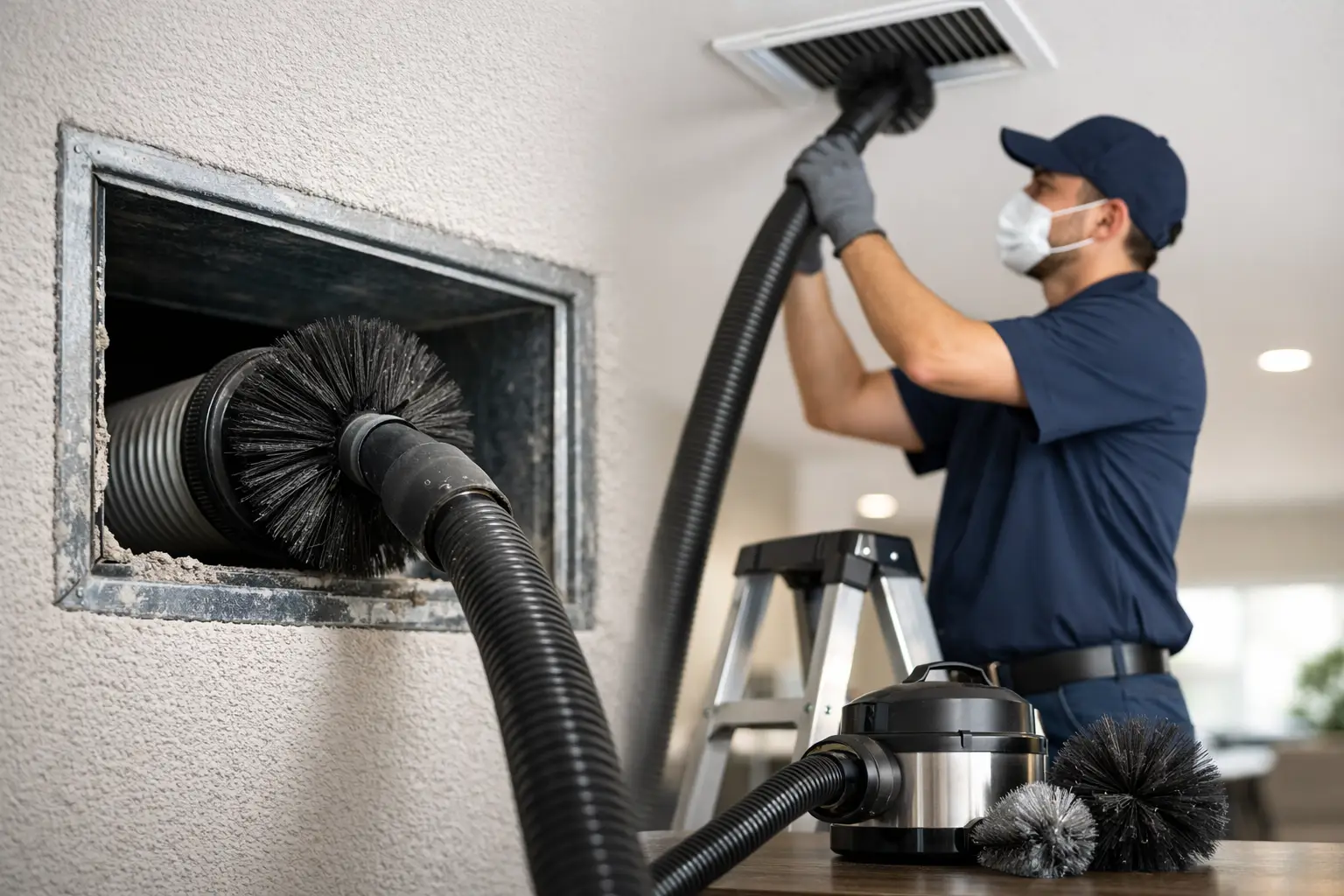
Professional technicians generally use controlled agitation tools, such as brushes or air-powered equipment, to dislodge buildup from accessible duct surfaces. A powerful vacuum system with HEPA filtration helps contain dust, allergens, and fine particles during removal. Registers, grilles, and accessible HVAC components may also be cleaned based on the condition of the system.
Post-cleaning inspection matters. It gives the homeowner or facility manager a clear view of the completed work and can reveal issues that cleaning alone cannot fix, such as disconnected duct sections, damaged vents, excessive moisture, or deterioration around a return. A video inspection can be especially helpful because it replaces guesswork with visible evidence.
Be cautious of unusually low offers that promise to clean an entire system without inspecting the property or explaining the process. Ductwork size, access, contamination level, number of systems, and needed repairs all affect the work involved. Clear scope and transparent pricing protect you from surprise charges and incomplete service.
Cleaning Helps, but Maintenance Controls Buildup
Duct cleaning works best as part of regular HVAC and property maintenance. Replacing filters on the schedule recommended for your system is one of the simplest ways to reduce airborne particles before they enter return ducts. A clogged filter can restrict airflow and force heating and cooling equipment to work harder.
Keep supply and return vents open and unobstructed, and vacuum registers as part of normal cleaning. If your home has persistent humidity, condensation, or musty odors, address those conditions early. Moisture is the bigger concern because it can support mold-related growth and damage building materials.
It also helps to keep related ventilation systems on their own maintenance schedules. Dryer vents should typically be cleaned at least once a year, and sooner for large households, long vent runs, or heavy laundry use. Lint buildup is a fire risk and can make a dryer run longer. Bathroom vents and kitchen exhaust systems also need attention when dust, grease, moisture, or weak exhaust becomes apparent.
A Different Schedule for Commercial Properties
Commercial duct cleaning schedules depend on how the building is used. A low-traffic office may follow an inspection-based schedule similar to a home, while a busy multifamily property, retail space, daycare, medical setting, or restaurant may need more frequent attention. Higher occupancy means more dust, fibers, allergens, and wear on filters and ventilation equipment.
Restaurants require special attention to kitchen hood and exhaust cleaning because grease accumulation presents a distinct fire and sanitation concern. Landlords and property managers should also consider duct inspections between tenants when a unit has had smoking, pets, renovation work, odors, pest activity, or water damage.
Keeping service records is useful for commercial facilities. It creates a maintenance history, helps budget for future work, and makes it easier to spot recurring airflow or moisture problems before they become costly repairs.
Choose Cleaning Based on Conditions, Not Fear
Air ducts do not need to be cleaned every year in every property. But waiting until a system is visibly dirty, smells unpleasant, or struggles to move air can mean more discomfort and more strain on HVAC equipment. The most sensible approach is a periodic inspection, followed by cleaning when the system’s condition supports it.
Pro Air Cleaners can help homeowners, landlords, and facility managers evaluate ductwork with trained technicians, HEPA-filtered equipment, and post-cleaning inspection options. If persistent dust, odors, allergies, moisture concerns, or reduced airflow are affecting your property, a clear inspection is the right next step – and a cleaner, better-performing ventilation system is a practical result worth protecting.