
The biggest clearing decision is often what stays, not just what goes. For lot clearing in Stamford, CT, a crew can remove selected trees, brush, and other vegetation to prepare a property for its next use. The right scope depends on the site and the features you want to preserve.
Before work begins, define the area to be cleared, identify trees and landscape features to keep, and decide how debris will be handled. A clear scope makes it easier to compare estimates and plan for tree removal without overlooking important details.
This guide explains how to prepare your property, what to look for in a clearing contractor, and which project details can affect an estimate. You’ll also learn how terrain, access, vegetation, and debris removal shape the work, so you can approach your Stamford project with a practical plan and clearer expectations.
Key Takeaways
- Define the clearing area and mark trees or site features to preserve before work begins.
- Prepare for a building site by clearing personal belongings, surveying the property, and planning how debris will be handled.
- Compare written estimates by reviewing scope, labor, equipment, access, debris handling, and possible permit needs.
- Confirm local permit requirements before tree removal or significant land changes, and make sure the written agreement sets out costs, timing, and scope changes.
- After the property work, consider whether indoor air duct, dryer vent, or bathroom vent cleaning or repairs are also needed.
Need a pro for your land clearing project in Stamford, CT?
For lot clearing in Stamford, CT, the right approach depends on the property’s intended use, vegetation, terrain, and features to preserve. Residential yards, commercial sites, and industrial parcels each need a defined scope.
Residential, Commercial, and Industrial Clearing
Residential land clearing can open space for a home, driveway, garden, or landscaping. Commercial projects may need access areas, parking spaces, or building footprints prepared, while industrial sites can require larger work zones and careful equipment access. Define the clearing limits and identify any trees, boundaries, or landscape features to keep.
Before comparing land clearing services, match the planned work to the property’s intended use. A homeowner might need brush removed around a future patio, while a business may need a clear route for site equipment.
Land Leveling and Clearing Costs
Land leveling can prepare a cleared area for landscaping or construction, but the required finish depends on its intended use. A garden may need a different surface from a building site, so specify whether the project includes vegetation removal, grading, or both. Terrain, access, vegetation density, and debris handling all affect the work.
There isn’t one reliable average clearing cost per acre for every Stamford property. The price depends on the property and is provided after a quote request; acreage, slope, access, tree size, and debris disposal shape the estimate.
Clearing Methods and Local Providers
Forestry mulching grinds brush and smaller trees into mulch on site, while excavation removes vegetation and may disturb or reshape more soil. In Connecticut, the right method depends on the intended result, ground conditions, and debris plan. Mulching can suit selective vegetation removal; excavation may fit projects that also require ground preparation.
Clearing companies may handle different property types and scopes. Compare the work described, equipment suited to the terrain, and whether debris removal is included or material stays on site. These details make estimates easier to compare.
Permits and Inland Wetlands Rules
Before significant land changes or tree removal begin, Stamford property owners should check local permit requirements. Inland wetlands rules may apply when work is near wetlands or associated areas, so determine whether the parcel or proposed activity falls under local requirements before finalizing the scope.
For example, mark the proposed clearing area on a site plan and note nearby wetlands before scheduling work. Include any required approvals in the project timeline, and don’t assume a routine yard project follows the same process as a larger site-clearing job.
What preparation steps should homeowners take before land clearing begins?
Good preparation gives the crew a defined work area and helps protect features you want to keep. For a new construction site, organize property information, equipment access, debris handling, and approvals before work begins.
Building and New Construction Site Preparation
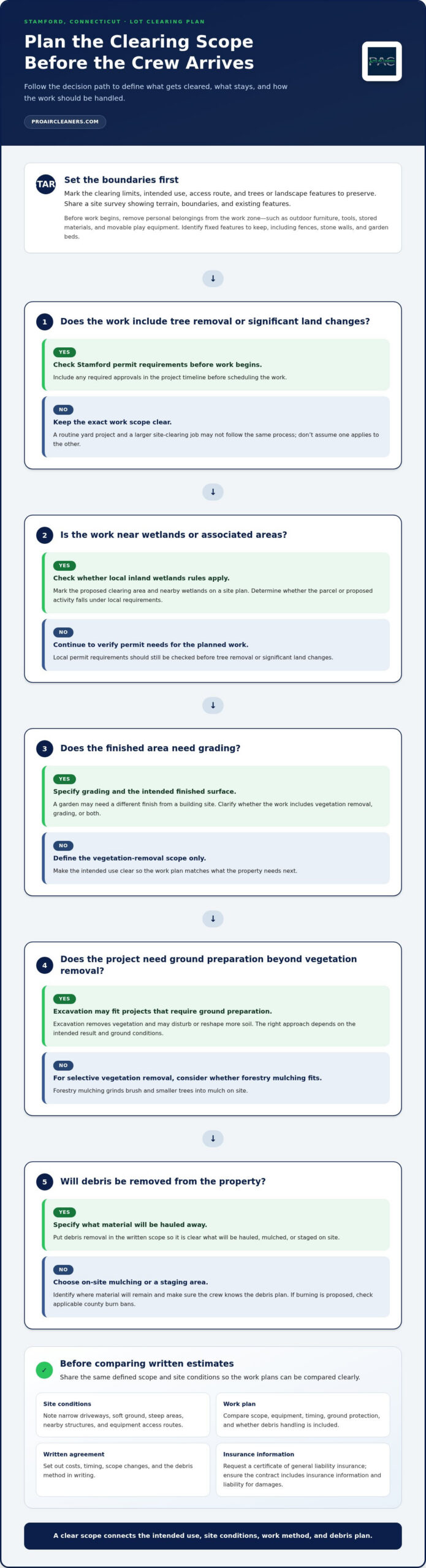
Start by defining the scope: mark the clearing limits, intended building area, access route, and trees or landscape features to preserve. A site survey can show how the terrain, boundaries, and existing features relate to the planned work. Share that information with the clearing team so the work aligns with the property’s construction plans.
Remove personal belongings from the work area, including outdoor furniture, tools, stored materials, and movable play equipment. Identify fixed features such as fences, stone walls, and garden beds that should remain. Marking a garden edge, for example, distinguishes protected landscaping from brush designated for removal.
Before scheduling, consider how the cleared area will be used. A building footprint may need different preparation from a future lawn or garden. Clarify whether the project includes vegetation removal only or grading too, since those tasks affect the sequence of site work.
Debris Removal and Excavation Preparation
Decide how branches, brush, and other debris should be handled. The plan may involve hauling material away, mulching it in place, or staging it on site. If burning is proposed, check applicable county burn bans before choosing that approach.
Preparation also depends on access and terrain. Identify narrow driveways, soft ground, steep areas, and nearby structures, since these can affect equipment routes and debris staging. Sharing these details helps the crew plan the work sequence and limit unnecessary disturbance.
- Mark the boundaries and features to preserve before the crew arrives.
- Clear belongings from the work zone and share the site survey.
- Set out the debris method, excavation needs, and intended finished use.
- Check local permit requirements before significant land modifications begin.
- Request a certificate of general liability insurance, and ensure the contract includes insurance information and liability for damages.
For debris removal, make sure the written scope explains what material will be hauled, mulched, or staged. A clear agreement also helps distinguish clearing from later construction work. If clearing leaves unwanted material to remove, dump removal can be a practical next step.
Contractor services, experience, and estimates
For a Stamford clearing project, compare the work plan as closely as the estimate. Scope, equipment, timing, and ground protection can explain why proposals differ.
Contractor Experience and Service Areas
A company’s stated service area indicates whether it handles local residential, commercial, or larger site projects in Stamford. A listing alone doesn’t show whether its equipment suits your terrain or its experience matches your scope. Look for a work description that identifies vegetation to remove, areas to preserve, access needs, and debris handling. These details connect the proposed work to your property rather than relying on general claims.
Environmental care matters too. Selective clearing removes chosen vegetation while retaining trees or other features marked for preservation. Phased work and suitable equipment can reduce soil disturbance, while erosion controls and debris recycling can help limit environmental impacts. These measures are especially relevant on sloped ground or near sensitive areas.
Contracts, Scope, Timelines, and Costs
A written contract should define the work scope, completion timeline, costs, payment schedule, and terms for unexpected conditions or scope changes. The estimate should itemize labor, equipment, debris handling, site access, and any required permits. Read exclusions carefully: a Stamford estimate reported on June 1, 2018 excluded disposal fees, stump removal, mature tree removal, structure demolition, heavily sloped terrain, and site preparation and grading for house construction.
Project duration depends on weather, site accessibility, terrain, vegetation density, and whether work is selective or total clearing. A typical 5-acre clearing job takes 2-5 days; a small, obstacle-free site may take a few days, while a larger, more challenging project may take weeks. Put the expected schedule and scope-change terms in writing.
Comparing Contractor Quotes
Request 2-3 quotes to compare the same defined scope, rather than comparing totals for different work. A quote should make clear what happens to debris and whether equipment access or permits affect the work.
Use a short comparison checklist: included clearing, preserved features, equipment, debris plan, site access, timeline, and permit costs. Matching those details reveals whether a lower estimate leaves out work another proposal includes. For a clearer scope, describe the intended result and the ground conditions in your land clearing project request.
Free property assessments and written estimates
A property assessment turns visible site conditions into a defined clearing scope. For a Stamford lot, document the work area, trees and shrubs to remove, features to preserve, access route, and debris plan before reviewing an estimate.
“Free estimate” describes the charge for preparing an estimate, not the work it covers. A written estimate is useful only when it clearly identifies tasks and exclusions. Compare its scope with your intended result, such as opening a backyard for landscaping or clearing vegetation for construction.
An estimate for a Stamford property depends on the site, not acreage alone. Slope, ground conditions, tree size, brush density, equipment access, and debris handling can change the work involved. A sloped parcel with mature trees and limited access, for example, needs a different plan from level ground covered mainly by shrubs.
Before requesting an estimate, prepare a concise property brief. Include a site map or marked aerial view, the clearing zone, trees or landscape features to retain, and the intended use afterward. Note narrow driveways, soft ground, fences, or nearby structures, since these can affect equipment movement and cleanup.
- Define the scope: Identify whether the work covers brush, selected trees, stumps, or broader vegetation removal.
- Describe the site: Note slopes, access limits, dense growth, and areas requiring selective clearing.
- Specify debris handling: State whether material should be hauled away, mulched in place, or staged.
- Review exclusions: Look for disposal, stump removal, mature tree removal, grading, and permit-related items.
Ask for labor, equipment, debris handling, site access, and required permits to be listed separately in the estimate. This makes it easier to see whether cleanup and removal are included or treated as separate work. A clear scope also helps prevent confusion if site conditions change after clearing begins.
The estimate depends on the property, including acreage, terrain, vegetation, access, and debris handling. An assessment can help describe these factors, but it should not replace written terms. Before approving the work, compare the estimate with the final scope, timeline, payment schedule, and process for unexpected conditions or changes.
Stamford CT permits required for tree removal and land clearing
Stamford property owners should check local permit requirements before significant land modifications begin. Whether tree removal or clearing needs approval depends on the proposed work and site conditions, so identify the exact work area before setting a start date. Pay particular attention to work near wetlands or watercourses, since location can affect applicable requirements.
Begin with a marked site plan showing the parcel, clearing limits, trees to remove, and features to preserve. Note nearby wetlands, watercourses, slopes, and drainage paths. These details clarify the proposed activity and support a focused discussion with the appropriate Stamford municipal office about applicable permits.
List specific activities rather than describing everything as “site clearing.” For example, separate tree removal, brush clearing, stump work, grading, excavation, and debris handling. Distinguishing selective tree removal from broader land disturbance gives officials clearer information and helps align the work scope with approvals.
- Mark the proposed work zone and trees or landscape features to retain.
- Identify wetlands, watercourses, drainage areas, and steep sections on the parcel.
- Describe each planned activity, including clearing, grading, or excavation.
- Ask which local approvals apply before equipment or tree crews arrive.
- Include permit responsibilities and approval timing in the project schedule.
For work near inland wetlands, establish the boundary and proposed activity before finalizing the clearing plan. Don’t assume a project outside a visible wet area has no related review requirements. When seeking guidance, explain the location, access route, and planned ground disturbance, then keep the resulting instructions with the project documents.
Describe tree removal clearly. Identify the trees to be removed, where they stand, and whether the work changes the site beyond vegetation removal. If burning debris is proposed, check applicable county burn bans before choosing that disposal method. Record the chosen approach in the written scope.
Once approvals and work boundaries are clear, align the field plan with the permitted scope. Keep a copy of the site plan, approvals, and written work description accessible during the project. For the clearing phase, discuss land clearing for your property as part of a documented site plan.
Tree removal requirements depend on the proposed work and property conditions. Identify the trees and work area, then ask the appropriate Stamford municipal office which local approvals apply. Pay particular attention to work near wetlands or watercourses, where location may affect the requirements.
Pro Air Cleaners: Air Duct Cleaning
Pro Air Cleaners provides air duct cleaning for homeowners planning outdoor property work who also want to address indoor ventilation. Lot clearing and indoor vent maintenance are separate tasks, but both can support broader property upkeep.
Turn to Pro Air Cleaners when air ducts need cleaning, a dryer vent needs cleaning, or an air duct vent needs repair or replacement. Bathroom vents can also be cleaned or replaced. These services maintain the vents themselves and are separate from the clearing plan for your Stamford property.
If your property also needs indoor vent service, contact Pro Air Cleaners to discuss your needs.
Plan the next stage of your property
Once the land is ready for its intended use, consider how the rest of the property supports daily comfort. Planning lot clearing in Stamford, CT, can be one part of maintaining a home or building, from outdoor spaces to ventilation.
Pro Air Cleaners supports indoor maintenance with air duct cleaning, dryer vent cleaning, and air duct vent repairs and replacements. These services address different needs from exterior clearing and can help when you’re also planning care for your home’s vents.
If indoor vent maintenance is part of your next step, contact Pro Air Cleaners to discuss the service that fits your needs. A thoughtful plan can help you move forward with a property that feels cared for inside and out.
Frequently Asked Questions
Are Land Clearing Companies certified or regulated by any authority?
Contractor insurance and project permits serve different purposes. In Stamford, homeowners planning significant land modifications should check applicable local permit requirements before work starts. You can also request a certificate of general liability insurance and ensure the written contract identifies insurance information and responsibility for property damage. These steps clarify oversight and accountability for your project.
Can land clearing impact the environment, and how do companies mitigate this?
Yes. Clearing can destroy habitat, contribute to soil erosion, and pollute waterways if disturbed soil or debris reaches them. Selective clearing can preserve chosen trees and vegetation, while erosion controls help limit soil movement. Phased work and equipment suited to the site can reduce ground disturbance; recycling debris can keep usable material out of disposal streams. For example, a plan can retain vegetation along a drainage area while clearing only the intended building zone.
How do Land Clearing Companies address common challenges during the process?
Crews adjust the work plan to terrain, site access, weather, vegetation density, and whether clearing is selective or total. A narrow entrance may limit equipment choices, while steep ground can require a more controlled sequence. Phased clearing and suitable machinery can help reduce soil disturbance. If unexpected conditions arise, the contract’s scope-change terms should guide how work and costs are handled before the plan changes.
How long does land clearing take for a typical 5-acre lot?
A typical 5-acre land-clearing job takes 2-5 days, depending on terrain, vegetation density, and weather. That estimate can shift if access is difficult or the work requires selective clearing rather than removing vegetation across the full area. A property owner can make scheduling clearer by defining the work zone and intended clearing method in advance. Ask that the expected timeline and process for delays appear in the written agreement.
What should homeowners look for in a contract with a Land Clearing Company?
A useful contract states the exact work area, vegetation to remove, features to preserve, expected completion timeline, total costs, and payment schedule. It should also explain responsibility for property damage and how unexpected conditions or scope changes will be handled. If buried debris or an unmarked boundary changes the planned work, written change terms help both parties agree on adjustments before extra work proceeds.
What’s included in a land clearing quote?
A clear quote explains the planned work and its assumptions, not just a total. Look for separate details about labor, equipment, access, debris handling, and required permits. It should also say what happens to stumps, mature trees, and material left on site. If your goal is a clean building area, clarify whether the quote includes hauling debris away or leaves it staged for later removal.
Why Choose Professional Tree & Land Services?
Professional tree and land services can coordinate vegetation removal with the property’s intended use, helping avoid clearing areas that should remain protected. They can also plan equipment access, debris handling, and work order around terrain and site constraints. A homeowner preparing a backyard for landscaping may need selective brush removal, while a construction project may require a different clearing sequence and ground preparation.