
A clean-looking vent doesn’t show what has collected inside the ductwork. Professional air duct cleaning in Hartford, CT can remove accumulated debris from accessible parts of the system. Dryer vent cleaning addresses a separate concern, since dryer fires cause millions of dollars in property damage each year. Cleaning is most useful when there’s a specific reason for it, rather than as an automatic fix for every indoor air concern.
It’s reasonable to want a cleaner, more comfortable home and to understand what a service can accomplish before scheduling. A thorough cleaning can remove dust and debris from accessible ductwork, but it isn’t a guaranteed cure for allergies or a promise of lower energy bills.
This article explains why professional cleaning matters, what can affect an estimate, and how to compare the scope of work behind each quote. You’ll also learn how duct cleaning may relate to indoor air quality and system performance, what signs can help guide your timing, and when service is a practical next step.
Key Takeaways
- Compare estimates by the areas and components included, not just the bottom-line figure; the scope of work is key to understanding the value.
- Look for visible signs of dust buildup or airflow concerns to help decide whether duct cleaning is timely for your home.
- Professional cleaning can remove debris from ductwork, but it shouldn’t be treated as a guaranteed fix for every air-quality or efficiency concern.
- Duct Diagnostics says most homes benefit from professional air duct cleaning every 3-5 years, with household conditions helping determine the right timing.
- Learn what a thorough service covers and how vent cleaning or repairs may address concerns beyond the ducts themselves.
Why is it important to hire a Connecticut HVAC duct cleaning service?
Professional duct cleaning can remove accumulated debris from accessible parts of a home’s duct system. In Hartford and across Connecticut, a useful first step is to identify the concern and define which components need attention.
Visible debris inside registers, dust collecting around supply vents, or particles blowing from a vent can prompt an inspection. These signs don’t prove that the entire duct system needs cleaning. Note which rooms show the issue and whether it returns after you clean the register. That record helps you describe the concern clearly.
Before work begins, the cleaning scope should be clear. It should identify the areas to be cleaned, the access points, and any vent components included. This matters because “duct cleaning” can mean different things in different homes. Ask for the scope in writing and compare the listed tasks, not just the general service label.
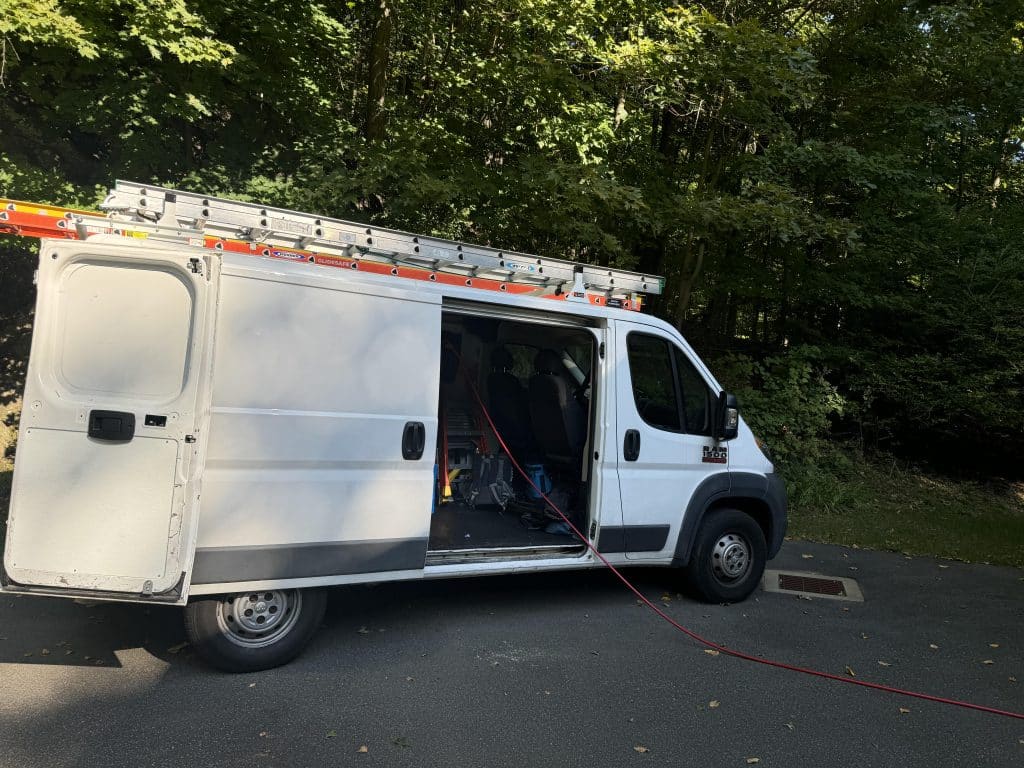
How long does air duct cleaning take? One customer report described technicians spending about 6 hours cleaning a home’s zones and dryer vent. That example shows why the home’s layout and included components matter, rather than establishing a standard duration for every job.
Customer Reviews and Service Practices
Customer reviews can help readers understand how a service communicates and organizes its work. Look for specific descriptions of the areas cleaned, the visit’s progress, and how technicians treated the home. One reported job involved several home zones and a dryer vent, with about 6 hours spent cleaning. Treat that as one customer’s experience, not a timing estimate for every Hartford property.
Clear communication matters alongside the cleaning itself. A useful process explains the work area, how nearby rooms will be protected, and what the cleaning addressed. If the concern is limited to one room’s vent, for example, distinguish that register from the broader duct system. A clear explanation helps you understand what the service does and doesn’t address.
NADCA Cleaning Standards
NADCA is the National Air Duct Cleaners Association. Its air duct cleaning standards provide a professional framework for assessing and cleaning HVAC systems. You can use those standards as a reference when comparing a proposed scope, but the name alone doesn’t show what a specific visit includes.
Review the written scope for the system areas covered, the cleaning approach, and how the work will be explained afterward. Ask how the plan addresses your specific concern, such as visible debris at a supply register. A defined process makes it easier to understand whether the proposed cleaning fits your home’s needs.
Service planning in the Hartford area depends in part on the property’s location and layout. Across Connecticut, homes vary in duct access, system design, and the number of rooms connected to the ductwork. These details affect how technicians plan the work and which sections they can reach. Share your location and describe the affected rooms when discussing service.
Professional attention is especially useful when debris is visible inside vents, airflow concerns affect multiple rooms, or cleaning needs extend beyond the duct system. Dryer vent cleaning addresses a separate pathway from household air ducts, so describe that concern separately. A focused explanation helps match the cleaning service to the issue and supports a healthier home environment.
Comparing estimates and hiring professionals
Estimates are easiest to compare when they describe the same work. Review the scope, areas included, and factors that could change the quote.
Duct Cleaning Costs and Estimates
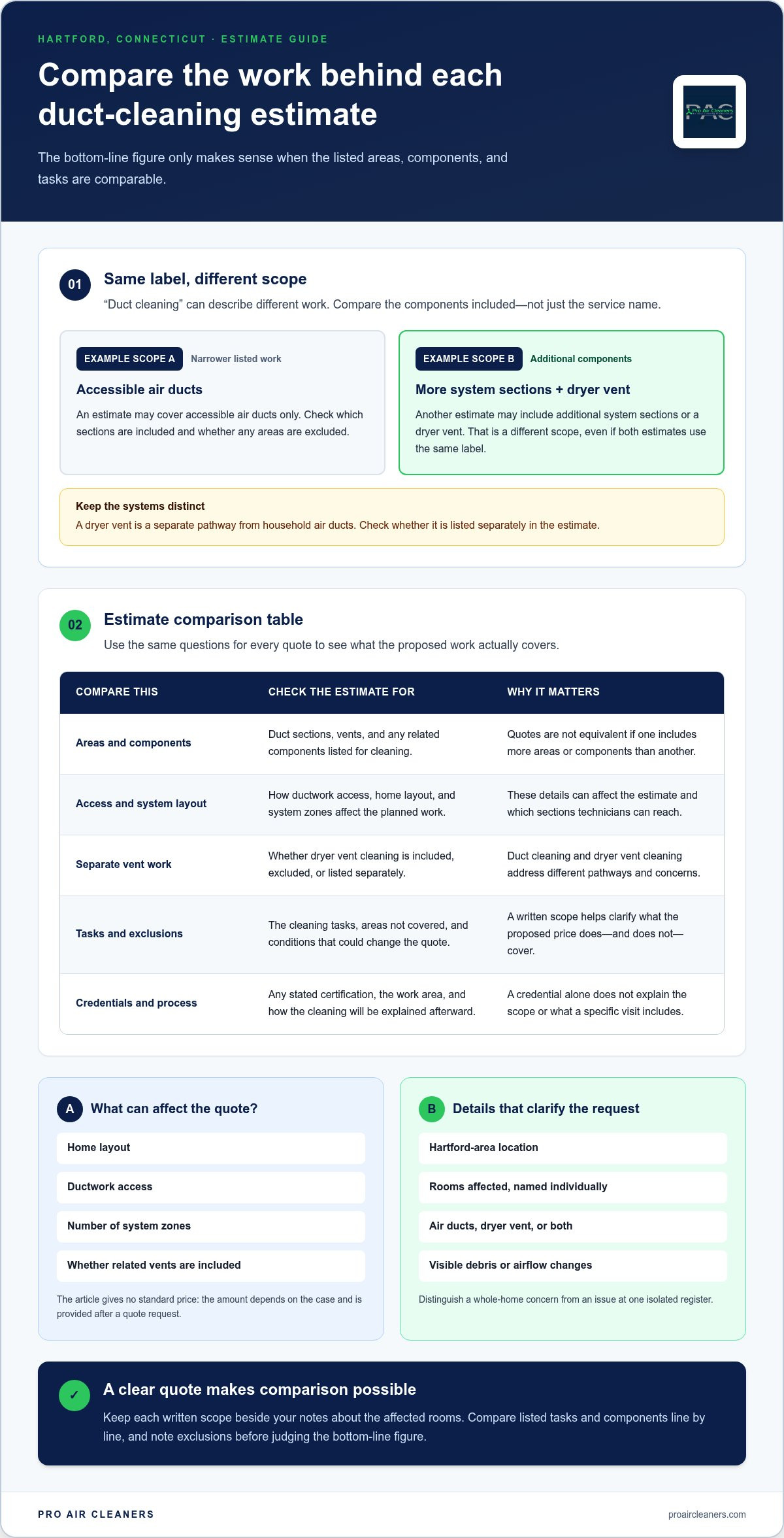
The price depends on the case and is given after a quote request. Cost factors include the home’s layout, ductwork access, number of system zones, and whether the requested scope includes related vents. Compare estimates only after checking that each describes the same components and tasks.
For example, one estimate may cover accessible air ducts, while another includes additional system sections or a dryer vent. Those are different scopes, even if both use the label “duct cleaning.” Note any exclusions and compare the work line by line instead of assuming the lowest figure covers equivalent service.
Upfront Pricing
An estimate should make the scope understandable before work begins. Look for a description of the ductwork or vents included, the cleaning tasks, and any conditions that could change the quote. This helps you judge whether the proposed service matches the airflow concern or visible buildup you want addressed.
If an estimate mentions certified technicians, the credential and its relevance should be clear in writing. Certification alone doesn’t explain what the cleaning covers. A useful comparison also considers how the work area is defined and whether additional components, such as a dryer vent, are listed separately.
Online Estimate Requests
An online estimate request is more useful when it describes the property and concern clearly. Include the Hartford-area location, affected rooms, whether the issue involves air ducts or a dryer vent, and any visible debris or airflow changes. These details help define the work you’re requesting.
Before submitting a request, distinguish between a whole-home concern and one isolated register. A clear description keeps separate needs, such as ductwork cleaning and dryer vent cleaning, from getting mixed together. If several rooms are affected, name them individually so the estimate can reflect the areas under discussion.
Once you have an estimate, keep its scope alongside your notes about the home. Compare included areas, stated exclusions, and how each item relates to the concern. This gives you a practical basis for weighing cost against the described work, without assuming two estimates cover the same service.
For a service-specific starting point, review air duct cleaning information and describe the areas you want addressed in your estimate request.
HVAC system efficiency and indoor air quality
Duct condition is one factor in indoor air quality and HVAC performance, but it isn’t the only one. In a Hartford home, compare what you notice at the vents with airflow, filter condition, and room-to-room comfort.
HVAC System Efficiency
Airflow depends on several parts working together, including the filter, blower, coils, and ductwork. A restricted or dirty duct section can contribute to airflow problems, but cleaning alone won’t fix a damaged duct or equipment issue. Note whether, for example, a bedroom stays stuffy while the living room feels comfortable, then describe that pattern during an HVAC assessment.
Cleaning may remove loose debris from accessible duct surfaces, addressing one possible source of obstruction. It doesn’t establish that the system will use less energy or operate more efficiently. Record which rooms have weak airflow and whether the issue changes when the system runs. Those observations can help distinguish a duct concern from another performance problem.
Indoor Air Quality Concerns
Hartford residents may notice indoor air concerns as dust returning quickly after cleaning, odors near a supply vent, or irritation that seems worse in a particular room. These signs can have different causes, including household activities and ventilation. Record the room, time, and conditions, such as cooking or open windows, to identify a pattern before choosing a response.
Indoor air quality testing can help assess a specific concern, but the right test depends on what you’re investigating. A general dust concern differs from a question about a particular gas or particle. Define the concern first, then identify the measurement needed. Duct cleaning removes debris from ductwork; it doesn’t replace testing or correcting a source elsewhere in the home.
Allergen Removal
Dust, pollen, and other particles can enter a home through daily activity and ventilation. If visible debris collects near a return grille, cleaning the grille and checking the filter are practical first steps. Duct cleaning can remove accumulated material from accessible sections, but it can’t remove allergens that continue entering from outside or originate in furnishings and other rooms.
For example, note whether symptoms or dust appear mostly after windows are open, during cleaning, or near one supply vent. That detail can help distinguish a possible duct issue from other indoor sources. A healthier indoor environment may require addressing several sources, while duct cleaning targets buildup within the system. Don’t assume that removing duct debris will resolve every allergy or air-quality concern.
Keep a simple room-by-room record to make an assessment more specific. List each affected room, describe airflow changes, and note visible dust, odors, or recent filter replacement. For example, “weak airflow in the upstairs bedroom, dust at the nearby register” gives clearer context than “the air feels poor.” Keep any test results with your notes so the concern remains distinct from measured issues.
Consider the duct system as one part of the home’s indoor environment. If airflow remains uneven after you check the filter and supply vents, the next step is to evaluate the system components involved. If the concern is a measured pollutant, focus on that finding and its source rather than assuming the ductwork is responsible. This targeted approach helps match the response to the concern.
Recommended duct cleaning frequency
There isn’t one interval that suits every Hartford home. Duct Diagnostics says most homes benefit from professional air duct cleaning every 3-5 years. Treat that as a planning guide, then consider the home’s condition, renovation history, and visible buildup. A calendar reminder can prompt a review, but the decision should reflect what’s happening in the duct system.
Household conditions can affect how quickly dust and debris accumulate. Renovation work, for example, may leave construction dust near vents, while a home with pets may collect more hair around registers. These examples don’t create a fixed cleaning schedule. Instead, note what changed, where debris appears, and whether the same area needs repeated attention.
A simple review can help ground your decision. First, check accessible supply and return grilles for visible material. Next, note whether dust returns soon after you clean a grille. Then record recent remodeling, unusual debris, or airflow changes by room. This gives a cleaning professional specific context instead of relying only on a date.
Indoor air quality concerns need careful interpretation. Dust on furniture can come from sources outside the ductwork, such as open windows, clothing, or household activity. If one room shows repeated buildup near a vent, compare it with other rooms and note when the pattern appears. This can help determine whether duct cleaning is relevant or another source needs attention.
Vent cleaning is separate from duct cleaning. Dryer vents carry exhaust from the dryer, while HVAC ducts distribute conditioned air through the home. Lint at the dryer vent calls for attention to that pathway, not simply a change to the HVAC cleaning schedule. Keep those observations separate when planning maintenance.
For a useful review, describe what you’ve observed and what work you expect. Share when the home was last cleaned, if known, and mention any renovation or visible debris. The cleaning method should match the concern and explain which areas it covers. This helps you decide whether service is due now or continued observation makes sense.
Use the 3-5-year interval as a reminder to assess the system, not an automatic appointment date. A Hartford homeowner might review the vents after remodeling, then compare what’s visible with the home’s previous condition. If the ductwork appears clean and no specific concern has emerged, the calendar alone doesn’t explain a need. If debris is visible inside accessible ducts, document its location and discuss that finding as part of the assessment.
Choosing a professional duct cleaning company
Choose a service based on a clear scope, understandable work practices, and relevant experience with residential duct systems. In Connecticut, licensing requirements depend on the work involved, so distinguish duct cleaning from HVAC installation or repair. The written appointment scope should say whether it covers cleaning alone or includes other work.
Start by asking which areas the service will address and how the work will be explained. A useful response names the parts of the HVAC system included, such as accessible ducts, supply vents, and return vents. It should also distinguish dryer vent cleaning from air duct cleaning, since these are separate systems with different purposes.
Use this short review before scheduling an appointment:
- Compare the written scope with the rooms and vents you want addressed.
- Look for a clear explanation of the cleaning method and any exclusions.
- Check whether the estimate separates ductwork cleaning from repairs or other work.
- Read customer feedback for specific descriptions of communication and completed tasks.
NADCA, the National Air Duct Cleaners Association, publishes standards for HVAC system cleaning. A reference to NADCA can help clarify the method being discussed, but it doesn’t replace a specific written scope. Ask what technicians will clean and how they’ll describe the completed work, rather than relying on a broad claim such as “whole system.”
Warning signs of air duct cleaning scams or unnecessary services include vague promises, pressure to add work, or claims that cleaning will solve every indoor air concern. Be cautious if a technician can’t connect a recommendation to a specific observation, such as visible debris inside an accessible duct. A clear explanation separates cleaning needs from unrelated repairs or concerns elsewhere in the home.
National advertising can reach Hartford residents, but a familiar brand name alone doesn’t explain the scope of a local appointment. Compare the work description, communication, and estimate details. For example, an offer that mentions air ducts but excludes return vents may differ from one that covers both. Assess what each visit includes before comparing estimates.
Keep the decision grounded in your home’s needs. Write down the affected rooms, any visible buildup, and whether the concern involves ductwork or a dryer vent. Then compare those details with the proposed method and scope. If you’re ready to discuss a specific cleaning need, request an air duct cleaning estimate with the areas you want addressed.
Licensing requirements depend on the work being performed: duct cleaning is distinct from HVAC installation or repair. Confirm in writing whether the appointment covers cleaning alone or includes additional HVAC work.
Pro Air Cleaners: Air Duct Cleaning
Pro Air Cleaners provides air duct cleaning for homeowners addressing debris or buildup in their duct system. If your concern involves a dryer vent, bathroom vent, or damaged air duct vent, the relevant cleaning, replacement, or repair service addresses that component.
Before scheduling, note which rooms or vents concern you and describe what you’ve observed. This helps focus the discussion on the relevant work, whether that’s duct cleaning, dryer vent cleaning, or bathroom vent maintenance. If airflow concerns involve damaged duct vents, repairs or replacement may be more appropriate than cleaning alone.
Air duct cleaning doesn’t replace diagnosis of every HVAC or indoor air quality issue, but it can address accumulated material inside ductwork. Contact Pro Air Cleaners to discuss your home’s concern and the service that may fit.
Make a Clear, Confident Next Move
Turn your observations into a focused plan for your home. Before arranging professional air duct cleaning in Hartford, CT, note which rooms need attention and what you’ve seen or noticed. A clear starting point keeps the conversation centered on your concern instead of assuming every indoor air issue has the same cause.
Pro Air Cleaners provides Air Duct Cleaning, Dryer Vent Cleaning, and Air Duct Vent Replacements & Repairs. These services address different parts of a home’s ventilation system, so describing the affected component helps identify the relevant work. If your concern is damaged duct vents rather than buildup, repairs or replacements may be the better starting point.
Bring your notes and questions when discussing service, and choose a next step that fits the issue you’ve observed. Contact Pro Air Cleaners to discuss service, and take a practical step toward caring for your home’s ventilation system.
Frequently Asked Questions
How Do You Clean My Ductwork?
Professional duct cleaning starts by identifying the system areas included in the work. Technicians access the ductwork, use suitable cleaning methods to dislodge buildup, and collect loosened material. Before the appointment, clear the area around vents and point out rooms with dust or airflow concerns. Afterward, ask which sections were reached and whether the original concern was visible there. This helps you understand the work completed.
How Do You Find Professional Air Duct Cleaning Companies in Hartford, CT?
For professional air duct cleaning in Hartford, CT, compare the written scope and how clearly the company explains its work. A useful estimate identifies the areas covered and distinguishes duct cleaning from dryer vent work or vent repairs. Read reviews for specific accounts of communication and service practices, rather than relying only on star ratings. A detailed description gives you more context for judging whether the service fits your home’s needs.
What Is the Air Duct Cleaning Cost in Hartford, CT?
The price depends on the case and is given after a quote request. For a Hartford home, cost factors include the duct system’s layout, access to the ductwork, the areas included, and any separately requested vent work. Compare estimates only when their scopes match. A quote covering additional system areas, for example, isn’t directly comparable to one limited to a smaller portion of the ductwork.
What Is the Average Cost to Clean HVAC Ducts in Connecticut?
The price depends on the case and is given after a quote request; there isn’t one average figure for every Connecticut home. The estimate depends on the duct system’s size and layout, access conditions, and cleaning scope. To compare quotes, line up the areas and tasks included. A difference in scope can explain different estimates without meaning the work is equivalent.
What Is Included in a Professional Air Duct Cleaning Service?
The included work depends on the agreed scope, so read the description before scheduling. Air duct cleaning addresses ductwork; dryer vent cleaning and bathroom vent cleaning are separate tasks. Vent replacement or repair is also different from cleaning. A request about a damaged vent calls for discussing repair or replacement, while a buildup concern calls for discussing cleaning. A clear scope keeps separate needs distinct.
How Do You Choose a Certified Air Duct Cleaning Company?
Choose a service based on a clearly described cleaning method, written scope, and credentials relevant to the work. NADCA, the National Air Duct Cleaners Association, publishes air duct cleaning standards, but a reference to standards doesn’t explain what a specific appointment covers. Check whether the proposed work identifies the system areas and tasks. Clear details help you assess the service rather than relying on a certification label alone.
How Often Should Air Ducts Be Professionally Cleaned?
Duct Diagnostics says most homes benefit from professional air duct cleaning every 3-5 years. Use that interval as a planning reference, then consider changes such as renovation work or visible buildup. For example, construction dust near registers can prompt a closer look after remodeling. Keep notes about when conditions changed and which rooms are affected, so your timing reflects the home’s condition as well as the calendar.
How Do You Assess Air Duct Cleaning Reviews in Hartford, CT?
Look for Hartford-area reviews that describe the work, communication, and the home’s specific concern. A review naming the rooms or vents addressed gives more useful context than a general statement of satisfaction. Notice whether accounts explain the appointment process and how questions were handled. Treat individual experiences as examples, not guarantees that another home will have the same process or outcome.