What if the key to a smoother property cleanup isn’t starting with a pile of unwanted items, but getting clear on the project first? Residential dump removal services can help with a home cleanup, yet it’s natural to wonder what the work covers and how to handle a large or awkward job.
A well-scoped plan makes it easier to organize the details that shape the removal, including what needs to go and how the property can be accessed. This guide explains how residential dump removal works, what to prepare before arranging service, and what to consider for responsible disposal in Connecticut.
You’ll also learn how to describe your cleanup needs so the work can be tailored to your property, and how dump removal differs from land clearing. Pro Air Cleaners is a Connecticut-based local provider with more than 30 years of experience, serving homeowners across the state. With a clearer picture of the process, you can plan your cleanup with greater confidence and move toward a more orderly property.
Key Takeaways
- Residential dump removal services can support a range of home cleanup projects, from accumulated clutter to property transitions.
- Identify the cleanup goal and property conditions to distinguish dump removal from routine trash pickup or land clearing.
- Make your service request more informative by noting the area, materials, access points, and priorities, and including helpful photos.
- Clarify work-area boundaries and obstacles before removal to help organize the project around your property.
- Pro Air Cleaners provides residential and commercial dump removal and land clearing from New Britain, serving Connecticut, Massachusetts, and New York.
When Are Residential Dump Removal Services the Right Choice?
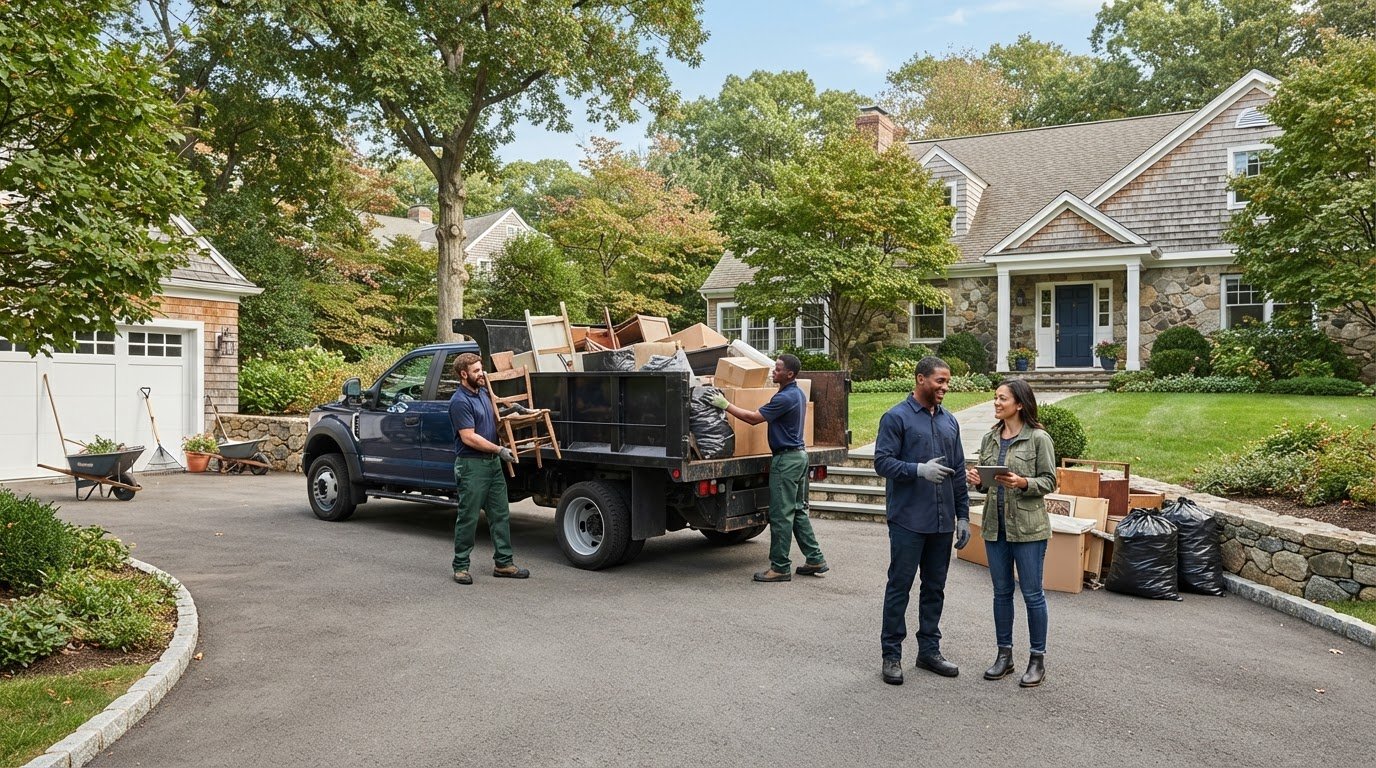
Residential dump removal is a planned service for clearing unwanted material from a home or residential property and hauling it away as part of a defined cleanup project. Unlike routine household trash collection, it addresses accumulation that calls for a separate plan. Residential dump removal services can reduce the homeowner’s lifting, sorting, and hauling burden, while the project’s size and property conditions help shape the work.
A cleanup may become necessary gradually or around a change in the property. For example, rooms or outdoor areas may have accumulated unwanted material, a home may need attention during a transition, or a broader property project may call for clearing space. The goal is to restore order and make the area easier to use, not simply to put out another week’s household waste. A clear description of the area and the overall goal gives the service provider a better basis for tailoring the project.
Residential removal is one part of the broader field of Waste management, which encompasses how unwanted materials are handled. For homeowners, the practical question is whether the accumulation is beyond the scope of ordinary collection and would be easier to address through a dedicated cleanup.
What kinds of home projects can prompt removal?
Common triggers include an accumulated cleanup, a property that needs attention before or after a transition, or a larger effort to reclaim usable space. The right service plan depends on more than the amount involved: the location of the material, the property layout, and access to the work area can all affect how the project is organized. Describing those conditions helps set a realistic scope.
Consider whether the goal is limited to clearing a defined area or is part of a wider property improvement. If the work involves changing or clearing land rather than removing accumulated material, that may point toward a different kind of project. Clear goals help prevent mismatched expectations and make it easier to organize the work around the property.
How is dump removal different from ordinary trash pickup?
Regular trash collection is part of a household’s recurring routine. A property cleanup, by contrast, is a separate project: accumulated material may need to be gathered and hauled beyond the scope of an ordinary collection day. It can also require planning around where the material is located and how it can be accessed. That distinction matters whether you’re addressing one area or coordinating a broader cleanup.
Before arranging removal, identify what area needs attention and what outcome you want, rather than assuming every cleanup follows the same process. This keeps the conversation focused on the property and its conditions. For a wider view of how dump removal can apply to property projects, explore the heavy-duty dump removal guide. A well-defined project is a practical first step toward a cleaner, more usable space.
Residential Dump Removal vs. Junk Hauling and Land Clearing
These service terms can overlap, so the clearest way to tell them apart is to start with the result you need. Are you clearing accumulated material from a residential property, preparing an outdoor site, or addressing both? That distinction helps keep the project scope focused and the work organized around the property’s actual conditions.
| Project type | Main goal | Material or work context | Property considerations |
|---|---|---|---|
| Residential dump removal | Clear unwanted accumulated material from a home or residential property | Material gathered as part of a defined cleanup | Location, amount, and access to the work area |
| Junk hauling | Remove unwanted material through a hauling-focused project | Material the homeowner wants taken away | How much there is and where it is located |
| Land clearing | Open or prepare an outdoor site | Vegetation or site-preparation work | Outdoor layout and the area to be cleared |
| Routine trash pickup | Collect regular household waste on an ongoing schedule | Waste set out as part of the household’s usual collection routine | Collection arrangements and regular access |
When does a cleanup project call for dump removal?
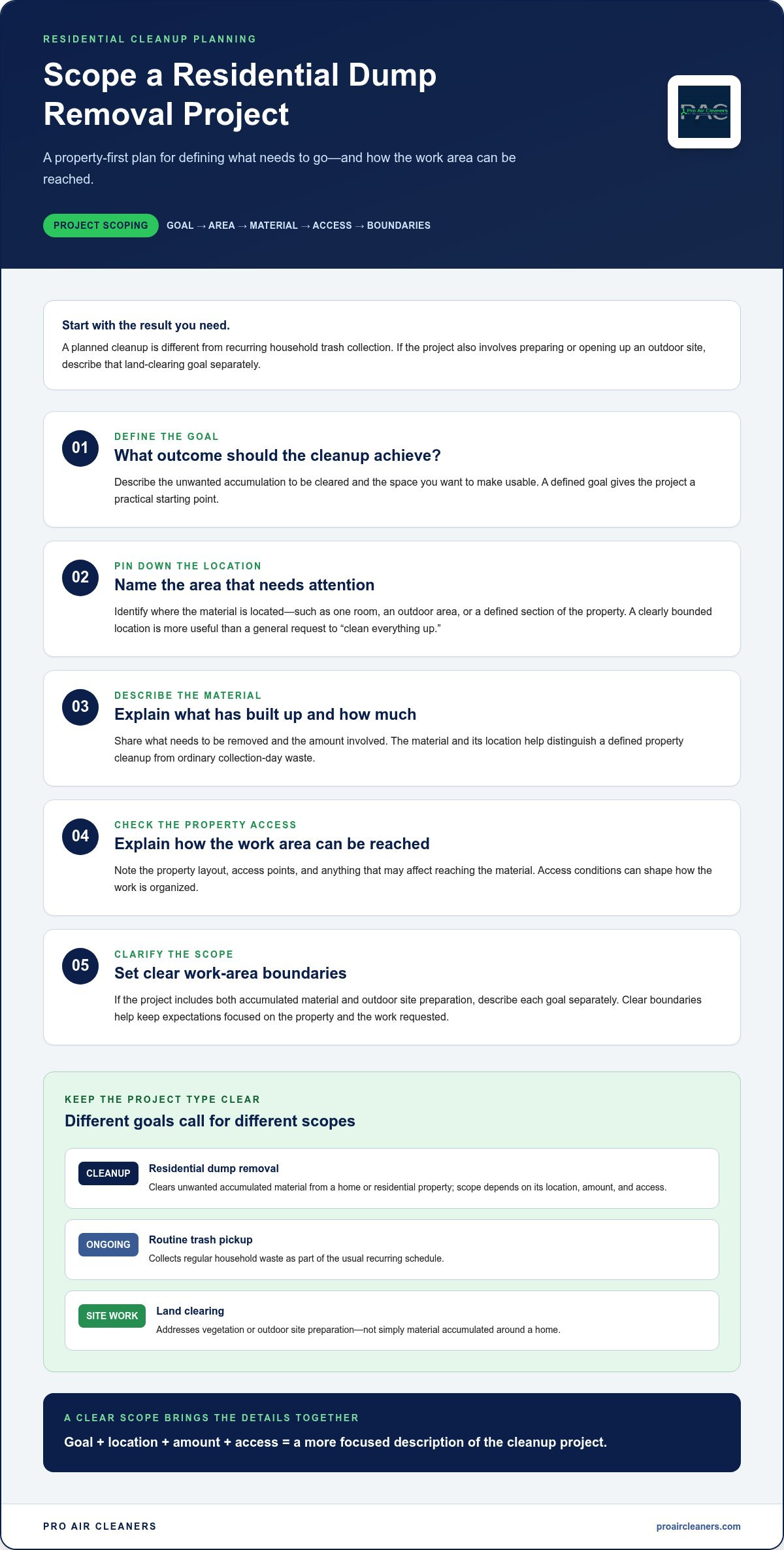
Dump removal is suited to a planned cleanup centered on accumulated material and the goal of clearing usable space. To define the scope, identify the area involved, describe how much material has built up, and note how the work area can be reached. A clearly bounded location, such as one section of a property, gives the project a more practical starting point than a general request to “clean everything up.”
Junk hauling is often used to describe the removal and transport side of a cleanup, while dump removal can describe the broader property project. The terms may overlap in everyday use, so explain the outcome you want rather than relying on a label alone. Residential dump removal services can be tailored around the project’s location, access, and amount, without assuming every property or cleanup has the same scope.
When is land clearing a separate or related need?
Land clearing addresses vegetation or outdoor site-preparation needs, not simply the removal of material that has accumulated around a home. If a project involves both clearing an outdoor area and removing accumulated material, describing each goal separately helps clarify the work. For Connecticut projects that include preparing or opening up a site, site debris removal near me project examples and next steps provide related planning context.
A project is cleanup when the goal is to remove accumulated material, land clearing when the goal is to prepare an outdoor site, and both when the property needs each kind of work. Keeping that distinction in mind also separates a one-time project from routine trash pickup, which handles regular household waste rather than a defined property cleanup. Pro Air Cleaners provides dump removal and land clearing, so homeowners can consider the work in terms of the property’s needs. If you’re defining a cleanup, you can learn about Pro Air Cleaners as you plan the project.
How to Scope a Residential Dump Removal Project in Connecticut
A clear project description helps residential dump removal services be tailored to the property rather than treated as a one-size-fits-all cleanup. Before arranging service, gather the details that explain what needs attention, where it is, and what may affect access. Notes and photos can make the request more informative, though they don’t replace a project-specific discussion or determine a particular estimate method.
Use this sequence to organize the essentials:
- Define the area. Identify the room, yard, or other part of the property involved. Describe its boundaries so the project has a clear beginning and end.
- Describe the material. Give a general, accurate description of what has accumulated. Separate what you know from assumptions about how particular material must be handled.
- Note access. Explain how the work area can be reached and whether the material is near the access point or farther across the property. Mention features that could affect movement through the site.
- Set priorities. Clarify which areas matter most and whether the cleanup connects to a wider property project, such as outdoor site preparation.
Which property details should homeowners organize?
Record the cleanup location, approximate extent, and any access constraints. A short description might say that the work is concentrated in one defined area, with access from a particular side of the property. Add photos that show the space and its approach when useful. These details help communicate actual conditions without guessing about material categories or disposal requirements.
Keep confirmed needs separate from questions. For example, note whether the project is limited to accumulated material or is part of a larger clearing effort. That distinction can help shape the discussion and keep the planned work aligned with the property’s goals.
What Connecticut disposal considerations belong in planning?
Disposal requirements can depend on the material and the municipality, so avoid relying on broad assumptions about what applies everywhere. Consult Connecticut debris removal guidance for property owners and current state and local municipal guidance for rules relevant to the material involved. If you’re unsure how a particular requirement relates to the project, describe the material accurately rather than presuming its disposal route.
Property conditions matter alongside disposal considerations. The distance between the work area and access point, obstacles along the route, and overall project extent can all influence how the cleanup is organized. A photo or written note about these conditions gives a clearer picture than a general description alone.
Before making a service request, bring your area description, material notes, access details, priorities, and any questions about current local guidance together in one place. This simple preparation helps keep the planning conversation specific and supports a project scope that reflects the home, the work area, and the intended result.
How to Prepare Your Home and Property Before Removal
A little preparation helps make the cleanup area easier to understand and keeps the project focused on your priorities. Before removal begins, identify the route to the work area, separate anything you want to keep, and clearly mark places that should remain untouched. These steps help clarify the property’s layout without assuming who will handle lifting, sorting, or other tasks.
How can you make the work area easier to access?
Walk the route from the property entrance to the cleanup area and note gates, stairs, narrow passages, or other features that may affect access. Share these details when arranging the project, especially if the work area is set back from the easiest entry point. Move personal belongings that aren’t part of the cleanup away from the work zone so they’re less likely to be confused with material intended for removal.
Use this checklist to prepare:
- Identify the entrance and route to the cleanup area.
- Note gates, stairs, narrow passages, and other access constraints.
- Keep belongings you plan to retain separate from the work area.
- Mark the cleanup boundaries so the intended area is clear.
- Keep household members and pets away from active work areas as a general safety precaution.
Good access planning is about sharing conditions, not making assumptions about how the work will be carried out. If the route changes between areas or parts of the property have limited access, describe that clearly in advance. A concise note can help the project discussion account for the actual site rather than relying on a broad description.
What should you communicate before work begins?
Summarize the areas to address and the outcome you want, such as clearing a defined section while leaving nearby spaces undisturbed. Point out property boundaries and anything that should remain untouched. If priorities differ across the site, explain which areas matter most so the scope reflects your intended result.
Residential dump removal services are easier to plan when the homeowner’s expectations and the property’s conditions are described together. Mention relevant site-specific considerations, such as access limitations or the relationship between the cleanup area and a larger property project. Keep confirmed details separate from assumptions, particularly about which material is included or how it will be handled. The scope can then be discussed with a clearer understanding of the work area and priorities.
Before the work starts, review the boundaries and priorities you’ve communicated. This final check can help prevent confusion about what the project covers, especially where the cleanup area meets a space you want to preserve. If you’re preparing a residential cleanup, explore Pro Air Cleaners’ dump removal service as you organize the project details.
Plan Residential Dump Removal with Pro Air Cleaners
A residential cleanup is easier to plan when the service provider understands the property, the area that needs attention, and the result you want. Pro Air Cleaners provides residential and commercial dump removal, along with land clearing, giving homeowners a local option for property cleanup projects. The company operates from New Britain, Connecticut, and serves Connecticut, Massachusetts, and New York.
With more than 30 years of experience as an independent local service provider, Pro Air Cleaners brings established background in property services to residential cleanup planning. That experience is company context, not a promise of a particular project outcome. Each property has its own layout and priorities, so clear information about your cleanup helps keep the discussion grounded in the work you want addressed.
What makes Pro Air Cleaners relevant to residential cleanup?
Dump removal can help homeowners address unwanted accumulation as part of a defined property cleanup, while land clearing focuses on outdoor site needs. Describing which goal applies, and whether both are part of the project, helps establish a useful starting point. Pro Air Cleaners provides both services, and its New Britain base supports service across Connecticut as well as Massachusetts and New York.
Before discussing the project, gather a few straightforward details:
- The property location and the specific area needing attention.
- A general description of the project and its approximate extent.
- Access conditions that could affect reaching the work area.
- Your priorities, including spaces or boundaries that should remain untouched.
- Whether the cleanup connects to a separate land-clearing or site-preparation goal.
These notes help make your request more specific without requiring you to decide in advance how the work will be carried out. If photos help show the location or access, include them as context. Keep descriptions accurate and distinguish what you know about the project from assumptions about particular materials or their handling. Residential dump removal services can then be discussed with the property’s actual conditions and your intended outcome in view.
What is the next step for your cleanup project?
Start with a short summary: where the property is, which area needs attention, what you want the cleanup to accomplish, and any access or boundary details that matter. If the project also involves preparing an outdoor site, mention that separately so the different goals are clear. A focused description gives the planning conversation a practical foundation.
When you’re ready to discuss your property cleanup, discuss your residential dump removal project with Pro Air Cleaners. Share the area, access details, and priorities, and the conversation can begin with the needs of your Connecticut home in focus.
Make Space for What Comes Next
Clearing a property isn’t only about what leaves. It’s also an opportunity to make room for a home that feels more comfortable and works better for your needs. A defined cleanup goal can turn a daunting task into a meaningful step toward using your space differently.
Residential dump removal services can support that transition when unwanted material has become a barrier to the way you want to use your property. Think about what you’d like the cleared space to make possible, whether that’s easier movement, a more functional area, or simply a calmer environment. Keeping that purpose in view can make it easier to move from putting off the project to taking a practical first step.
You don’t need every detail settled before starting a conversation. Share the goal you have in mind, and let that guide your next steps. Pro Air Cleaners is ready to discuss your residential cleanup project.
Discuss your residential dump removal project, and take the first step toward a more usable space. A fresh start is within reach.
Frequently Asked Questions
What do residential dump removal services typically include?
Residential dump removal typically covers a planned cleanup of accumulated unwanted material at a home or residential property, with removal and hauling arranged for the defined project. The exact scope depends on the property and what the homeowner wants addressed, so don’t assume every household material or task is automatically included. Describe the location, approximate amount, and intended outcome to clarify the work being discussed before planning proceeds.
How do I prepare my property for dump removal?
Before removal, secure personal documents, medications, valuables, and anything with sentimental importance in a separate, clearly identified place. If someone else in your household is coordinating the work, agree on what can be removed and what must stay. This helps ensure the project reflects household decisions rather than assumptions made during the cleanup, and reduces the chance of important belongings being mistaken for items intended to go.
Can dump removal and land clearing be part of the same project?
Yes, one property project can include dump removal and land clearing if it involves both accumulated material and outdoor site preparation. Describe each objective separately, such as clearing a defined area of unwanted material while also opening up another part of the property. Explain how you expect to use each area afterward, so the project discussion can account for both goals without treating them as the same kind of work.
Does residential dump removal cover every type of household material?
No, don’t assume every household material is automatically included in a removal project. The project scope and applicable handling requirements can depend on what the material is and where the property is located. Give an accurate description of anything you want removed, and consult current state or municipal guidance if you have questions about disposal requirements. Clear information helps avoid planning around assumptions about what can be handled.
How is residential dump removal different from regular trash pickup?
Regular trash pickup is for recurring household waste handled through a routine collection arrangement; residential dump removal addresses a separate, defined property cleanup. If material has accumulated between regular collection days or the work involves clearing a particular area, describe it as a project rather than assuming it belongs in household pickup. That distinction helps you plan for the cleanup without confusing it with your normal waste routine.
Does Pro Air Cleaners provide residential dump removal in Connecticut?
Yes, Pro Air Cleaners provides residential dump removal in Connecticut. To start a project discussion, share the town, the area of the property that needs attention, a general description of the material, and your main priorities. You can also describe any access considerations or areas that should remain untouched. These details help frame the conversation around your home and the cleanup you want to accomplish.