A dryer that suddenly needs two cycles to finish one load is not just frustrating. It can signal a venting problem that raises energy use, wears out the appliance, and increases fire risk. Homeowners and property managers often ask, when should dryer vents be replaced? The answer depends on the condition, material, routing, and safety of the entire vent system – not simply its age.
Dryer vent cleaning removes lint buildup, but cleaning cannot correct crushed ductwork, unsafe materials, loose connections, or a vent run that was installed improperly. Replacement is the right solution when the vent itself can no longer move hot, moist air safely and efficiently outdoors.
When Should Dryer Vents Be Replaced?
A dryer vent should be replaced when damage, deterioration, poor installation, or unsafe materials prevent reliable airflow. Some issues are visible behind the dryer. Others are found during a professional inspection of the full run, including areas in walls, ceilings, crawl spaces, attics, and exterior termination points.
1. The vent is crushed, kinked, or sagging
A flexible vent that is flattened behind the dryer can restrict airflow immediately. Sharp bends and long sagging sections create pockets where lint collects, reducing the opening even further over time. A crushed vent may look like a small issue, but it can make the dryer run hotter and longer.
Replacement is often preferable to trying to reshape damaged flexible ducting. A properly routed rigid or semi-rigid metal vent offers a smoother path for air and is less likely to collapse when the dryer is pushed back into place.
2. The dryer vent uses plastic, vinyl, or foil accordion duct
Not every flexible-looking dryer connector is safe. Plastic and vinyl ducts can deteriorate under heat, while thin foil accordion-style ducts trap lint in their ridges and tear easily. These materials are common in older installations and quick repairs, but they are poor choices for a dryer exhaust system.
A professional replacement with appropriate metal venting helps reduce lint accumulation and handles normal dryer temperatures more safely. This is especially worthwhile in rental properties and commercial spaces, where frequent laundry use can expose weak vent materials faster.
3. Drying times keep getting longer after cleaning
Lint buildup is a frequent cause of slow drying, so cleaning should be considered first when the vent is otherwise sound. But if drying times remain long after a thorough cleaning, the vent may have a hidden restriction, improper routing, damaged interior lining, or too many bends.
The dryer itself could also be part of the problem. A professional inspection helps separate an appliance issue from a venting issue, so you are not replacing parts or equipment without addressing the actual cause.
4. You notice heat, moisture, or a burning smell in the laundry area
A laundry room should not become excessively hot or humid during normal use. Heat around the dryer, condensation on nearby surfaces, or a persistent musty odor can indicate that moist exhaust air is not leaving the building as it should.
A burning smell requires immediate attention. Turn off the dryer and avoid using it until the system has been inspected. Lint is highly combustible, and restricted airflow can cause the dryer and vent system to overheat. Replacement may be needed if the duct is damaged or built with unsafe material.
5. The exterior vent hood is broken or does not open properly
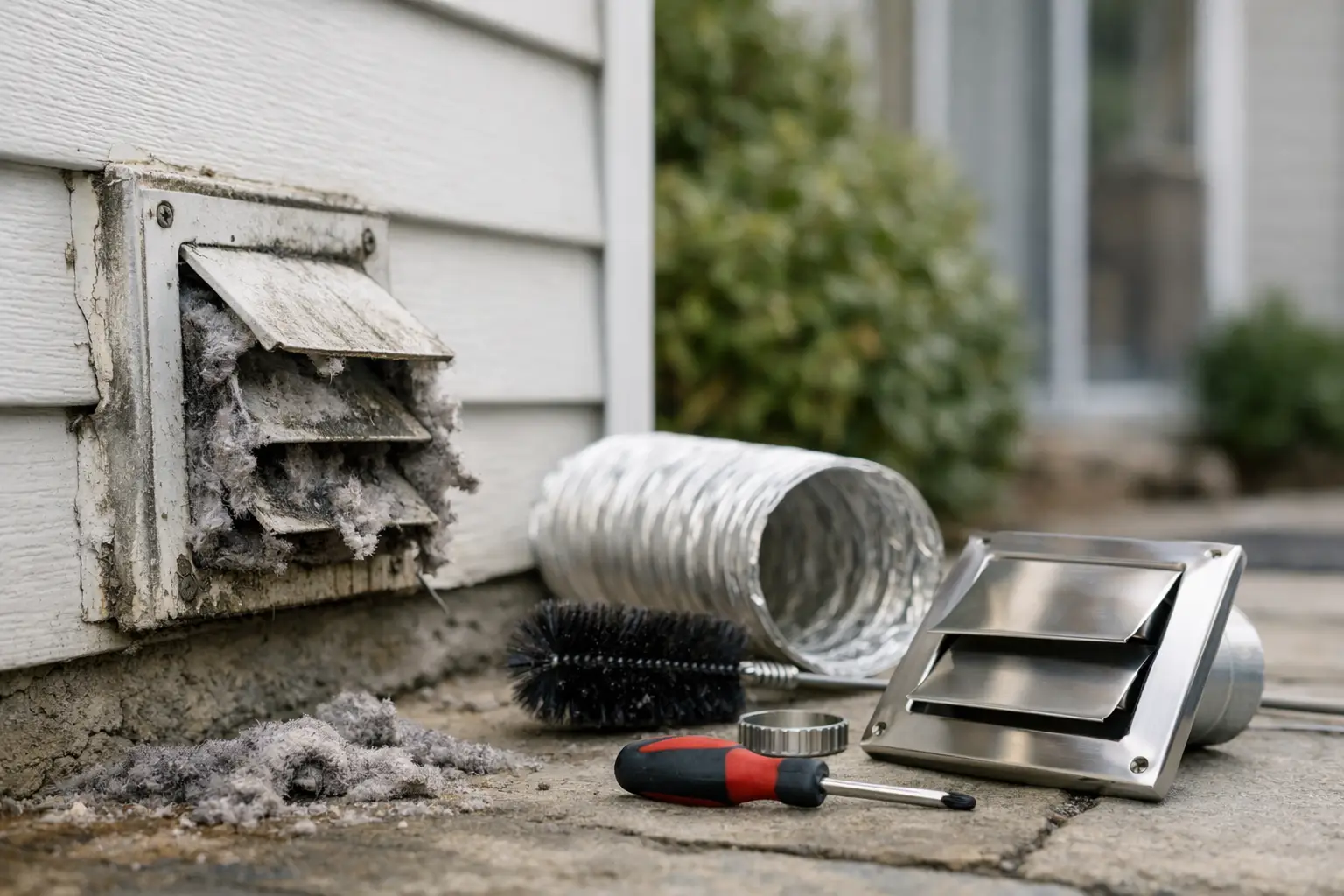
The exterior hood is the final exit point for dryer exhaust. Its flap should open while the dryer runs and close afterward to help keep out weather, pests, and outdoor debris. A broken hood, missing flap, damaged screen, or clogged termination can restrict airflow and allow unwanted moisture into the vent.
In some cases, replacing the exterior hood solves the issue. If the connecting duct is corroded, disconnected, or packed with debris, the repair may need to extend further into the vent run.
6. There is visible rust, corrosion, holes, or separated joints
Dryer exhaust carries heat and moisture. Over time, metal components can rust, especially in damp basements, utility rooms, and coastal or high-humidity environments. Corroded seams, holes, and disconnected joints can leak lint and moist air into walls, ceilings, or crawl spaces.
This is more than a housekeeping concern. Moisture leaking into concealed areas can contribute to odors, staining, and conditions that support mold growth. Replacing compromised sections helps keep exhaust moving where it belongs – outdoors.
7. Lint is collecting around the dryer or inside the building
Lint around the dryer connection, behind the appliance, or near wall penetrations may mean the vent is loose, split, or disconnected. A professional can confirm whether the problem is limited to a connection or whether the ductwork has failed farther along the run.
Do not assume visible lint is normal. While dryers produce lint, the vent system should contain and exhaust it effectively. A leaking vent can affect indoor cleanliness and create a fire hazard in areas that are difficult to see or reach.
8. The vent was installed with too many turns or an overly long route
A dryer vent works best with a short, direct route to the exterior. Every unnecessary elbow adds resistance and creates another location for lint to accumulate. Long runs may be permitted in certain buildings when designed correctly, but they need the right materials, connections, and maintenance access.
If a renovation, appliance relocation, or previous repair created a complicated vent path, replacement and rerouting may improve dryer performance substantially. This is common in older homes, multi-unit properties, and commercial laundry areas where utility layouts have changed over the years.
Cleaning or Replacement: Which Service Do You Need?
Cleaning is the right service when the vent is structurally sound but has lint, dust, or debris restricting airflow. Replacement is needed when the duct is unsafe, damaged, improperly routed, leaking, or made from unsuitable material. Often, the best solution includes both: remove the buildup, inspect the full system, and replace the sections that cannot be safely restored.
A visual check behind the dryer is useful, but it cannot reveal every problem. Concealed vent runs can disconnect inside walls or become blocked at points that are inaccessible without specialized equipment. For that reason, a full inspection is particularly valuable before selling a property, completing a renovation, onboarding new tenants, or responding to repeated dryer complaints.
Why Professional Dryer Vent Replacement Matters
Dryer vent work is not simply a matter of attaching a new hose. The replacement needs to account for the correct vent material, secure joints, smooth airflow, proper exterior termination, appliance clearance, and the specific route through the building. Poor installation can create the same restrictions that prompted the service call.
For homes and businesses across Connecticut, Massachusetts, and New York, Pro Air Cleaners provides professional dryer vent cleaning, repair, and replacement supported by experienced technicians, HEPA-filtered equipment, and clear inspection findings. A free estimate and video inspection can help show what is happening in the system and whether cleaning, repair, or replacement is the most practical next step.
A dryer vent is easy to overlook because much of it sits out of sight. Treat slower drying, excess heat, damaged ducting, and repeated lint problems as early warnings. Addressing them now can help protect your dryer, your energy budget, and the people who live or work in the building.