
Why do you still wake up with a scratchy throat and heavy congestion even when your air purifier has been running on high all night? It’s incredibly frustrating to scrub every surface and invest in high-end filters only to see a thin layer of grey dust settle back onto your furniture by morning. You likely feel skeptical about whether professional maintenance is a genuine health necessity or just another industry trend. We understand that skepticism, especially when you’re simply looking for a way to breathe easier in your own living room.
This guide explains how professional air duct cleaning for allergies functions as a restorative treatment that neutralizes hidden triggers at their source, which restores your home’s air quality for lasting relief. You’ll learn how your HVAC system can act as a reservoir for pollen and pet dander if left unaddressed, and we’ll detail the specific steps required to ensure your ventilation supports your respiratory wellness. By the end of this article, you will have a clear roadmap for transforming your home from a source of irritation into a true sanctuary of wellness and peak environmental performance.
Key Takeaways
- Understand how your HVAC system functions as the “lungs” of your property and why it often serves as a hidden reservoir for airborne irritants.
- Discover how air duct cleaning for allergies physically removes sticky pet dander and seasonal pollen that accumulate deep within your ventilation network.
- Learn why a total ventilation approach, including bathroom and dryer vent maintenance, is essential for regulating humidity and protecting your respiratory health.
- Identify the subtle signs of “Home Fever,” where allergy symptoms improve when you leave the house, signaling a need for professional system restoration.
- Gain peace of mind by understanding how three decades of industry experience and specialized tools ensure your home remains a safe, clean environment for your family.
The Hidden Link: How Your HVAC System Traps Allergy Triggers
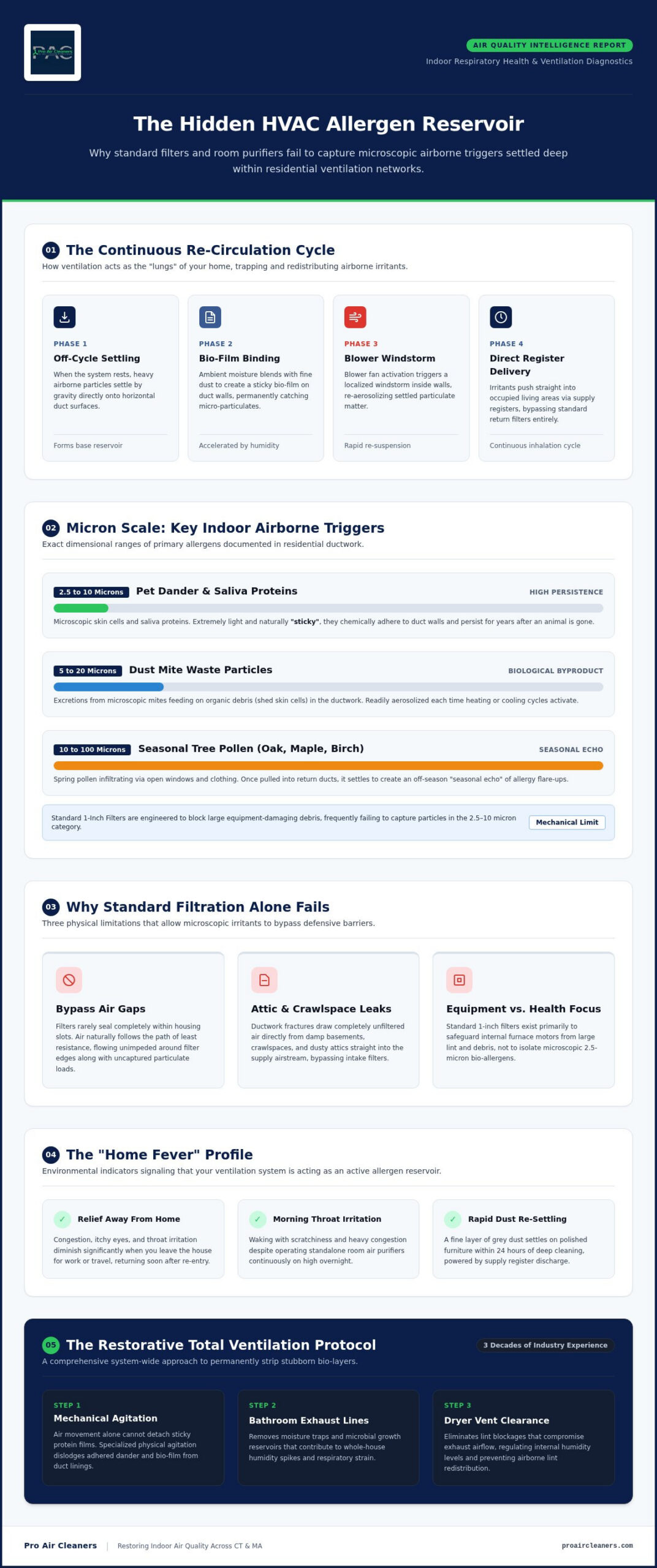
Your HVAC system acts as the “lungs” of your home. It constantly inhales air from your living spaces, conditions it for temperature, and exhales it back to you. However, this process often creates a cycle of contamination that is invisible to the naked eye. When the system is in an off-cycle, heavy particulates like pollen and pet dander settle into the horizontal runs of your ductwork. This creates a reservoir of allergens that sits undisturbed until the next cooling or heating cycle begins.
Once the blower fan activates, it acts like a localized windstorm inside your walls, re-aerosolizing these settled particles and pushing them through your registers. This continuous re-circulation cycle means you’re breathing the same irritants over and over, regardless of how often you vacuum your carpets or wipe down counters. Because these deposits accumulate deep within the supply lines, this buildup completely bypasses standard 1-inch filters located at the return air intake.
The Anatomy of a Dirty Air Duct
Over time, a thin “bio-film” composed of microscopic dust and ambient moisture develops on the interior surfaces of your ventilation. This sticky layer is particularly prevalent in the humid climate of Connecticut, where summer moisture levels frequently spike. Gravity and static electricity cause smaller allergens to adhere to this film, creating a dense layer of debris that isn’t easily removed by simple air movement. Unlike the light surface dust you see on a bookshelf, this deep-seated accumulation creates a permanent breeding ground for irritants. Maintaining high indoor air quality depends on removing this hidden source of irritation through professional mechanical agitation.
Why Standard Filtration Often Fails Allergy Sufferers
Many homeowners believe that a high-quality filter is enough to protect their health. While filters are a critical component, they have significant limitations. Standard HVAC filters are primarily designed to protect the mechanical equipment from large debris, not necessarily to capture microscopic pollen or dander that can be as small as 2.5 microns. Additionally, “bypass air” often occurs when filters don’t fit perfectly in their slots, which allows air to sneak around the edges. If your system has duct leaks, it may even pull unfiltered air directly from dusty attics or damp crawlspaces. This is why air duct cleaning for allergies is a necessary restorative step; it addresses the contaminants that have already made it past your defenses and settled into the system’s “lungs.”
Common Allergens Lurking in Your Ventilation System
While household dust is visible on your coffee table, the most aggressive triggers for allergy sufferers are often microscopic and hidden from view. In the Northeast, your HVAC system collects a specific cocktail of irritants that cycle through your home. These typically include pet dander, seasonal pollen, and fungal spores. These “Big Three” don’t simply sit in the ducts; they interact with the environment to become more persistent and difficult to remove without specialized intervention.
Dust mites also find a sanctuary in this environment. These microscopic organisms feed on the organic matter found in duct debris, such as shed skin cells. Their waste particles range from 5 to 20 microns in size, making them easily airborne every time your heater or air conditioner kicks on. This creates a nutrient-rich ecosystem within your walls that standard cleaning methods cannot reach.
Pet Dander: The Persistent Indoor Trigger
Dander is far more than just pet hair. It consists of microscopic skin cells and proteins found in animal saliva. These particles are incredibly small, typically ranging from 2.5 to 10 microns, which allows them to remain airborne for extended periods. Because these proteins are naturally “sticky,” they bond to the interior metal or flexible surfaces of your ductwork. Even if a pet hasn’t lived in the property for years, this sticky reservoir can continue to trigger respiratory issues. Professional air duct cleaning for allergies is the only reliable way to physically strip this protein layer from the system surfaces.
Pollen and Seasonal Infiltration
In Connecticut and Massachusetts, we experience heavy pollen spikes from oak, maple, and birch trees throughout the spring. These particles, which measure between 10 and 100 microns, enter your home through open windows or on your clothing. Once they’re pulled into the return vents, they settle in the ductwork and create a “seasonal echo.” You might find your symptoms flaring up in late summer even though the spring pollen season ended months ago. This happens because the allergens are simply being recycled from the ducts back into your breathing zone.
Microscopic Spores and Fungal Growth
The high humidity levels common in New England often lead to moisture accumulation inside cooling coils and dark duct corners. When you combine this moisture with the organic “food” found in accumulated dust, you create a perfect environment for fungal growth. Mold spores are tiny, often between 3 and 40 microns, and can spread rapidly through the air stream. Following EPA guidance on air duct cleaning is essential when you suspect biological growth or visible debris. If you’re concerned about the air your family is breathing, a professional ventilation assessment can identify these hidden triggers and restore your home’s air quality.
Beyond Air Ducts: The Role of Dryer and Bathroom Vents
To achieve true respiratory relief, you must view your property as a total ventilation ecosystem. If the HVAC system represents the home’s lungs, then your exhaust vents serve as the critical exhalation pathway. When these secondary vents become restricted, the balance of your indoor environment shifts, which often traps the very triggers you’re trying to eliminate. While many homeowners focus solely on air duct cleaning for allergies, neglecting the bathroom and dryer exhaust lines can undermine your restorative efforts by allowing moisture and dust to linger.
Bathroom Vents and Moisture-Driven Allergies
A bathroom exhaust fan is your primary defense against localized humidity spikes. In the variable climate of Connecticut and Massachusetts, steam from showers that isn’t properly vented can quickly condense inside walls or attics. This moisture provides the essential ingredient for mold colonies to flourish, which then release spores into the air you breathe. It’s vital to check the integrity of the vent pipe; a disconnected or leaking line can dump humid air into your ceiling joists rather than outdoors. You might notice your bathroom vent needs professional cleaning or replacement if the fan sounds louder than usual, if mirrors take longer than ten minutes to clear, or if you see dark spots forming on the ceiling. Effective exhaust performance is a cornerstone of controlling indoor allergy triggers and maintaining a dry, healthy environment.
The Dryer Vent and Fine Particulate Dust
Dryer vents are often viewed only through the lens of fire safety, but they play a significant role in your home’s overall dust levels. When lint builds up in the exhaust line, it creates back-pressure that forces fine particulate dust through the dryer’s seals and back into your laundry area. These microscopic fibers are highly irritating to those with respiratory sensitivities and can quickly spread to adjacent rooms. The U.S. Fire Administration notes that failure to clean lint buildup is the leading cause of roughly 32% of home clothes dryer fires, which results in thousands of incidents annually. Beyond the obvious safety benefits, keeping this vent clear prevents fine lint from becoming part of the “re-circulation cycle” mentioned earlier. Incorporating dryer vent maintenance into your plan for air duct cleaning for allergies ensures that every exhaust path in your home is optimized for peak performance and wellness.
Signs Your Home Needs Professional Duct Cleaning for Allergies
Identifying whether your ventilation system is contributing to your respiratory distress requires a combination of health tracking and physical observation. One of the most telling indicators is the “Home Fever” effect. If you find that your congestion, itchy eyes, or sneezing fits improve significantly when you leave for work but return shortly after you walk through the front door, your indoor environment is likely the source. This pattern suggests that your HVAC system is actively distributing triggers rather than filtering them out.
Visual cues provide tangible evidence of accumulation. Watch your supply registers when the blower fan activates; a visible “poof” of dust indicates that debris has settled in the ducts and is being forced into your breathing zone. Another subtle sign is the presence of dark filtration lines on your carpets, especially near baseboards or under doors. These streaks occur when your home’s air is forced through the carpet fibers because of leaky or clogged ductwork, which leaves behind a concentrated trail of soot and dust. If you’ve ever wondered why is my house so dusty even after a thorough cleaning, leaky return ducts and a compromised ventilation system are often the hidden mechanical culprits behind that persistent grey film. In the humid climates of Connecticut and Massachusetts, a musty or stale odor when the furnace or AC kicks on often points to organic accumulation within the dark, damp corners of the system.
The history of your property also plays a major role in its current air quality. If you’ve recently moved into a pre-owned home, you’re breathing whatever the previous owners left behind, including years of pet dander or tobacco smoke residue. Similarly, if you’ve completed a renovation, the fine particulates from drywall sanding and floor finishing often bypass standard filters and settle deep within the return lines, where they continue to irritate your lungs for months after the project is finished.
Self-Assessment Checklist for Allergy Sufferers
- Symptom Timing: Track whether your coughing or throat irritation spikes specifically when the heating or cooling cycles begin.
- Return Air Grilles: Inspect your intake vents for heavy, fuzzy gray accumulation that returns quickly after you wipe it away.
- Age of Ductwork: Consider if the system has gone more than three to five years without a professional inspection.
When to Call a Professional vs. Changing a Filter
While changing your filter is a vital maintenance task, it’s often not enough to solve deep-seated issues. You can perform a simple “one-inch test” by removing your filter and looking past the slot into the air handler or plenum. If you see a coating of debris on the internal metal surfaces, your system has reached a point where air duct cleaning for allergies is the only restorative solution. We strongly advise against DIY vacuuming for this task. Standard household vacuums lack the negative pressure and HEPA containment required to capture microscopic allergens; attempting to clean the ducts yourself often agitates the dust and makes your symptoms worse. Before booking a service, it’s also worth understanding how much air duct cleaning costs so you can budget appropriately and avoid bait-and-switch pricing schemes. If you suspect your system is compromised, a professional ventilation assessment can determine if you need specialized cleaning or specific vent repairs to restore your home’s health and your peace of mind.
The Pro Air Cleaners Approach to Restorative Air Quality
With over 30 years of industry experience, Pro Air Cleaners operates as a protective steward of your home’s environment across Connecticut, Massachusetts, and New York. This veteran status allows us to approach every project with the quiet confidence that only comes from decades of specialized labor. We believe in a restorative philosophy that focuses on transitioning your property from a state of neglect or accumulation to one of peak environmental performance. Rather than providing a surface-level wipe down, our insured technicians address the entire ventilation ecosystem to ensure that your home remains a sanctuary of wellness.
The Professional Cleaning Process
Our method centers on physical source removal, which is the industry standard for achieving lasting results. We utilize professional-grade equipment, including high-powered negative-air vacuums and mechanical agitation tools like pneumatic whips and rotary brushes. These specialized tools allow us to reach deep into your ventilation system to dislodge the sticky reservoirs of dander and pollen mentioned earlier. By creating a controlled environment through strict containment protocols, we ensure that every particulate is extracted directly into our HEPA filtration units without cross-contaminating your living space. This thorough approach to air duct cleaning for allergies is what separates a professional restoration from a simple maintenance task.
Long-Term Benefits: Peace of Mind and Wellness
Investing in comprehensive ventilation maintenance provides advantages that extend far beyond immediate symptom relief. When your HVAC system is free from heavy debris, the blower motor doesn’t have to work as hard to circulate air, which results in improved mechanical efficiency and a longer lifespan for your equipment. This optimization often leads to noticeable savings on monthly energy costs and prevents the need for expensive repairs caused by restricted airflow. By addressing your air ducts, dryer vents, and bathroom exhausts simultaneously, you create a balanced system that supports both your health and your home’s structural integrity. Taking this proactive step ensures your property is in capable hands, allowing you to breathe easier with the knowledge that your air quality is managed by seasoned experts.
Schedule your professional air duct inspection with Pro Air Cleaners today to restore your home’s air quality and protect your family’s respiratory health.
Taking Control of Your Home’s Air Quality
Understanding how your ventilation system acts as a reservoir for triggers is the first step toward reclaiming your health. We’ve explored how microscopic dander, seasonal pollen, and humidity-driven mold spores cycle through your living space; however, these hidden threats don’t have to be a permanent part of your environment. By addressing the total ventilation ecosystem, including problematic bathroom and dryer exhaust lines, you can effectively neutralize the “Home Fever” effect and restore your respiratory wellness.
Professional air duct cleaning for allergies serves as a restorative treatment that moves your HVAC system from a state of neglect to one of peak efficiency. With over 30 years of local expertise, our fully insured and specialized technicians provide comprehensive air duct and vent repair services across the Connecticut, Massachusetts, and New York areas. This commitment to thoroughness ensures that your property remains in capable hands, providing you with the lasting peace of mind you deserve.
Breathe easier; contact Pro Air Cleaners for a professional vent inspection in CT, MA, or NY
You deserve a home that supports your wellness and allows you to rest without the burden of constant respiratory irritation.
Frequently Asked Questions
Can air duct cleaning really cure my allergies?
Air duct cleaning for allergies isn’t a medical cure, but it’s a vital part of an environmental management strategy. By physically removing the accumulation of pollen, pet dander, and dust from your ventilation, you eliminate the source of re-circulating triggers. This restorative process reduces the overall allergen load in your home, which allows your body’s immune system to rest. While you’ll still encounter outdoor irritants, your indoor environment becomes a cleaner sanctuary for your respiratory health.
How often should I have my ducts cleaned if I have pets?
If you have multiple pets, we typically recommend a professional cleaning every two to three years. Fur-bearing animals constantly shed skin cells and hair that get pulled into the return air vents, where they create a thick layer of debris. This organic matter serves as a food source for dust mites and can trap moisture. Regular maintenance ensures that these sticky protein-based triggers don’t reach a concentration level that overwhelms your home’s filtration system.
Will the cleaning process make my house messier or trigger an attack?
A professional cleaning should never leave your home messier or release dust into your living areas. We use high-powered negative pressure systems that create a vacuum within the ductwork, ensuring all dislodged particulates are pulled directly into our HEPA-filtered containment units. Our technicians follow strict safety protocols to protect your property. This specialized approach to air duct cleaning for allergies prevents cross-contamination, making the process safe even for those with severe respiratory sensitivities or asthma.
Does air duct cleaning remove mold from the vents?
Professional cleaning effectively removes visible biological growth and the organic dust that mold uses for food. While we don’t offer specialized mold remediation services, our thorough agitation and extraction process clears the fungal spores and moisture-trapping debris from the interior surfaces of your ducts. This restoration improves airflow and helps prevent future growth. If your system has structural issues, we can also provide air duct vent replacements and repairs to address those specific vulnerabilities.
How long does a professional air duct cleaning session usually take?
A comprehensive cleaning session for a standard single-family home typically takes between three and five hours. The exact duration depends on the number of vents, the accessibility of the main trunk lines, and whether you’ve requested additional services like dryer or bathroom vent maintenance. We take the time necessary to ensure every component is thoroughly cleaned; however, we work efficiently to minimize disruption to your daily routine while maintaining our high standards of workmanship and care.
Is it necessary to clean bathroom and dryer vents at the same time?
It’s highly beneficial to address all household vents simultaneously to maintain your home’s total ventilation ecosystem. Clogged bathroom exhausts and lint-filled dryer lines can contribute to humidity spikes and fine-particulate dust circulation. By cleaning these along with your main ducts, you ensure that every exhaust pathway is optimized for performance. This comprehensive approach prevents localized moisture hotspots and reduces the total volume of irritants that can linger within your walls or attic spaces.
What is the difference between duct cleaning and duct sanitation?
Cleaning refers to the physical removal of dust, dirt, and debris using mechanical tools and high-powered vacuums. Sanitation is an optional secondary step where an antimicrobial treatment is applied to the interior surfaces to kill remaining microscopic organisms. While physical source removal is the most critical part of the process, sanitation provides an extra layer of protection against odors and fungal spores. We focus on thorough mechanical cleaning to ensure your system functions at peak restorative levels.
Can dirty air ducts cause headaches or just respiratory issues?
Dirty air ducts can certainly contribute to headaches along with standard respiratory symptoms. When a system is clogged with debris, it can harbor volatile organic compounds (VOCs) or allow for the buildup of stale, carbon-dioxide-rich air. Poor indoor air quality is a known trigger for tension headaches and fatigue in many individuals. Restoring your system’s cleanliness improves the oxygen exchange in your home and removes the chemical and biological irritants that often lead to these non-respiratory health concerns.