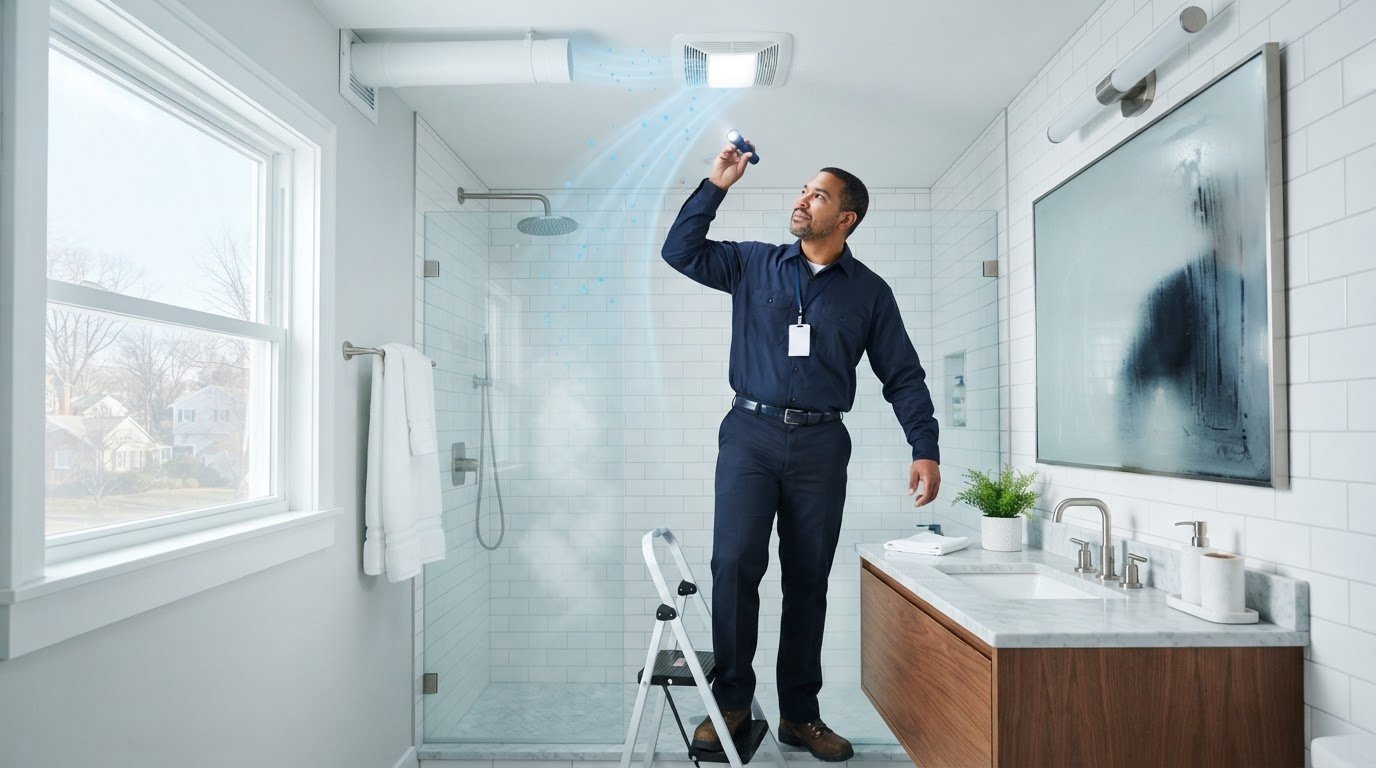
What if your bathroom fan runs but the mirror still drips? The issue may not be your shower routine alone. Effective bathroom fan moisture control depends on drawing humid air out of the room and exhausting it outdoors. A blocked or damaged vent route can limit airflow, even when the fan is switched on.
Lingering dampness and musty odors are frustrating, but they’re useful signs to investigate. Start with a consistent fan routine: run the fan during a shower and leave it on afterward so moisture has time to clear.
This guide explains how bathroom fans remove moisture, how daily use and basic upkeep can improve performance, and what signs may point to an airflow or exhaust problem. You’ll also learn when bathroom vent cleaning, repair, or replacement may help restore ventilation. Pro Air Cleaners provides bathroom vent cleaning, repairs, and replacements for homeowners in Connecticut.
Key Takeaways
- Effective bathroom fan moisture control depends on moving humid air out of the bathroom through a properly routed exhaust.
- Follow your fan’s instructions for when to run it and how long to keep it operating after bathing.
- Compare changes in fan sound, apparent airflow, and how quickly dampness clears to spot patterns that may need attention.
- Cool surfaces and changing indoor and outdoor conditions can affect condensation, so moisture clues may vary between homes and seasons.
- If recurring dampness or odors persist, bathroom vent cleaning, repair, or replacement may help address an airflow issue.
Bathroom Fan Moisture Control: Why Humid Air Needs an Exit
A shower releases water vapor into the bathroom air. When warm, humid air meets cooler surfaces such as a mirror, window, or tiled wall, some of its moisture can condense into droplets. If damp air lingers, surfaces may take longer to dry and odors may persist. Effective bathroom fan moisture control means drawing humid air out of the room and sending it through an exhaust route to the outdoors.
That final step matters. A fan that moves air around the bathroom without exhausting it outdoors may not remove moisture from the home. Ventilation is the movement and replacement of indoor air; mechanical ventilation uses equipment to help move that air. A bathroom exhaust fan applies this principle, but its performance depends on the fan’s condition and the full vent path.
What bathroom exhaust fans do with humid air
The fan draws bathroom air into an exhaust route that should carry it outdoors. If the fan or route isn’t working as intended, humid air may not leave the room effectively. Fan noise alone can’t confirm that air is reaching the exterior, so consider airflow and moisture patterns rather than assuming that a running fan is doing the job.
When bathroom moisture deserves a closer look
Notice whether condensation or dampness keeps returning after ordinary bathroom use, especially if surfaces stay wet longer than usual. Fogged mirrors, damp finishes, slow-drying surfaces, and persistent odors are useful clues, but none identifies a specific cause on its own.
To clarify the pattern, note when moisture appears and whether the fan runs during and after bathing. Consider whether the same surfaces are affected each time or whether the issue changes with the weather or household routine. These observations can help distinguish a one-time burst of condensation from a recurring ventilation concern.
If dampness continues despite consistent fan use, look beyond the routine. The fan’s condition and the route carrying air outdoors both affect moisture removal. Bathroom vent cleaning, repair, or replacement may be appropriate depending on the system’s condition. Start by considering the airflow path, not just the visible condensation.
How to Use a Bathroom Fan to Control Moisture
A consistent routine gives your exhaust fan time to handle steam during a shower and humid air afterward. Switch the fan on before bathing or as you begin, keep it running while the shower is in use, then leave it on afterward. Follow the fan manufacturer’s instructions for operation and any built-in timer instead of relying on one run time for every bathroom and fan.
A simple before, during, and after shower routine
- Before or at the start: Turn on the fan using its normal controls and follow the manufacturer’s directions.
- During bathing: Keep it running while the shower adds moisture to the air.
- Afterward: Allow extra run time, then notice whether condensation clears more consistently than when the fan is switched off immediately.
Effective fan use means removing humid air beyond the shower period, not just running the fan while you bathe. The Home Ventilating Institute offers additional bathroom fan ventilation guidance, including considerations related to fan selection and moisture removal. Use your fan’s own instructions to guide its operation.
Support airflow without complicating the routine
An exhaust fan needs air to move through the room, so don’t cover or block its grille. Depending on the bathroom layout, a gap beneath the door or an open doorway may help replacement air enter while the fan draws air out. If you usually keep the door closed, notice whether the room feels different when there’s a clear path for air to enter. This isn’t a technical test, but it can help you spot a pattern.
Wiping standing water from a shower door, ledge, or other wet surface can reduce the moisture left on that surface. Treat it as a supplement, not a substitute for ventilation: the fan still needs to move humid air out of the bathroom. A steady routine makes it easier to see whether moisture clears more reliably. Persistent dampness despite regular use may point to an airflow concern.
If your routine isn’t resolving recurring airflow concerns, bathroom vent cleaning and repair may help restore system function. Pro Air Cleaners provides bathroom vent cleaning, repairs, and replacements to support dependable bathroom fan moisture control.
Bathroom Fan or Vent Problem? How to Check the Airflow
If dampness keeps returning despite consistent fan use, take a closer look at the airflow pattern. These observations can help you describe what’s happening, but they aren’t a technical inspection and can’t identify a defect on their own.
Clues that airflow may be limited
Notice how the fan sounds and whether you can observe air moving near the grille without touching it. A change in sound, unusual rattling, or little apparent airflow is worth noting, but none proves the fan or vent is faulty. Also compare how moisture clears after different showers and whether the issue is seasonal, recurring, or isolated.
A simple record can make patterns easier to recognize:
- Does the fan sound different from its usual operation?
- Is there apparent airflow at the grille while it’s running?
- Do damp surfaces clear, or does condensation repeatedly linger?
- Does the pattern change with the season or from one use to another?
A working motor only tells you that the fan is running. It doesn’t establish that humid air is traveling through the full exhaust route and exiting outdoors. For bathroom fan moisture control, the fan, grille, and vent path work as a system. A visible symptom alone can’t show which part needs attention.
Why the exhaust route matters
The fan has to move air through its vent path for moisture to leave the bathroom. Buildup, damage, or a disconnected section could affect airflow, but these are possibilities to assess, not conclusions to draw from a fogged mirror or a quiet fan. Avoid entering an attic, opening walls, or attempting duct work, which can involve concealed or difficult-to-access areas.
If the concern persists, share your observations with a professional. Pro Air Cleaners provides bathroom vent cleaning and repairs. An assessment can help determine whether cleaning, repair, or replacement is appropriate. Learn more about professional bathroom vent cleaning services and what maintenance may involve. Notes about fan sound, apparent airflow, and moisture patterns help focus attention on the complete exhaust route.

Bathroom Moisture Control in Connecticut: Habits and Seasonal Clues
Bathroom conditions vary from home to home across Connecticut, and visible condensation may change as indoor and outdoor temperatures shift. A cooler mirror or wall can collect moisture from warm shower air, while changes in heating, window use, or household routines may affect how quickly surfaces dry. These clues offer context, but a seasonal change by itself doesn’t confirm a fan or vent problem.
Notice seasonal changes without jumping to conclusions
Compare similar shower routines across different weather periods. For example, note whether the mirror fogs more during a colder stretch, whether dampness clears as usual, and whether the fan was running. If you see a recurring pattern, record it rather than relying on one observation. This helps distinguish a change in visible condensation from a persistent ventilation concern.
Build moisture-aware habits at home
Use the exhaust fan consistently during and after bathing, following its instructions, and keep the grille clear. Pay attention to surfaces that repeatedly stay damp or odors that return. A short note about the conditions, fan use, and how long moisture remains can reveal whether the issue is isolated or recurring. These practical habits support bathroom fan moisture control without treating every fogged mirror as evidence of a defect.
For broader indoor-air context, professional air duct cleaning relates to the home’s air distribution system, while bathroom exhaust ventilation has its own fan and route. Keeping those systems distinct helps focus attention on the right concern. If recurring bathroom dampness continues despite consistent habits, bathroom vent cleaning or replacement may be a relevant maintenance option. Learn more about bathroom vent cleaning and replacement services.
When patterns point to a bathroom vent concern, Pro Air Cleaners can help with bathroom vent cleaning and repair. Cleaning, repair, or replacement may be appropriate depending on the system’s condition, helping restore ventilation so humid air can leave the room.
When Bathroom Fan Moisture Control Calls for Cleaning or Repair
If regular fan use hasn’t eased recurring dampness or odors, look beyond household habits and consider the bathroom vent system. A persistent pattern can justify a professional assessment, but it doesn’t reveal the cause on its own. Moisture can have more than one source, so ventilation work shouldn’t be treated as a guaranteed fix for every damp area or odor.
When cleaning or repair may be relevant
Cleaning and repair address different needs. Cleaning removes buildup that may be affecting the vent system, while repair focuses on components that are damaged or aren’t functioning properly. If the fan or vent path is in poor condition, replacement may be appropriate. The right response depends on the system’s condition, not the symptom alone.
Recurring signs such as little apparent airflow, unusual fan noise, or moisture that continues despite consistent use can help guide an assessment. They don’t confirm a blockage or failure. A professional can evaluate the bathroom vent and determine whether cleaning, repair, or replacement is appropriate, rather than relying on guesswork about hidden parts of the system.
What to expect from a professional next step
A service-focused assessment considers the bathroom vent’s condition and connects the findings to practical options. If buildup is present, cleaning may help clear the vent system. If a component is damaged or working poorly, repair may be suitable. If the system’s condition calls for it, replacement may be the better path. The aim is to address the observed ventilation concern while recognizing that other sources of moisture may need separate attention.
Pro Air Cleaners provides bathroom vent cleaning, repairs, and replacements, drawing on more than 30 years of experience. Clean, functional ventilation can support bathroom fan moisture control by helping humid air move through the exhaust route. A clear assessment also helps set reasonable expectations about what vent work can address.
For a practical next step, explore bathroom vent services from Pro Air Cleaners.
Make Bathroom Ventilation Part of Your Moisture Routine
Reliable bathroom fan moisture control starts with a simple habit: run the fan during bathing and allow it to continue afterward, following the manufacturer’s instructions. Keep the grille unobstructed, and pay attention to recurring dampness, odors, or changes in apparent airflow. These patterns can help you decide whether everyday use is enough or the vent system needs closer attention, though symptoms alone don’t confirm a specific problem.
If moisture continues despite consistent use, cleaning, repair, or replacement may be appropriate depending on the bathroom vent’s condition. Pro Air Cleaners brings more than 30 years of experience to bathroom vent cleaning, repairs, and replacements for customers in Connecticut.
Explore Pro Air Cleaners’ bathroom vent services to take the next step. A steady routine and attention to ventilation can help your bathroom feel fresher and dry more comfortably.
Frequently Asked Questions
How long should a bathroom fan run after a shower?
Keep the fan running after a shower long enough for moisture to clear, following the fan manufacturer’s instructions and any timer settings. There isn’t one run time that suits every fan, bathroom, and vent route. Notice whether condensation clears more consistently when you allow extra run time. If dampness keeps lingering despite regular use, the fan or exhaust path may need closer attention.
Should a bathroom fan run during a shower?
Yes. Run the exhaust fan while showering so it can begin removing humid air as steam builds. Turning it on before or as you start bathing can also help establish airflow. Leave it running afterward according to the manufacturer’s guidance. If the fan is operating but moisture repeatedly lingers, its sound alone won’t show whether air is traveling through the full vent route.
Why is my bathroom still humid when the fan is on?
A running fan may not be moving enough air through the room and exhaust route to clear moisture effectively. Possible factors include buildup, a vent-path concern, fan condition, or limited replacement airflow into the bathroom. Keep the grille clear and observe whether the issue recurs. Fogged mirrors or damp surfaces are clues, not proof of a specific problem. These observations can help guide bathroom fan moisture control.
How can I tell whether my bathroom exhaust fan is venting outdoors?
A running motor doesn’t confirm that air is reaching outdoors. You can review available home or renovation records, or observe an exterior vent opening from a safe, accessible location, but neither step is a complete technical inspection. Don’t enter an attic, open walls, or handle difficult-to-reach ductwork. If the route remains unclear or moisture persists, a professional assessment can evaluate the bathroom vent system.
Can a bathroom fan help prevent condensation?
A properly functioning exhaust fan can reduce humid air in the bathroom, which may help limit condensation on cooler surfaces. It can’t guarantee that condensation will never form, since surface temperature and indoor conditions also matter. Use the fan during and after bathing, and watch how surfaces dry over time. Repeated dampness despite consistent use may be a reason to check ventilation.
How often should a bathroom exhaust fan or vent be cleaned?
There isn’t one cleaning interval that applies to every bathroom fan and vent. Follow the manufacturer’s care instructions, and pay attention to visible buildup, changes in operation, or recurring moisture concerns. Cleaning may help when buildup is affecting the vent system, but a symptom alone doesn’t establish that cleaning is needed. A professional assessment can help determine whether cleaning or another form of maintenance is appropriate.
When should a bathroom exhaust fan be repaired or replaced?
Consider an assessment if recurring dampness, odors, unusual noise, or little apparent airflow continue despite consistent fan use. These signs don’t identify the cause by themselves. Repair may address a damaged or poorly functioning component, while replacement may be appropriate depending on the system’s condition. Pro Air Cleaners provides bathroom vent cleaning, repairs, and replacements in Connecticut to help homeowners identify a practical next step.