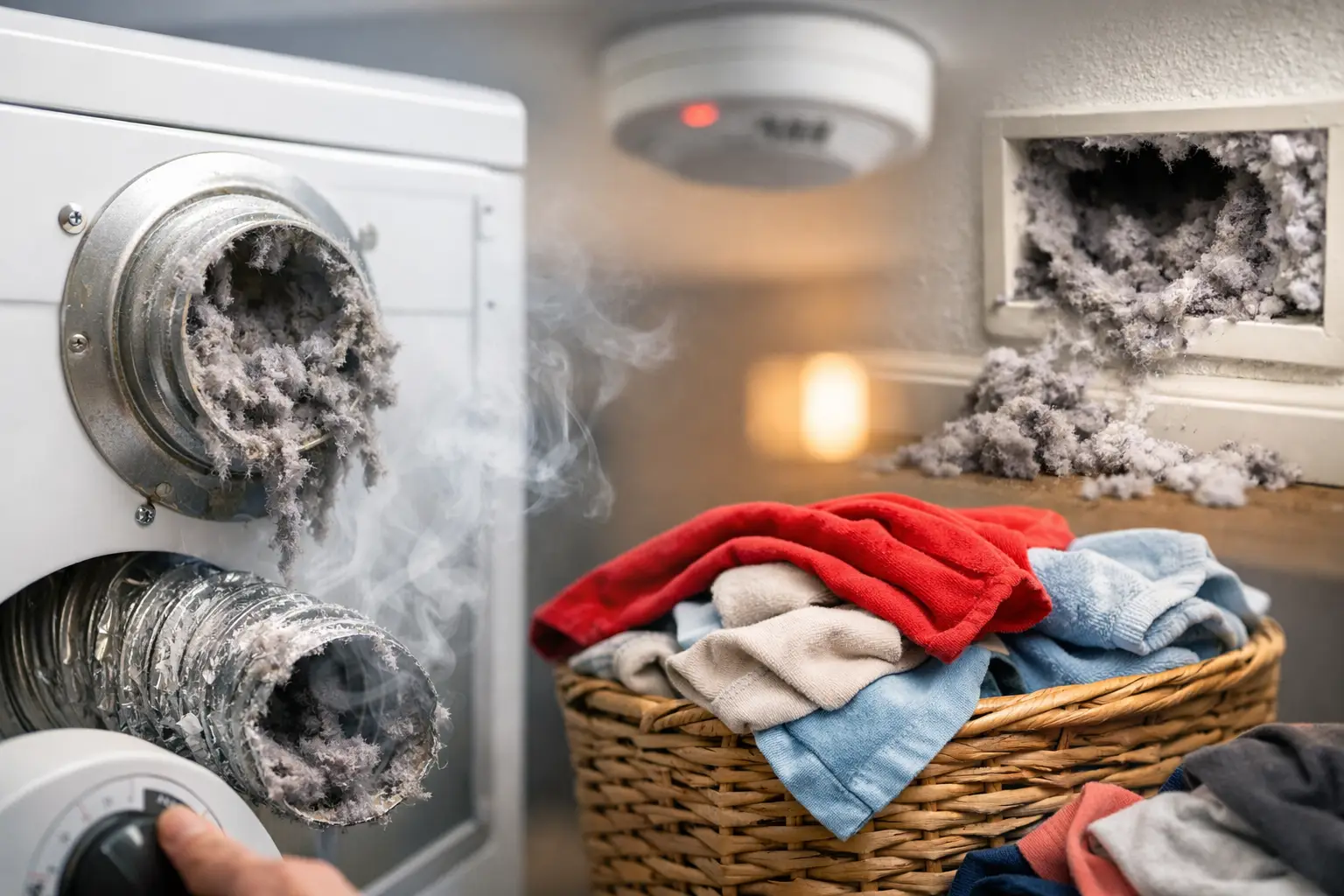
A dryer that suddenly needs two or three cycles to dry a normal load is not just frustrating. It is often one of the best dryer vent warning signs that airflow has been restricted. Behind the dryer and inside the vent line, lint can build up gradually until heat and moisture have nowhere to go. That can raise energy use, shorten the life of the appliance, create excess humidity indoors, and increase fire risk.
Dryer vent problems are easy to overlook because the dryer may still run. But a running appliance is not necessarily a safely venting appliance. Homeowners, landlords, property managers, and facility operators should treat changes in drying performance, heat, odors, or visible lint as a reason to schedule a professional inspection.
The best dryer vent warning signs to watch for
A dryer vent should carry hot, moist air outside efficiently every time the dryer operates. When the route is clogged, crushed, disconnected, too long, or damaged, the warning signs tend to show up in the laundry room first.
Clothes take longer to dry
Long drying cycles are one of the clearest signs of restricted vent airflow. A load that once dried in 40 to 60 minutes may begin taking two cycles or more. The dryer has to run longer to compensate, which wastes electricity or gas and puts added strain on internal components.
Heavy items such as towels, bedding, and jeans naturally take longer than lightweight clothing. Still, a noticeable change in your usual drying time deserves attention. Do not assume the dryer itself is the problem until the vent system has been inspected.
The dryer or laundry room feels unusually hot
A dryer produces heat, but the exterior of the machine should not become dangerously hot to the touch. If the laundry room feels hotter or more humid than usual during a cycle, warm air may be backing up instead of exhausting outdoors.
This is especially concerning in apartments, multifamily properties, commercial laundry areas, and laundry closets with limited ventilation. Heat buildup can make the space uncomfortable, contribute to moisture-related problems, and place greater stress on the dryer.
You notice a burning smell
A burning odor should never be ignored. Lint is highly combustible, and a clogged dryer vent can trap it where temperatures are elevated. The smell may be faint at first, then become more noticeable during longer cycles.
Turn off the dryer if you smell burning, see smoke, or notice unusual overheating. The cause may be lint accumulation, a mechanical issue inside the appliance, or another electrical problem. A qualified professional can inspect the vent path and identify whether cleaning, repair, or replacement is needed.
The outdoor vent flap does not open properly
When the dryer is running, the exterior vent hood should release a steady flow of warm air and the flap should open. If little or no air comes out, or the flap remains closed, airflow could be blocked by lint, nesting material, a damaged hood, or a disconnected duct.
Exterior vent covers also need to keep out rain, pests, and debris without restricting exhaust. A vent hood that is broken, missing, painted shut, or covered by landscaping can prevent proper operation. This is a common issue at rental properties and commercial buildings where exterior maintenance may be handled separately from appliance service.
Lint appears around the dryer or vent connection
A small amount of lint in the dryer filter is normal. Lint collecting behind the appliance, around the wall connection, or outside near the vent termination is not. It can indicate a loose connection, a damaged transition hose, or pressure building inside a clogged line.
Visible lint also means the system may be releasing particles into places where they do not belong. In a home, that can make the laundry area harder to keep clean. In a business or multifamily building, it can become a recurring maintenance and safety concern.
The dryer shuts off before the load is dry
Many modern dryers have sensors or thermal safety controls that can shut down the unit when temperatures become too high. If the dryer stops mid-cycle, the controls may be responding to restricted airflow. Repeated overheating can also damage the appliance over time.
A shutdown does not always mean the dryer needs replacement. The vent line may be the issue, particularly if the problem occurs alongside slow drying, excess heat, or weak outdoor airflow.
Why dryer vent restrictions become a fire and moisture problem
Lint is produced every time clothes tumble. Cleaning the lint screen after every load helps, but it does not remove the lint that passes beyond the filter and settles inside the ductwork. Over months or years, buildup can narrow the vent path and reduce the dryer’s ability to exhaust heat.
The risk is not limited to lint. Long vent runs, multiple bends, flexible foil-style connectors, crushed ducts, bird nests, and disconnected sections can all interfere with airflow. In older homes and renovated properties, the vent route may be hidden behind walls, ceilings, or cabinetry, making a visual check incomplete.
Restricted airflow also keeps moisture in the building longer. That may lead to condensation around the dryer area, musty odors, or conditions that support mold growth in vulnerable spaces. For families managing asthma or allergies, and for commercial property managers responsible for indoor conditions, addressing the source is more effective than masking the odor or running the dryer longer.
When a dryer vent needs cleaning, repair, or replacement
Cleaning is often the right solution when lint and debris are the main problem. Professional equipment can remove buildup throughout the vent route, including areas that cannot be reached from the lint trap or exterior hood alone. A proper service should also confirm that air is moving freely to the outside.
Repair may be necessary if the duct has separated, been crushed behind the dryer, developed gaps, or has an improperly installed exterior termination. Replacement may be the safer choice for damaged or outdated materials that collect lint more easily or do not meet current safety expectations.
The right recommendation depends on the vent’s length, material, number of turns, access points, and overall condition. A professional inspection provides a clearer answer than guessing based on a single symptom. For property managers, this is particularly useful when occupants report slow drying but the underlying issue may be outside the unit itself.
Why professional inspection is worth scheduling
Dryer vent work can involve hidden duct runs, roof or upper-wall terminations, and tight spaces behind heavy appliances. Attempting a partial cleaning may remove some visible lint while leaving the main blockage untouched. It can also miss loose fittings or damaged sections that continue to leak heat, moisture, and lint.
Experienced technicians can inspect the full system, clean the accessible ductwork with appropriate equipment, and identify repairs that support safer operation. At Pro Air Cleaners, trained technicians use professional cleaning methods and can provide a free video inspection so customers can see the condition of the vent and understand the recommended work.
For homes with frequent laundry use, large households, pets, or long vent runs, annual dryer vent service is often a sensible maintenance schedule. Commercial laundry areas, multifamily properties, salons, gyms, and other high-use facilities may need more frequent attention. Usage and vent design matter more than a one-size-fits-all timetable.
Do not wait for a complete blockage
A complete blockage is not the first sign of a dryer vent problem. By that point, your dryer may already be overheating, your utility costs may have increased, and lint may have accumulated where it should not. Responding when drying times change or the laundry room feels unusually warm can prevent a smaller maintenance issue from becoming a larger repair or safety concern.
If you have noticed any of these warning signs, schedule a professional dryer vent inspection and ask for a clear explanation of what the technician finds. Clean airflow helps protect the appliance, supports a healthier property, and gives you greater confidence every time the dryer runs.