
The dryer may not be the problem. If clothes need another cycle to dry, it’s easy to suspect a failing appliance, but restricted airflow can cause the same frustrating pattern. Common clogged dryer vent symptoms include longer drying times, excess heat, a burning smell, or lint collecting near the outdoor vent. One sign alone may not reveal the cause, so look for patterns in how the dryer behaves.
It’s reasonable to feel concerned when laundry takes longer or you notice unusual heat, especially because lint buildup can affect safety. This guide covers seven signs to check, how vent related symptoms can differ from common dryer problems, and which basic checks are appropriate at home. You’ll also learn when to stop troubleshooting and consider professional cleaning, repair, or replacement. A few careful observations can help you choose a sensible next step without guessing or taking apart the appliance.
Key Takeaways
- Longer drying cycles, unusual heat, and weak airflow can be clues, but no single sign confirms a clogged vent.
- Restricted airflow can affect heat and moisture removal, and may be accompanied by lint buildup along the exhaust path.
- Compare possible vent symptoms with appliance, load, or setting issues before deciding what to check next.
- Keep home checks to the lint screen and visible, safely accessible exterior vent area. Stop if you notice concerning signs.
- Persistent symptoms or suspected vent damage may call for professional cleaning, repair, or replacement.
Clogged Dryer Vent Symptoms: Check These Signs First
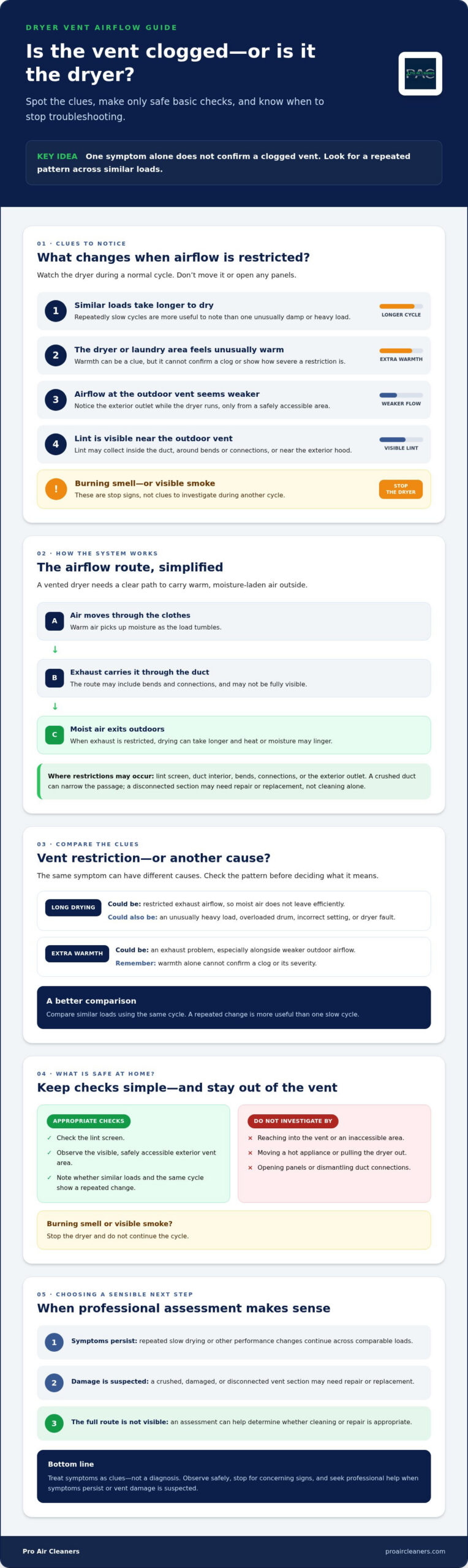
Longer drying cycles, unusual warmth, and weaker airflow at the outdoor exhaust are common clues that a dryer vent may be restricted. The vent carries moist air from the dryer to the outdoors. Because similar changes can also result from a dryer fault, laundry load, or setting, treat these clogged dryer vent symptoms as clues, not a diagnosis.
During a normal cycle, observe the dryer without moving it or opening any panels. Note whether:
- Similar loads take longer to dry than they used to.
- The dryer or laundry area feels unusually warm.
- Airflow at the exterior vent seems weaker than usual.
- Lint is visible around the outdoor vent opening.
Dryers rely on airflow to carry heat and moisture through the exhaust system. For a basic overview of how clothes dryers work, see the appliance’s drying and venting process. A change in performance is worth noting, but it doesn’t identify the cause by itself.
Does laundry take longer to dry than usual?
When exhaust airflow is restricted, moist air may not leave the dryer efficiently. Clothing can stay damp longer, and a cycle may take more time. Compare similar loads using the same cycle before drawing a conclusion. One unusually heavy load, an overloaded drum, an incorrect setting, or a dryer fault can also extend drying time. A repeated change across comparable loads is more useful than a single slow cycle.
Is the dryer, laundry room, or exhaust unusually hot?
Notice whether the area around the appliance or the laundry room feels hotter than usual, or whether airflow at the exterior outlet seems weak while the dryer runs. These observations can suggest an exhaust problem, but warmth alone can’t confirm a clog or show how severe a restriction may be. Don’t reach into the vent or move a hot appliance to investigate. If you notice a burning smell or visible smoke, stop the dryer and don’t continue the cycle.
Why a Clogged Dryer Vent Can Cause Heat, Moisture, and Lint
A dryer needs a clear route to move warm, moisture laden air out of the appliance and outdoors. In a vented dryer, air travels through the exhaust duct and exits through an exterior hood or outlet. The route’s length, bends, and connections vary by home and installation, so the full path may not be visible from the laundry room.
Restricted exhaust airflow can leave moisture in clothes, contribute to unusual warmth, and make lint buildup more likely. These effects help explain why several clogged dryer vent symptoms may appear together, but they don’t prove the vent is the cause. The U.S. Consumer Product Safety Commission’s CPSC safety alert explains that lint buildup can obstruct airflow and contribute to overheating and fire.
How does dryer airflow carry heat and moisture outside?
As clothes tumble, the dryer moves warm air through the load, where it picks up moisture. The exhaust system carries that air away from the appliance and out of the home. If the path is restricted, air may not escape as intended, which can affect drying and allow heat or moisture to linger. The precise layout depends on the property and dryer installation. There isn’t one vent arrangement for every home.
Where can lint and other restrictions build up?
The lint screen catches much of the lint released during drying, but some can pass beyond it during ordinary use. Over time, buildup may collect inside the duct, around bends or connections, or near the exterior vent hood. An obstructed outlet can also interfere with exhaust, even if the visible section of duct appears clear.
Not every airflow restriction is a cleaning issue. A crushed duct can narrow the passage, while a disconnected section may allow moist, lint containing air to escape where it shouldn’t. Those conditions may need repair or replacement rather than cleaning alone. Don’t pull the dryer out, dismantle duct connections, or reach into an inaccessible vent to investigate. Visible signs can’t show the condition of the entire route.
If performance changes persist or you suspect a damaged or disconnected section, professional help can determine whether the system needs cleaning or repair. Pro Air Cleaners provides dryer vent cleaning and repair for residential and commercial customers in Connecticut, including New Britain, as well as Massachusetts and New York.
Clogged Dryer Vent or Dryer Problem? Compare the Clues
Long drying times can point to restricted exhaust, but they can also come from the load, cycle, or appliance. Compare several observations instead of treating one symptom as a diagnosis. A recurring pattern can help you decide whether to check basic settings or arrange an assessment.
| What you notice | Possible vent clue | Other possible cause |
|---|---|---|
| Similar loads repeatedly need extra drying time | Restricted exhaust may be slowing the removal of moist air. | A drum packed too full, a cycle that doesn’t suit the fabric, or a dryer issue may also affect drying. |
| Little noticeable air at the exterior outlet during a cycle | Weak airflow may suggest a restriction somewhere along the vent route. | Outlet design and installation can affect what’s easy to observe, so this clue alone isn’t conclusive. |
| Lint around the outdoor vent or recurring unusual warmth nearby | These observations may accompany reduced airflow or buildup. | Lint can have other sources, and warmth by itself doesn’t identify a fault. |
| One load dries slowly, but comparable loads dry normally | A vent issue is still possible, but a one time change is less telling. | Load size, dampness, or cycle selection may explain the difference. |
Symptoms suggest where to investigate, not what has definitively failed. Even several clogged dryer vent symptoms can’t confirm the cause without assessing the exhaust route and appliance.
Which clues point toward restricted exhaust airflow?
Recurring long cycles become more suggestive when they occur alongside weak airflow at the exterior outlet, visible lint near the outlet, or unusual warmth around the laundry area. Observe the outlet from a safe distance while the dryer runs, if it’s safely accessible. Don’t reach into the vent or remove fixed ductwork to test airflow. Multiple persistent clues make a vent assessment more reasonable than one isolated change.
What else can make a dryer take too long?
An overloaded drum, unsuitable cycle setting, or items that went into the dryer especially damp can affect drying time. Appliance maintenance issues can also be involved. Check the lint screen and consult the dryer’s manual for basic guidance before trying other troubleshooting. Don’t dismantle the appliance or vent. For more detail on what professional service involves, see this professional dryer vent cleaning guide.
What to Do When You Notice Clogged Dryer Vent Symptoms
Use a cautious sequence: stop the dryer if you notice a burning odor, smoke, or concerning overheating; check only items you can reach safely; note what you observe; then decide whether further assessment is needed. Don’t keep running cycles to test a dryer that shows warning signs. Limited checks can help you describe the problem without exposing yourself to hot equipment or hidden ductwork.
Which safe checks can you make without taking the dryer apart?
Once the dryer is off and cool, clean the lint screen as directed in the appliance manual and look for obvious damage. From a safe, accessible position, check the exterior vent hood for visible blockage or a flap that appears stuck. Don’t put your hands or tools inside the outlet, and don’t climb or move equipment to reach it.
Make a simple note of what changed: which loads take longer, whether airflow at the outlet seems weaker than usual, and whether you saw visible lint or unusual warmth. These observations may help establish whether symptoms are recurring, but they won’t confirm the condition of the full vent system.
When should you stop using the dryer and seek help?
Stop the dryer if you notice smoke, a burning smell, or concerning overheating, and don’t restart it to see whether the issue passes. If there’s a fire or smoke that makes the area unsafe, leave and follow local fire safety guidance, including contacting emergency services as appropriate. Safety comes first. Troubleshooting can wait.
If several symptoms persist after basic checks, arrange a professional assessment rather than probing the duct or dismantling the appliance. A visible exterior opening can’t show whether there’s a restriction, disconnection, or damage farther along the route. For additional prevention guidance, read about dryer vent fire hazard prevention.
If you need help assessing a persistent concern, ask about professional dryer vent cleaning or repair.
When Professional Dryer Vent Cleaning or Repair Makes Sense
If clogged dryer vent symptoms continue after basic, safe checks, a professional assessment can help determine whether the cause is buildup, a damaged component, or something else. This can be especially useful when part of the duct run is hidden or difficult to access. Looking at the exterior outlet alone won’t reveal the condition of the entire route.
Cleaning and repair address different problems. Professional cleaning removes accumulated lint and other debris from the vent path. Repair or replacement may be appropriate if a section is crushed, disconnected, damaged, or otherwise unable to carry exhaust properly. Cleaning can’t restore a damaged duct, so have the system assessed before assuming one service will resolve the issue.
Does the problem call for cleaning, inspection, or vent repair?
Recurring lint buildup or signs of restricted airflow are reasons to ask whether the vent needs cleaning. If you can see damage or suspect a loose connection, ask for an assessment that considers repair or replacement as well. A repeated restriction may also call for a closer look at the vent route and outlet. The appropriate next step depends on what an assessment finds, so avoid assuming a particular service or result in advance.
What should you ask a local dryer vent professional?
Clear questions can help you understand the proposed work before it begins. Ask which parts of the vent system will be assessed and cleaned, and how the provider handles a suspected damaged duct or blocked exterior outlet. You can also ask what findings would make repair or replacement more appropriate than cleaning alone. For more background, read this dryer vent cleaning and safety guide.
Pro Air Cleaners provides dryer vent cleaning, repair, and replacement for residential and commercial customers across Connecticut, Massachusetts, and New York. If you’re still noticing performance changes or suspect a vent issue, contact Pro Air Cleaners about dryer vent service and describe what you’ve observed. Connecticut homeowners comparing service options can also review what affects dryer vent cleaning cost in CT, including vent route length, access, and whether repair work may be needed alongside cleaning.
Take the Next Step Toward Reliable Dryer Performance
Longer drying cycles, unusual warmth, and weak airflow can be clues to a vent restriction, but they don’t confirm the cause. Compare symptoms across similar loads, keep home checks to safe, accessible areas, and stop using the dryer if you notice smoke or a burning smell. If signs persist, an assessment can help determine whether cleaning or vent repair is appropriate.
Recognizing clogged dryer vent symptoms gives you a clearer basis for deciding what to do next. Pro Air Cleaners offers dryer vent cleaning, repair, and replacement for residential and commercial customers in Connecticut, including New Britain, as well as Massachusetts and New York. The business reports more than 30 years of experience and insured technicians.
If you’re still noticing changes in dryer performance, contact Pro Air Cleaners to discuss dryer vent cleaning or repair.
Frequently Asked Questions
What are the most common symptoms of a clogged dryer vent?
Common clogged dryer vent symptoms include clothes taking longer to dry, unusually warm conditions around the dryer or laundry room, weak airflow at the exterior outlet, and lint near the vent opening. You may notice more than one sign, but these clues don’t confirm the vent is blocked. A large load, unsuitable cycle, or dryer issue can cause similar changes. Compare how the appliance performs with similar loads and settings.
Can a clogged dryer vent make clothes take two cycles to dry?
Yes, restricted exhaust airflow can leave moisture in clothes and make them need another cycle. But two cycles don’t prove the vent is clogged. A full drum, items that went in especially damp, an unsuitable setting, or an appliance problem can also prolong drying. Compare similar loads on the same cycle and note whether the issue recurs. If long drying times persist, consider a professional assessment rather than repeatedly running extra cycles.
Is it safe to use a dryer with a clogged vent?
If you suspect a clogged vent, don’t ignore persistent symptoms or keep running repeated cycles to compensate. Restricted airflow can contribute to heat buildup, and lint accumulation is a safety concern. Stop using the dryer if you notice smoke, a burning smell, or concerning overheating. If there’s smoke or fire, leave the area if it’s unsafe and follow local fire safety guidance, including contacting emergency services as appropriate.
How can I tell if my dryer vent is clogged or my dryer is broken?
You can compare clues, but symptoms alone can’t reliably identify the failed part. Repeated long cycles combined with weak airflow at the exterior outlet or visible lint near it may point toward a vent restriction. A one time slow load may instead relate to load size or settings. Check the lint screen and consult the dryer manual for basic guidance. If symptoms continue, a professional can assess the vent path and help distinguish possible causes.
Can I check a clogged dryer vent myself?
You can make a few limited checks without taking the dryer apart. With the dryer off and cool, clean the lint screen as the manufacturer directs and look for obvious damage. From a safe, accessible position, observe the exterior vent hood for visible blockage or a stuck flap. Don’t reach inside the vent, use improvised tools, move heavy equipment, climb unsafely, or remove fixed ductwork. These checks can’t show the condition of the full vent run.
When should I call a professional for dryer vent symptoms?
Arrange a professional assessment if long drying times, weak airflow, or other concerns persist after basic checks, or if the duct run is inaccessible or appears damaged. Stop using the dryer if you notice smoke, a burning smell, or concerning overheating. Pro Air Cleaners provides dryer vent cleaning, repair, and replacement for residential and commercial customers across Connecticut. An assessment can help determine which service, if any, suits the condition of the vent system.
Does a clogged dryer vent always cause a burning smell?
No, a clogged vent doesn’t always produce a burning smell. A restriction may first show up as longer drying cycles, unusual warmth, or weak exhaust airflow, and some dryers may show few obvious signs. Don’t wait for an odor before taking persistent changes seriously. If you do notice a burning smell, stop the dryer and don’t restart it to test whether the odor returns. Treat smoke as an urgent safety concern.