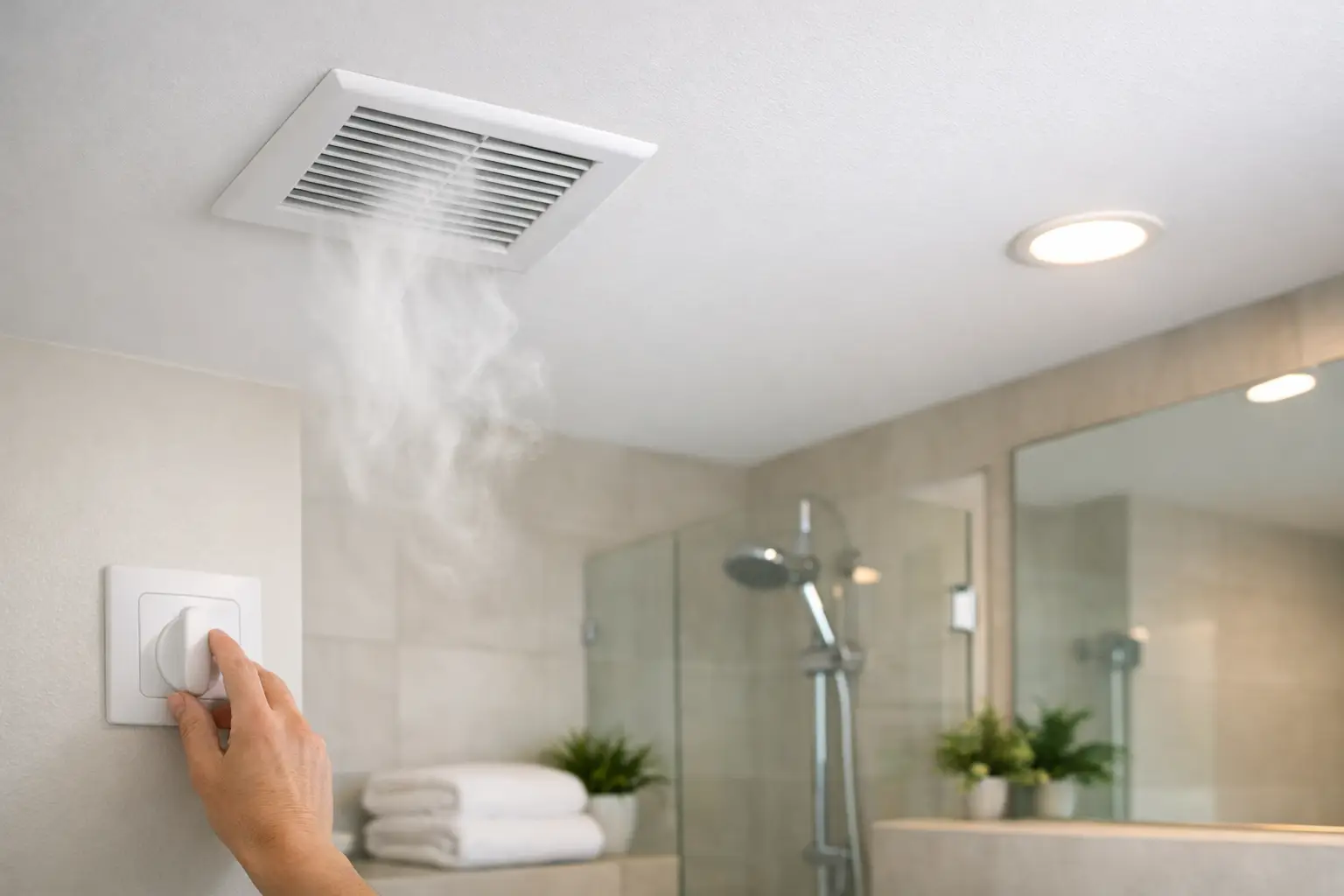
A bathroom can look spotless and still hold the conditions that lead to mold, peeling paint, stale odors, and damaged drywall. Knowing how to improve bathroom ventilation starts with looking beyond the fan grille. The real question is whether moist air is being captured, moved through a properly sized duct, and discharged safely outdoors.
For homes, apartments, offices, and commercial properties, bathroom ventilation is a health and maintenance issue. Warm shower air carries moisture into wall cavities, ceilings, and nearby rooms when the exhaust system is weak, clogged, disconnected, or improperly installed. A professional inspection can identify the source before a small ventilation problem becomes a costly repair.
Why Bathroom Ventilation Matters
Every shower, bath, and sink use adds humidity to an enclosed space. If that humidity has nowhere to go, it settles on mirrors, ceilings, grout, fixtures, and painted surfaces. Over time, repeated moisture exposure can support mold growth and leave behind persistent musty odors.
Poor ventilation can also affect indoor air quality outside the bathroom. Moisture and contaminants may travel through connected rooms, HVAC pathways, or ceiling spaces. For families with allergies, asthma, or sensitivity to odors, a bathroom that stays damp for too long can be more than an inconvenience.
Property managers and business owners face an additional concern: recurring moisture damage can lead to tenant complaints, maintenance calls, surface replacement, and interruptions to normal operations. A functioning exhaust system helps protect the building as well as the people inside it.
Signs Your Bathroom Exhaust System Needs Attention
A noisy fan is not always an effective fan. In fact, a fan may run for years while moving very little air because dust has built up on the motor or the duct has become restricted. Watch for patterns that continue even when the fan is on during and after a shower.
Common warning signs include:
- Mirrors and windows that remain fogged long after bathing
- Mildew spots, peeling paint, or discoloration on ceilings and walls
- Musty or lingering odors that return after cleaning
- A fan that rattles, hums, runs weakly, or does not turn on
- Moisture dripping from the grille or visible stains around it
- An exhaust vent that releases little or no air outside
These symptoms can have more than one cause. A bathroom may have an undersized fan, a damaged motor, an overly long duct run, a crushed flex duct, a blocked exterior cap, or a vent that ends in an attic, soffit, crawl space, or other unsuitable location. Cleaning the grille alone will not correct those problems.
How to Improve Bathroom Ventilation With the Right Fan
The fan must be sized for the room and the way it is used. A small powder room needs less airflow than a large primary bathroom with a shower, tub, toilet, and multiple occupants. Ceiling height, room layout, windows, and how often the space is used can also affect the required performance.
Higher airflow is not automatically better. An oversized unit can be louder, use more energy, and create issues if the duct system cannot support it. A quiet, correctly sized fan with proper ducting is generally more effective than a powerful fan connected to a restricted or poorly routed vent.
Noise matters, especially in homes, hotels, offices, and multifamily properties. When a fan is excessively loud, people tend to switch it off too soon or avoid using it altogether. Modern quiet fans can encourage consistent use, but the installation quality still determines whether the system performs as intended.
The Ductwork Often Determines Performance
The most important part of bathroom ventilation is frequently hidden above the ceiling or behind a wall. The fan can only remove moisture if its ductwork gives air a clear path to the exterior.
Short, direct, properly supported duct runs usually perform better than long runs with sharp bends. Every unnecessary turn adds resistance. Sagging flexible duct can collect dust and condensation, while crushed sections can sharply reduce airflow. Loose connections can send moist air into attics or wall cavities instead of outdoors.
The exterior termination also needs attention. A blocked, damaged, or improperly screened cap can restrict exhaust and allow moisture to linger in the duct. In colder weather, poor duct insulation may contribute to condensation inside the line, which can eventually stain ceilings or cause water to drip near the fan housing.
A trained technician can inspect the complete route, not just the fan. This is especially valuable after a remodel, roof project, storm damage, or a history of recurring mold and moisture issues.
Clean the Fan and Vent Path Professionally
Bathroom fans pull in more than humid air. Over time, they collect lint, dust, hair, aerosol residue, and debris that can coat the grille, blower wheel, motor housing, and duct interior. This buildup restricts airflow and makes the fan work harder.
Professional bathroom vent cleaning addresses the components that are difficult to reach safely and thoroughly. Using HEPA-filtered equipment helps contain dust during service, while a detailed inspection can reveal disconnected ducts, damaged materials, and hidden blockages. For properties where occupants are concerned about chemicals, green cleaning methods can support a cleaner indoor environment without adding harsh odors.
A thorough service should focus on airflow, not appearance alone. A clean-looking grille does not prove that the fan is exhausting moisture outside. Post-cleaning verification and video inspection provide useful evidence of the system’s condition and help property owners make informed repair decisions.
Add Controls That Keep the Fan Running Long Enough
Many ventilation problems come down to timing. Turning the fan on only while showering may not remove all the moisture created during a bath. Humidity remains in the room, towels, tile, and air after the water stops running.
A timer switch can keep the fan operating after the bathroom is empty. A humidity-sensing control can activate the system when moisture levels rise, which is helpful in busy households, rental properties, and commercial restrooms. The best choice depends on the occupants, the existing electrical setup, and whether the fan itself is reliable enough to run automatically.
Windows can help when outdoor conditions are dry and security allows, but they are not a complete substitute for mechanical exhaust. In humid weather or during cold seasons, opening a window may provide limited relief and can make the room less comfortable. A properly vented exhaust fan remains the more dependable solution.
Do Not Vent Bathroom Air Into the Attic
Exhausting bathroom air into an attic, garage, crawl space, or other enclosed area simply moves the moisture problem out of sight. That moisture can settle on framing, insulation, roof sheathing, and stored items. It can also contribute to mold growth and structural deterioration over time.
Bathroom exhaust should terminate outdoors through an appropriate wall or roof cap, following applicable building requirements. This is one of the most important reasons to involve an experienced vent professional. Correcting an improper termination may require more than replacing the fan itself.
Commercial buildings can be more complex because restrooms may share shafts, duct pathways, or roof penetrations. Facility operators should not assume that visible airflow at a grille means the system is compliant or effective. Inspection of the full exhaust path is the practical way to confirm performance.
When Repair Is Better Than Replacement
Replacement is not always the first answer. If the fan is relatively new and properly sized, cleaning the blower assembly, clearing the duct, repairing a disconnected joint, or replacing an exterior cap may restore airflow. These repairs can be cost-effective when the housing and electrical components are still in good condition.
Replacement makes more sense when the motor is failing, the unit is too loud to use, airflow is inadequate for the space, or the fan cannot be connected to a safe exterior duct route. If water damage, corrosion, or repeated moisture problems are present, a complete assessment helps prevent spending money on a partial fix.
At Pro Air Cleaners, experienced technicians can inspect bathroom vents, clean restricted pathways, identify damage, and recommend the work that fits the condition of the system. Free estimates and video inspections give homeowners, landlords, and facility managers a clearer view of what is happening behind the ceiling.
A bathroom should dry out without leaving fogged mirrors, musty air, or moisture stains behind. When ventilation works correctly, it quietly protects your indoor air, your finishes, and the people who use the space every day.