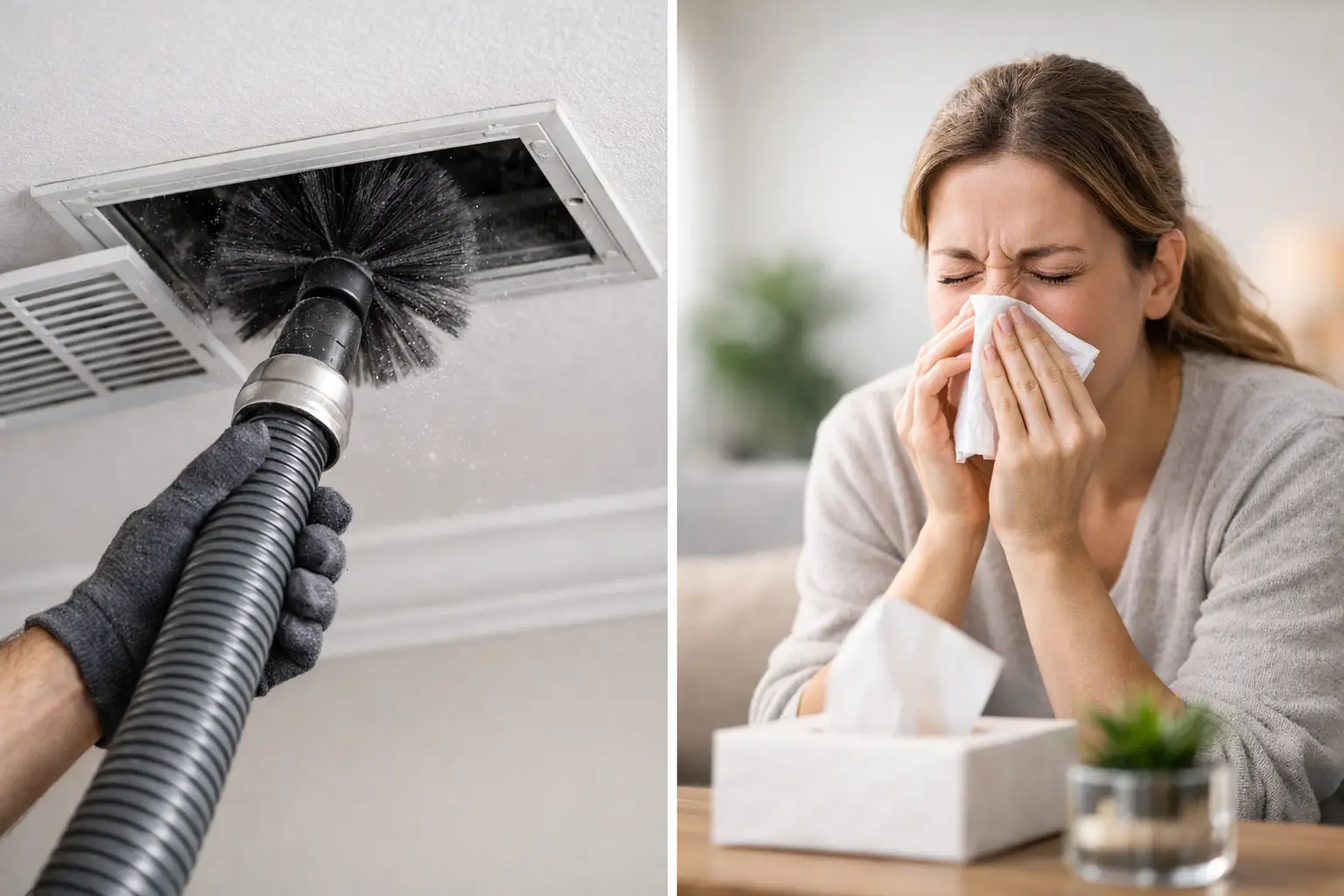
When allergy symptoms seem worse at home, the problem is not always outside pollen. Every time your heating or cooling system turns on, it can move settled dust, pet dander, pollen, and other particles through the building. Vent cleaning for allergy sufferers focuses on removing the buildup inside the air pathways that occupants use every day – not just making visible registers look cleaner.
For families, tenants, employees, and customers, cleaner ventilation can be one practical part of a healthier indoor environment. It is not a cure for allergies, and it cannot eliminate every trigger. But when ducts and vents have collected debris, moisture-related contamination, or construction dust, professional cleaning can help reduce the material that repeatedly circulates through a home or workplace.
Why Vent Buildup Can Affect Allergy Symptoms
Your HVAC system draws air in, conditions it, and sends it back through supply vents. Along the way, airborne particles can settle in return ducts, supply ducts, registers, blower components, and other areas of the system. Dust is rarely just dust. It may contain skin cells, fabric fibers, pet dander, outdoor pollen, and fine debris tracked in from outside.
In a well-maintained system, filtration captures a portion of these particles before they travel farther. But a clogged filter, leaky ductwork, a dirty return, or years of buildup can leave more material in the system than occupants expect. Turning on the heat or air conditioning may then stir particles that had been sitting undisturbed.
This matters most for people with seasonal allergies, asthma sensitivities, pet allergies, or reactions to dust. It can also matter after a renovation, water issue, move-in, pest problem, or long period of vacancy. Those events can introduce a heavier-than-normal load of debris into ducts and vents.
What Professional Vent Cleaning Actually Addresses
A proper service reaches beyond the vent cover. Cleaning only the grille may improve its appearance, but it does not remove buildup farther inside the ventilation path. Professional technicians inspect the system, access the ducts and components that can be safely cleaned, and use equipment designed to capture loosened debris rather than release it back into the occupied space.
At Pro Air Cleaners, HEPA-filtered equipment helps contain fine dust during the cleaning process. Trained technicians can also identify conditions that cleaning alone will not solve, such as damaged vents, loose connections, moisture concerns, blocked airflow, or a filter that is not suited to the building’s needs. When appropriate, baby-safe green solvents can be used for targeted cleaning without filling the property with harsh chemical odors.
A thorough job should also include visible proof of work. Video inspection and post-cleaning review give homeowners and property managers a clearer picture of the conditions inside areas they cannot normally see. That transparency is especially valuable when allergy concerns are ongoing and you need to decide whether the issue is duct buildup, filtration, humidity, or another source.
Cleaning Helps, but It Is Not the Only Answer
It is reasonable to expect less dust movement and a cleaner system after professional service. It is not reasonable to expect duct cleaning to cure hay fever, remove every allergen from a building, or correct an active mold or moisture problem without addressing its source.
If there is water intrusion, condensation, or visible microbial growth, the moisture issue needs attention first. If a pet lives in the home, dander will continue to be present. If windows stay open during high-pollen days, outdoor particles will still enter. Vent cleaning works best as part of regular indoor air care: appropriate filter changes, moisture control, routine housekeeping, and timely HVAC maintenance.
Signs Allergy Sufferers May Need Vent Cleaning
No single sign proves that ducts are causing symptoms. Still, several conditions make an inspection worthwhile. You may notice dust collecting quickly after cleaning, a stale or musty odor when the system starts, visible debris around registers, or allergy discomfort that feels more noticeable when the HVAC system is running.
Recent construction is another common trigger for service. Drywall dust, sawdust, insulation fibers, and other renovation debris can enter returns even when contractors take precautions. Newly purchased homes and rental turnovers also deserve a closer look because prior cleaning and maintenance records may be unclear.
For commercial properties, consider the amount of traffic the building receives. Offices, medical waiting areas, retail spaces, schools, and multi-unit properties can accumulate dust and outdoor contaminants quickly. A system that runs long hours has more opportunity to move particles through common spaces, particularly when maintenance has been deferred.
Why Method Matters for Allergy-Focused Cleaning
Not all duct and vent cleaning is equal. A low-cost service that only brushes visible openings may leave the main buildup behind. Worse, poorly contained cleaning can temporarily push dust into rooms. For an allergy-sensitive household or workplace, the goal is controlled removal, not a quick cosmetic treatment.
Professional equipment creates negative pressure in the system while agitation tools loosen accumulated debris. HEPA filtration helps capture fine particles, and technicians should protect nearby surfaces and work carefully around registers, returns, and HVAC components. A qualified provider also knows when to stop and recommend repair, replacement, or a separate inspection instead of treating every problem as a cleaning issue.
Dryer vents and bathroom exhaust vents deserve attention too. They do not connect to the central HVAC ducts in the same way, but they affect indoor conditions and safety. A restricted bathroom vent can allow excess humidity to remain in the room, increasing the risk of mildew and moisture damage. A clogged dryer vent creates a fire hazard and can leave laundry areas warmer and dustier than they should be.
How Often Should Vents Be Cleaned?
There is no single schedule that fits every property. A lightly occupied home with good filtration may need less frequent service than a home with pets, several occupants, recent remodeling, or smokers. Properties near busy roads, wooded areas, or high-pollen environments may also collect more outdoor debris.
Rather than booking cleaning on a fixed calendar without evidence, start with an inspection. A free video inspection can show whether the system has meaningful buildup and whether vent repair or replacement is needed. This approach avoids unnecessary work while helping you make a decision based on the actual condition of your system.
Property managers may benefit from a planned maintenance schedule because turnovers, tenant complaints, and seasonal HVAC demands can be easier to manage before they become urgent. For business owners, planned cleaning can support a more comfortable work environment while helping the HVAC system move air more efficiently.
Questions to Ask Before Hiring a Vent Cleaning Company
Ask what areas of the system will be cleaned, how debris will be contained, and whether the company will inspect the work afterward. Confirm that the technicians are experienced with residential or commercial systems like yours and that the company is insured. You should also ask whether the provider can identify damaged duct sections, disconnected vents, or ventilation issues that may need repair rather than cleaning.
Be cautious about promises that sound too broad. Reliable service providers explain the practical benefits – cleaner ducts, less accumulated debris, improved airflow potential, and a healthier-feeling indoor environment – without claiming to solve every allergy problem overnight.
A Cleaner Starting Point for Your Indoor Air
For allergy sufferers, the air system should not become a hidden storage area for dust and debris. Professional vent cleaning can give your household, tenants, or employees a cleaner starting point, especially when it is paired with sensible filtration, moisture control, and regular HVAC care.
If you are noticing recurring dust, odors, post-renovation debris, or discomfort when the system runs, schedule an inspection before guessing at the cause. A clear look inside the vents can help you choose the next step with confidence and keep your indoor space more comfortable for the people who use it every day.