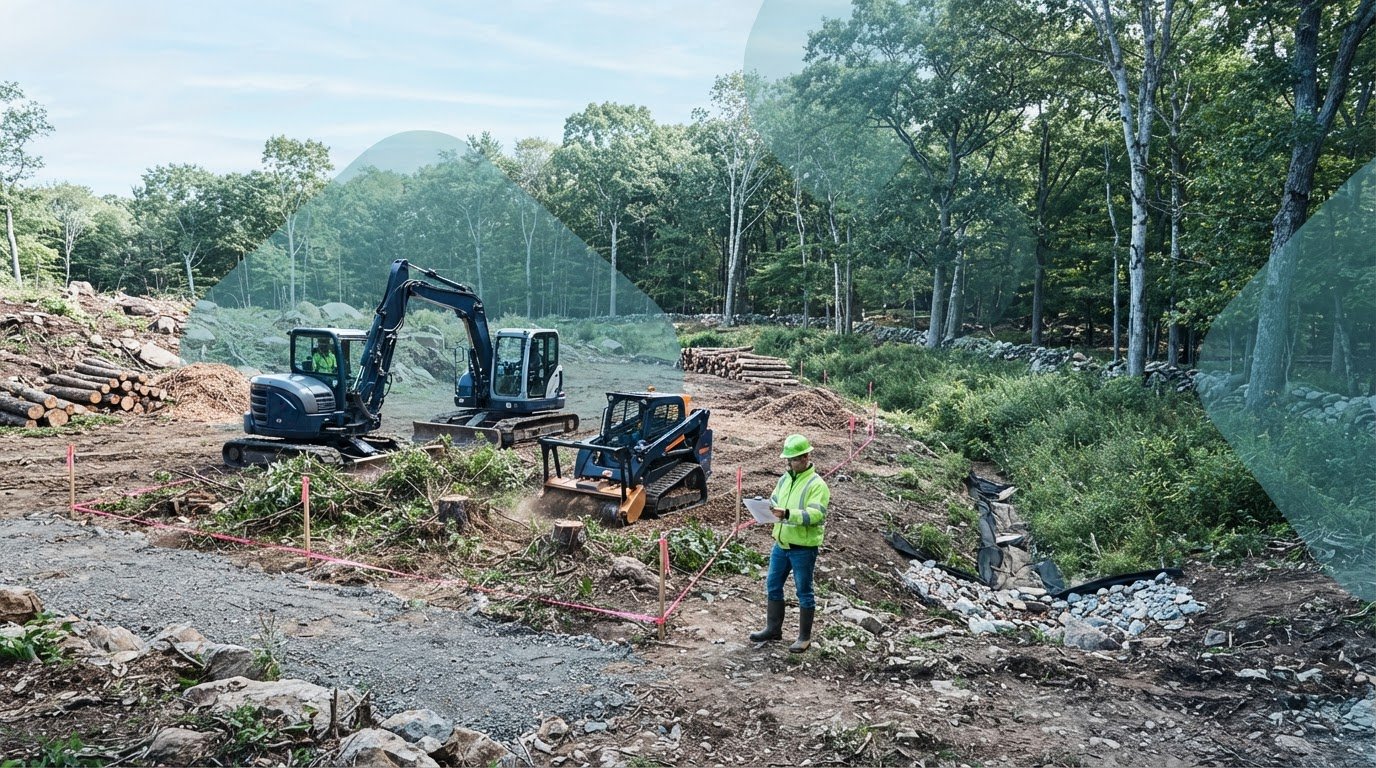
Land clearing for construction involves more than removing trees and brush. Boundaries, access, drainage, soil conditions, and debris all affect how a site can be prepared and what work remains before building begins. A clear plan helps define where clearing should stop and which tasks belong to later stages.
Start by connecting the intended construction use to the conditions on the ground. This guide walks through the sequence, from reviewing the site and setting work limits to selecting a clearing approach, managing debris, and preparing for handoff. It also explains how to distinguish vegetation removal from grading and foundation work.
For Connecticut property owners, terrain, vegetation, and local requirements can vary from one site to another. Comparing the site plan with visible conditions helps identify potential obstacles early, keep work focused, and reduce the risk of disturbing areas that should remain untouched.
Key Takeaways
- Begin with the intended construction use and site plans to identify what must be cleared and what should remain undisturbed.
- Land clearing for construction is one part of site preparation. Keep vegetation removal distinct from grading and foundation work.
- Choose a clearing approach based on vegetation, access, the required site condition, and how debris will be handled.
- Confirm boundaries before work starts, then follow an organized sequence for clearing and debris management.
- At handoff, clarify the work limits, debris disposition, access, and visible obstacles that remain for the next project stage.
What Does Land Clearing for Construction Actually Prepare?
Land clearing for construction is the planned removal or management of vegetation and other surface obstacles within a defined work area. Depending on the scope, that may include brush, trees, stumps, rocks, or accumulated debris. Access can also affect how the work is organized. The goal is to prepare the designated area, not automatically to clear or make the entire property ready for building.
Construction land clearing addresses vegetation and surface obstacles within planned work limits. It does not, by itself, establish that a site is ready for construction. Grading shapes or levels land, while foundation work prepares for the structure. These are separate stages, guided by the project plans and site conditions.
What does a construction-ready clearing area mean?
The building footprint shows where vegetation must be removed, but the clearing area may extend beyond the future structure. Plans may also call for access routes or space for other construction activities. Identify those needs before work begins so the clearing boundary is useful without extending farther than necessary.
An access route and a building area have different purposes and may have different preparation requirements. A route may need to be cleared so people or equipment can reach the work zone, while the building area may require additional work later. Final readiness depends on the project plans and subsequent tasks, including any grading or foundation preparation.
Which site conditions can change the plan?
Vegetation density, slope, soil conditions, rocks, and access all influence how a clearing area can be approached. A site with dense growth or embedded obstacles may need a different plan from an open lot with light vegetation. Slopes and soil conditions matter too, because disturbing the ground can affect how water moves across the property.
Identify drainage paths and nearby sensitive areas during planning, then account for them when setting the work limits. Connecticut properties vary in terrain, vegetation, and surroundings, so a clearing plan suited to one lot may not fit another.
Compare the site plan with what is visible on the ground. Note vegetation within the proposed footprint, stumps or rocks that may remain after clearing, debris that needs handling, and access points that could constrain the work. This check helps clarify what clearing should accomplish and which tasks belong to later stages of site preparation.
How to Plan Land Clearing for Construction Before Work Begins
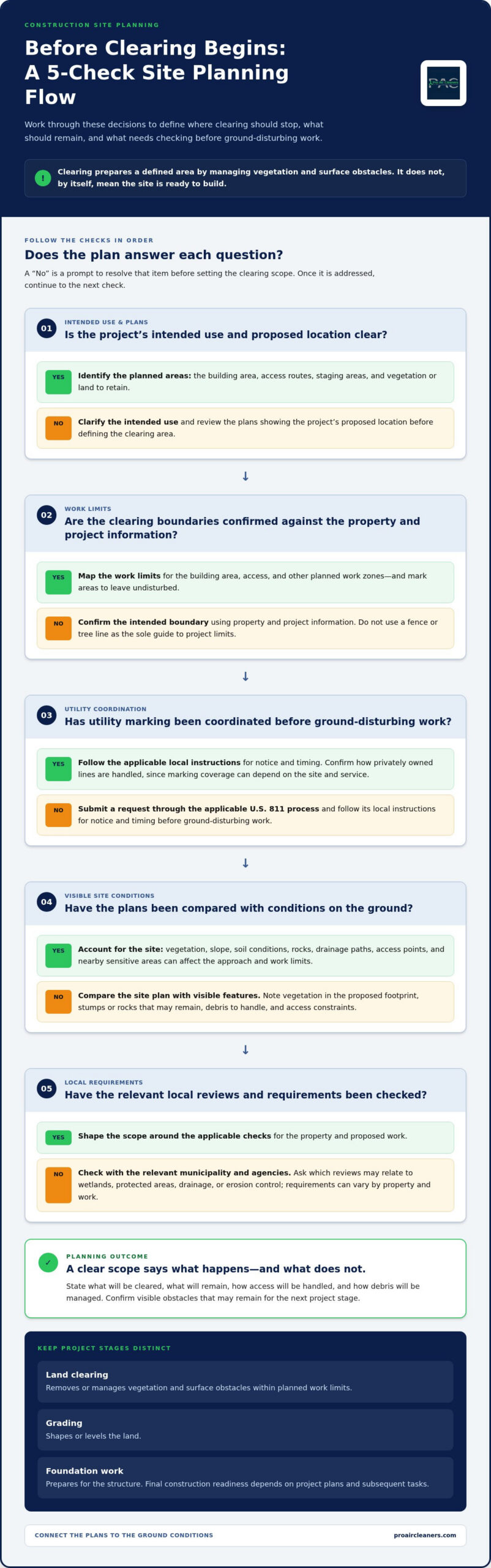
A clear scope connects the property’s intended use to the work required on the ground. Before land clearing for construction begins, organize the plans, boundaries, utility coordination, and local checks. This makes the work area intentional and helps protect areas outside it.
How do plans, boundaries, and utilities shape the clearing area?
Use the site plan to identify the building area, access routes, staging areas, and vegetation or land to retain. These details distinguish places that need clearing from areas that only need access. Don’t use a visible feature such as a fence or tree line as the sole guide to project limits. Confirm the intended boundary against the property and project information.
- Define the intended use. Identify what the project will add to the property and review the plans showing its proposed location.
- Mark the work limits. Map the building area, access, and other planned work zones. Also mark areas to leave undisturbed.
- Coordinate utility marking. Before ground-disturbing work, submit a request through the applicable U.S. 811 process and follow its local instructions for notice and timing. Confirm how privately owned lines are handled, since marking coverage can depend on the site and service.
- Review site conditions. Compare the plans with visible features, including slopes, drainage paths, vegetation, and areas that may need protection.
- Check local requirements. Verify which municipal or agency reviews apply before scheduling clearing work.
What should Connecticut property owners check locally?
Requirements can depend on the property and proposed work, so Connecticut owners should check with the relevant municipality and agencies rather than assume one rule applies everywhere. Ask which local reviews may relate to wetlands, protected areas, drainage, or erosion control. These checks help shape the work limits and avoid planning based on assumptions that may not fit the site.
Once these steps are complete, the clearing scope can state what will be cleared, what will remain, how access will be handled, and how debris will be managed. Pro Air Cleaners provides land clearing services for Connecticut properties. Learn about Pro Air Cleaners’ land clearing services. For a residential project focused on brush, see this guide to residential brush clearing services in Connecticut.
Which Land Clearing Method Fits a Construction Site?
Choose an approach based on the site condition needed for the construction plan, not just the amount of vegetation. Vegetation type and density, slope, access, and debris handling all matter. For example, a site where some trees will remain may call for selective clearing, while a building area requiring a clear surface may need vegetation removal and separate debris handling.
How do mulching, cutting, and grubbing differ?
Forestry mulching processes suitable vegetation onsite and leaves the resulting material on the ground. This may reduce the need to haul away that vegetation, but the material left behind may not suit every construction specification. Cutting and grinding separates tree or brush removal from decisions about stumps and debris. Cut vegetation may be hauled away, while stump grinding can address stumps without necessarily removing every root.
Grubbing addresses roots and stumps where the work plan calls for their removal. Rock removal and grading are also separate scope decisions. Removing trees or brush alone does not mean roots, rocks, or uneven ground have been addressed.
How should the method match the site and build?
Compare the desired result with the site conditions. Dense brush may be suitable for onsite processing if the plans allow material to remain. Larger trees may call for a cut-and-remove approach, while steep slopes or restricted access can limit where and how work is carried out. These are planning considerations, not a one-size-fits-all prescription.
- Material left onsite: Mulching may process suitable vegetation into ground-level material. That material remains part of the site condition.
- Material removed: Cutting followed by debris hauling can leave the area clearer of vegetation, though stump or root work may need to be scoped separately.
- Trees retained: Selective clearing can focus on the construction footprint and access areas while preserving designated trees or buffers outside the work limits.
Before choosing a method, compare its result with the construction specifications. Processed vegetation may be suitable for one area but unsuitable where later work requires a different surface. Removing vegetation also does not establish the finished grade or prepare a foundation. Define debris disposition, stump and rock work, and grading separately so the clearing result supports the next stage.
What Happens During Construction Land Clearing? Follow the Site Sequence
An organized clearing job follows the project limits from site review through debris management. Working in sequence keeps the job aligned with the plan, makes remaining work easier to identify, and prepares the property for its next stage without treating clearing as the whole of site preparation.
What are the main stages of site clearing?
- Review the site and scope. Compare project plans with visible conditions, including vegetation, access, slopes, and drainage features. Confirm which work is included and which areas should remain undisturbed.
- Mark the work area. Make the intended clearing limits visible before work starts. Include planned access areas and distinguish them from the building area and retained vegetation.
- Remove specified vegetation. Clear brush or trees only within the agreed limits, using an approach suited to the site and desired result.
- Address separately scoped obstacles. Handle stumps, roots, or rocks only where the plan includes that work. These tasks are not automatic parts of vegetation removal.
- Manage the debris. Identify what will be processed onsite and what will be removed, then review the cleared area against the agreed scope.
The sequence and included work can vary with the property and construction plan. A steep area with drainage features, for instance, may need different care from an open, level work zone. Keep clearing limits aligned with the project plan so preparation stays focused and areas outside the work zone remain protected.
How can the cleared site be protected before construction?
Removing vegetation can expose soil to rainfall and runoff, so erosion and drainage need project-specific attention. How to manage exposed ground depends on the site and applicable project requirements. Retained trees, property boundaries, drainage paths, and nearby sensitive areas may also need clear protection measures to keep work within its intended footprint.
After land clearing for construction, the handoff should state what was removed, what remains, how debris was handled, and whether visible obstacles are still present. Clearing does not establish final grades, complete foundation preparation, or replace construction approvals. Those remain separate considerations in the project sequence.
Pro Air Cleaners provides land clearing and dump removal for Connecticut properties. Learn about land clearing and debris removal.
- Work limits match the project plan.
- Areas and features to retain are identified.
- Debris disposition is understood.
- Visible stumps, rocks, or other obstacles are noted.
- Drainage, exposed soil, and erosion needs are accounted for in the next-stage plan.
- Grading, foundation preparation, and required approvals remain clearly distinguished from clearing.
How to Move from Land Clearing to Construction Site Handoff
A useful handoff makes clear what the clearing work accomplished and what belongs to the next stage. Before construction proceeds, compare the site with the agreed scope and intended work area. This helps prevent confusion about debris, access, and obstacles that could affect the next steps.
What should a site handoff checklist cover?
Walk the cleared area against the project plan, noting completed work and anything that remains. Keep the handoff focused on observable conditions and clearly assigned next steps.
- Boundaries: Confirm the work stayed within the planned clearing limits and designated areas to retain remain undisturbed.
- Debris: Record whether vegetation and other debris were removed or left onsite as planned. Identify any remaining piles or material needing attention.
- Access: Check that intended routes are visibly clear and note any limits that could affect access for the next stage.
- Remaining obstacles: Note visible stumps, rocks, roots, or other obstacles that may need separate work.
- Next-stage needs: Compare the site condition with the requirements of the next construction phase so outstanding tasks are clear before crews proceed.
Land clearing for construction does not automatically include grading, foundation preparation, or construction approvals. These may be separate project stages, so the handoff should distinguish completed clearing from work that remains under the broader construction plan.
How can land clearing and debris removal support the next step?
Coordinating vegetation clearing with debris management makes property preparation easier to review and gives the next stage a clearer picture of what remains. The scope depends on the property and work plan, but documenting boundaries, access, debris disposition, and visible obstacles gives the project team a practical reference.
Pro Air Cleaners provides land clearing and dump removal for residential and commercial properties. Based in New Britain, the company serves Connecticut and brings over 30 years of experience to property-preparation work. Its services focus on clearing and debris management, helping move a site toward its next use.
Explore Pro Air Cleaners’ land clearing and property services.
Set Up the Site for a Clear Next Step
Successful land clearing for construction starts with a defined scope and ends with a useful handoff. Match clearing limits to the project plans, choose an approach suited to the site and debris plan, and document what remains. This helps everyone understand where clearing stops and later work, such as grading or foundation preparation, begins.
Before the next stage, review the cleared boundaries, access routes, debris disposition, and visible obstacles. Keep drainage and exposed soil in view as the project moves forward. A careful handoff supports an organized transition without treating vegetation removal as a substitute for construction approvals or other project work.
Based in New Britain, Pro Air Cleaners provides land clearing and dump removal for residential and commercial properties in Connecticut. The team brings over 30 years of experience to property preparation. Contact Pro Air Cleaners about land clearing for your property.
A clear scope and well-planned preparation help set up the next phase with fewer unanswered questions.
Frequently Asked Questions
What does land clearing for construction include?
Land clearing for construction generally means removing or managing vegetation and surface obstructions within a defined work area. Depending on the scope, that may include brush, trees, stumps, rocks, or accumulated debris. Stump and root removal, rock removal, grading, and foundation preparation are separate tasks unless included in the plan. The construction footprint and access needs help determine what clearing is required.
What are the steps for clearing land before construction?
Start by identifying the planned construction use and reviewing the site plan. Define work limits, access routes, and areas to retain, then coordinate utility marking through the applicable U.S. 811 process and review relevant local requirements. Choose an approach that fits the site and debris plan. After vegetation removal and any separately scoped obstacle work, review the area and document what remains for the next stage.
Do I need a permit to clear land in Connecticut?
Permit requirements in Connecticut depend on the property location, site conditions, and proposed work, so no single answer applies to every lot. Check with the relevant municipality and agencies about reviews that may relate to tree removal, wetlands, protected areas, drainage, or erosion control. Verify requirements before work begins, since local rules and site conditions can affect the clearing plan and schedule.
What happens to trees and brush after land clearing?
Trees and brush may be processed onsite, cut and removed, or handled through another approach set out in the project scope. Forestry mulching, for example, processes suitable vegetation and leaves the material on the ground. With other methods, debris may be hauled away. State what will happen to brush and tree material in the plan, and whether stumps or roots are included as separate work.
Can land be cleared without damaging the soil?
Clearing can be planned to limit unnecessary soil disturbance, but the result depends on vegetation, slope, soil conditions, access, and the selected method. Keeping work within marked limits and protecting retained areas can help reduce disturbance. Removing vegetation may expose soil to runoff, so drainage and erosion considerations should be assessed for the specific site. Clearing itself does not guarantee that soil will remain undisturbed or be ready for construction.
How long does land clearing for construction take?
The time required for land clearing for construction varies with the size of the work area, vegetation density, terrain, access, debris handling, and agreed scope. A lightly vegetated, accessible area can involve different work from dense growth or a site with obstacles and limited access. Local requirements and site conditions may also affect scheduling. A project-specific assessment is needed to establish a realistic work plan and timing.
Is forestry mulching suitable for every construction site?
No. Forestry mulching processes suitable vegetation onsite and leaves the material on the ground, which may not match every construction specification or desired surface. Suitability also depends on vegetation, slope, access, and the condition required for the next stage. If the project calls for debris removal or a different surface, another method or additional work may be needed. Match the method to the site plan.
Should land clearing happen before grading?
Land clearing generally comes before grading because vegetation and specified obstructions may need to be removed before the ground can be shaped. The sequence should still follow the project plans and site conditions. Clearing does not establish final grades or prepare a foundation, and those tasks may be separate stages. Confirm the scope and handoff requirements so the cleared area is appropriate for the grading work that follows.