What if clearing only the overgrown sections could make your property easier to use without removing more than necessary? If you’re researching land clearing New Britain CT, start by identifying what is blocking your plans: dense brush, unwanted trees, accumulated debris, or an area that is difficult to reach. The right scope depends on how you intend to use the site and the conditions on the property.
A clear plan can help avoid confusion about what needs to be cleared, how debris will be handled, and whether local approvals may apply. New Britain-based Pro Air Cleaners provides land clearing and dump removal for residential and commercial properties, with more than 30 years of company experience.
This guide covers common reasons for clearing, how to match the work to your goals, and what to consider before the project begins. It also explains how conditions such as drainage or nearby wetlands can affect planning, and how to organize debris removal and next steps for a clearer, more usable property.
Key Takeaways
- Land clearing New Britain CT can address specific obstructions, so define what you want the property to support before setting the work area.
- Match the scope to your goal, whether restoring access, reducing overgrowth, or cleaning up a property.
- Consider slope, drainage, access, nearby structures, and vegetation when planning the work, especially around wooded or wet areas.
- Prepare a clear project brief by defining the goal, marking the area, noting site conditions, and identifying what should be removed or retained.
- Land clearing and dump removal can work together to help make a residential or commercial property cleaner and more usable.
Land Clearing in New Britain, CT: Property Benefits
Land clearing is the removal of unwanted vegetation or other obstructions from a site. Depending on the property and its intended use, it may mean reducing dense brush in one area, reopening a route that has become difficult to reach, or clearing a defined section for future plans. The goal isn’t necessarily to remove everything. A focused scope can address parts of a New Britain property that interfere with access, upkeep, or planned use while leaving other areas undisturbed.
Clearing can make a property easier to navigate and maintain by opening space that has become crowded or blocked. A homeowner might want to restore access to a back section of the yard; a commercial property owner may want to make an overgrown area more usable. The appropriate work depends on the intended use, vegetation, and physical layout. The general concept is described in Clearing (geography), though the practical scope of a property project depends on the individual site.
Land clearing is broader than tree-care-only work, which typically focuses on individual trees and their maintenance or removal. Clearing considers vegetation and other obstructions across a selected area, rather than one tree at a time. It also differs from removing material that has already been dumped or accumulated. For a wider look at planning a project, the Connecticut land clearing project guide provides related context.
When does a New Britain property need clearing?
Dense brush can make a yard or side lot difficult to inspect and maintain. Reducing overgrowth in a targeted area may improve access without requiring work across the whole lot. A blocked path or driveway edge may call for clearing along that route. If you’re preparing a section for a future use, focus the work on that area and its purpose. Routine upkeep and preparation for a new use are different goals, and neither automatically calls for full-site clearing.
Land clearing and dump removal serve different needs
Land clearing addresses unwanted vegetation or site obstructions; dump removal handles unwanted material or debris left on the property. A site may need one service or both. For example, brush could restrict access while discarded items occupy a separate area. Describe vegetation and accumulated material separately when planning the cleanup. That makes it easier to define what needs attention and avoid treating every task as the same kind of removal.
Choose a Land Clearing Scope That Fits Your New Britain Property
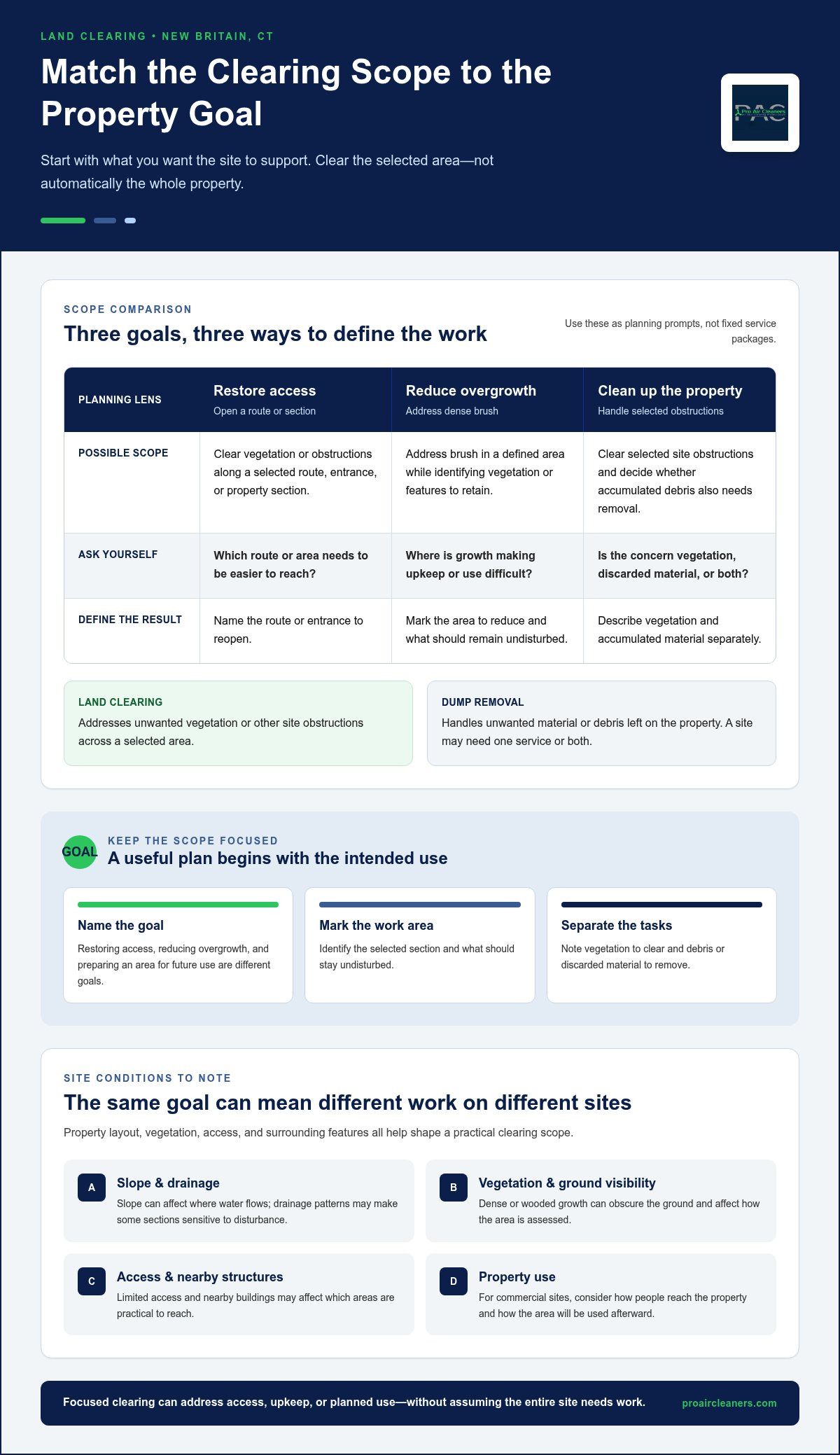
A useful land clearing New Britain CT plan starts with a clear goal, not an assumption that the entire site needs work. Reopening a path may require a different scope from reducing brush across a larger area or cleaning up an unused section. The site’s size, vegetation, access for the work, and need for debris removal can all affect how the project is defined.
Use these examples to identify what you want the work to accomplish. They’re planning prompts, not fixed service packages:
| Property goal | Possible scope | Planning question |
|---|---|---|
| Restore access | Clear vegetation or obstructions along a selected route, entrance, or section of the property. | Which route or area needs to be easier to reach? |
| Reduce overgrowth | Address dense brush in a defined area while identifying vegetation or features to retain. | Where is growth making upkeep or use difficult? |
| Clean up the property | Clear selected site obstructions and determine whether accumulated debris also needs removal. | Is the concern vegetation, discarded material, or both? |
Two sites with the same goal may still need different work. A narrow entrance can limit access to one section, while thicker vegetation may change how much of the area needs attention. Debris can also affect the cleanup scope, since removing unwanted material is separate from clearing vegetation. Define the work area and intended result before deciding how much of the site to include.
Residential clearing: match the work to how you use the property
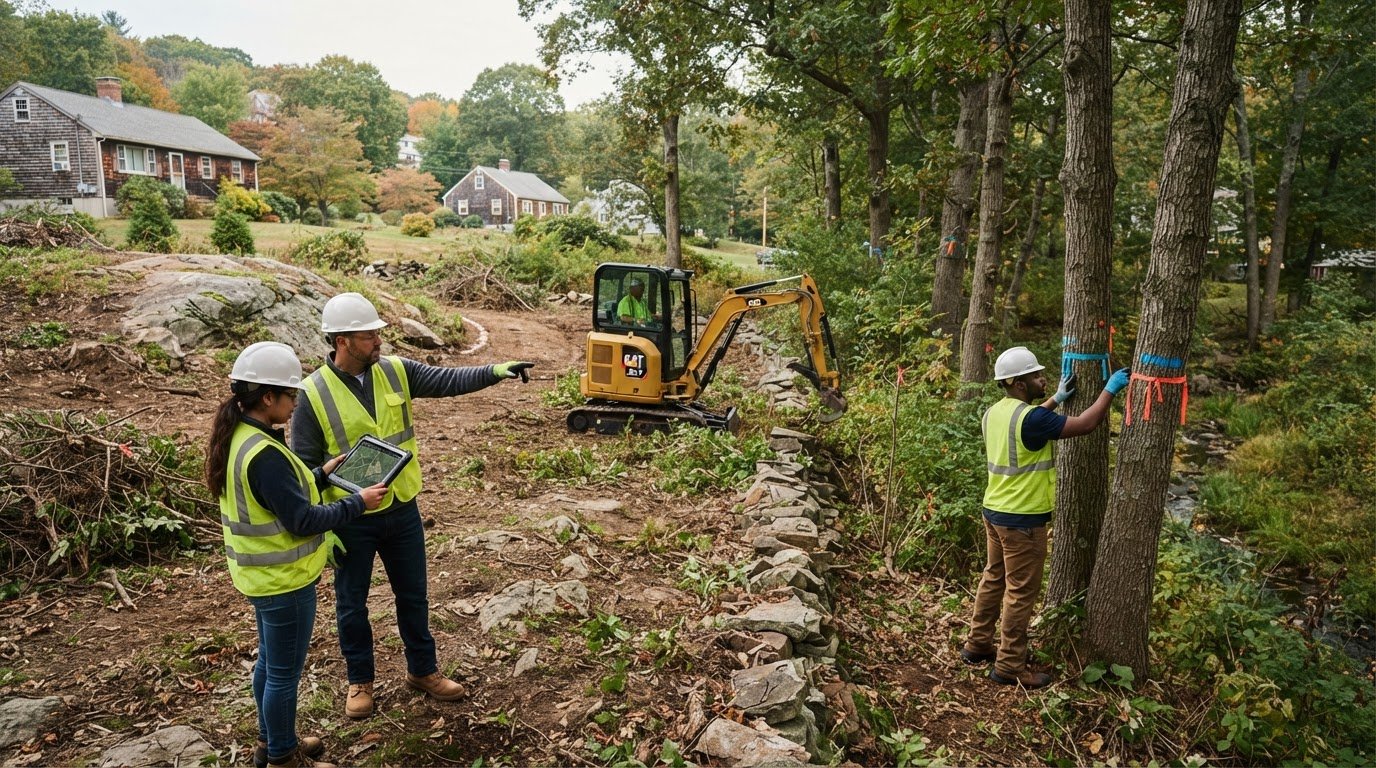
At a home, clearing might focus on brush that has overtaken part of the yard, a blocked side area, or vegetation crowding access to a section you want to maintain. Mark the areas that need attention and note what should stay undisturbed, such as a garden, boundary planting, or a portion of the yard you still use. This helps focus the scope on specific trouble spots instead of treating the entire residential lot as one work area.
Commercial clearing: consider access, operations, and site use
For a commercial property, consider how people reach the site and how the cleared area will be used afterward. Identify where vegetation or obstructions are causing difficulty, along with nearby areas that need to remain available for regular activity. Relating the work area to the property’s use makes it easier to describe the project without assuming operations can continue unchanged throughout the work.
Once you’ve identified the goal, work area, and any debris concerns, you can shape a more useful project brief. For additional planning context, explore the guide to Connecticut land clearing services.
New Britain Site Conditions and Local Requirements to Check
A clearing plan should account for the property’s shape and what surrounds the work area. Slope can affect where water flows, and drainage patterns may make some sections sensitive to disturbance. Dense or wooded vegetation can obscure the ground, while nearby buildings and limited access may affect which areas are practical to reach. Note these conditions when defining the work area so they can be reviewed before work begins.
For land clearing New Britain CT property owners are planning, don’t assume that the same rule or approval requirement applies to every lot. Connecticut and New Britain requirements can depend on the location, proposed work, and site conditions. Verify current rules for the specific parcel before work begins, including any review related to trees, wetlands, drainage, or soil disturbance.
Could wetlands or drainage affect land clearing?
Yes. A wet area, watercourse, or established drainage route may affect where and how clearing is planned, since changes near these features can raise environmental or water-management concerns. If a wooded section stays wet or runoff follows a visible path across the lot, note it rather than treating the area as ordinary dry ground. The Connecticut Department of Energy and Environmental Protection (DEEP) may be relevant for state guidance, while New Britain can provide local direction. Confirm current requirements with the appropriate agencies for the parcel and proposed work.
State guidance generally calls for a land disturbance permit or an approved Soil Conservation and Water Quality Plan when a project disturbs 5,000 square feet or more, or involves moving 100 cubic yards or more of soil. These thresholds don’t establish what applies to every project, so verify current state and municipal requirements before relying on them. New Britain also regulates certain designated legacy trees; check the city’s current rules to learn whether a tree on your property falls under them.
How do access and neighboring properties affect the plan?
Before defining the work area, note entrances, narrow access points, nearby buildings, and visible property boundaries. These details help clarify which parts of the site are reachable and where the planned clearing should stop. A tight passage beside a structure, for example, may call for a more carefully defined work area than an open section farther from buildings.
Walk the site and record features that should remain undisturbed, including boundary plantings, structures, and areas used by neighbors. If the boundary is unclear, resolve that uncertainty before setting the clearing limits. This review can reduce misunderstandings and help keep the scope aligned with the property owner’s intended use.
- Check the site: Note slopes, wet ground, drainage routes, vegetation, and nearby structures.
- Check the rules: Verify current City of New Britain requirements and consult Connecticut DEEP where relevant.
- Check the limits: Identify access points, boundaries, and features you want to retain.
Requirements can change, and site-specific conditions matter. Confirm applicable regulations and property details with the relevant city or state offices before work begins.
Prepare for Land Clearing in New Britain With a Clear Project Brief
A concise project brief turns a general concern, such as an overgrown section or blocked route, into a practical description of the work. Before planning land clearing New Britain CT, gather details about your goal, work area, site conditions, and any material that needs to be removed. This preparation helps distinguish what should change from the features you want to preserve.
Use this four-step sequence to organize your notes:
- Define the goal. Describe the result in observable terms, such as clearer access to a rear section or less brush around a defined area.
- Mark the area. Sketch the property or identify the boundaries of the work zone, noting structures, plantings, or other features to retain.
- Note site conditions. Record slopes, wet ground, drainage paths, narrow entrances, and nearby buildings that could affect the work area.
- List debris concerns. Identify discarded or accumulated material separately from vegetation and other site obstructions.
Define the work area and intended result
Be specific about what you want to be different after clearing. “Make the property easier to access” is a useful starting point, but noting which route is blocked makes the goal clearer. Mark where the work should stop, too. A defined area and a list of features to preserve help keep the project discussion practical without treating the whole property as one continuous work zone.
A simple sketch can communicate the basics. Note the approximate area to address, the direction of access, and any nearby structures or boundaries that matter. If the clearing supports a future construction project, its intended use can shape the preparation sequence. The step-by-step construction site preparation guide offers related planning context.
Account for debris and property access
Before discussing scope, document details that may affect the work and cleanup. Include entrances, narrow passages, uneven or sloped ground, wet spots, dense vegetation, nearby structures, and visible property lines. Note whether the site contains loose debris or unwanted material in addition to vegetation. These details can affect how the work area is defined and whether clearing and dump removal both belong in the plan.
Keep the two kinds of removal distinct in your notes: vegetation or site obstructions to clear, and accumulated material to remove. If a section has both, identify each separately rather than describing everything as “cleanup.” That distinction makes it easier to discuss the intended result and the scope of the property work.
With your goal, marked area, site notes, and debris concerns in hand, you’ll be better prepared to shape a project around your property. Learn more about land clearing and dump removal from Pro Air Cleaners, serving residential and commercial properties across Connecticut.
Pro Air Cleaners for Land Clearing and Property Cleanup in New Britain
For property owners planning land clearing New Britain CT, Pro Air Cleaners provides land clearing and dump removal to address different site needs. Based in New Britain, the company serves residential and commercial properties across Connecticut and has over 30 years of company experience. The work can be planned around the area you want to improve and how you intend to use it, rather than assuming every property needs the same kind of cleanup.
A practical approach to clearing and cleanup
Start with the result you want from the property. That might mean opening up a section that’s difficult to reach, reducing overgrowth in a defined area, or addressing obstructions that interfere with the site’s intended use. A clear goal helps define the scope. Noting what should remain undisturbed also keeps attention on the parts of the property that need work.
Clearing and dump removal address separate concerns. Land clearing focuses on vegetation or other site obstructions; dump removal addresses unwanted material or debris already on the property. If a site has both, describe them as distinct parts of the cleanup. The services can complement each other, but the appropriate scope depends on the property, the material present, and the intended result.
This distinction is useful for both residential and commercial sites. A homeowner may want a selected area cleared while also dealing with discarded items elsewhere on the property. A business may want a particular section to be more usable, with debris identified as a separate concern. In either case, describing the work accurately helps define the project around the site rather than assuming a standard package.
What to share when requesting project information
A few basic details can make an initial project discussion more specific. Share the property’s location, what you want the area to be like after the work, and the general part of the site that needs attention. A short written description is useful, and a simple sketch or photos can show boundaries and conditions that may be difficult to explain.
- Location and intended result: Note where the property is and what you want clearing or cleanup to address.
- Work area and access: Describe the section involved, entrances or narrow access points, and any nearby buildings.
- Debris and features to retain: Identify visible unwanted material separately from vegetation, structures, or areas you want preserved.
These details give the project conversation a clear starting point. If you’re ready to discuss your property clearing project, share your project details with Pro Air Cleaners and outline the cleanup needs for your site.
Take the Next Step Toward a More Usable Property
A property cleanup can start with one clear decision: what do you want the site to make possible? Keep that goal at the center as you move from planning to action. A defined purpose helps keep land clearing New Britain CT focused on the areas that matter to you, while accounting for site conditions and any local requirements that apply.
You don’t need every detail settled before starting a conversation. A simple description of the property, the area you want addressed, and the result you’re working toward can provide a practical starting point. From there, the project scope can be shaped around the site and its intended use rather than a one-size-fits-all approach.
When you’re ready to move forward, discuss your New Britain land clearing project with Pro Air Cleaners. A clear plan is a practical first step toward making your property more accessible and useful.
Frequently Asked Questions
Do I need a permit for land clearing in New Britain, CT?
It depends on the property and the proposed work, so check requirements before clearing begins. Contact the City of New Britain and consult relevant Connecticut agencies if the project could affect trees, wetlands, watercourses, or soil. Have the parcel location and a clear description of the planned work ready. This can help identify which local or state reviews may apply to your project.
Can land clearing remove brush without clearing the entire property?
Yes. Clearing can focus on a specific patch or strip of brush rather than the whole property. For example, you might want to open a narrow passage along a fence while retaining vegetation elsewhere. Mark the desired limits and identify plants or features to leave in place. This defines a targeted scope that addresses the area you want to use without including unrelated parts of the lot.
What happens to debris after land clearing?
Debris handling should be part of the project discussion, since clearing vegetation and removing material already on the property are separate needs. Identify whether the site has brush, branches, discarded items, or a mix, and point out where they are located. Pro Air Cleaners provides dump removal as well as land clearing, so you can describe both concerns when planning a property cleanup. Define what the scope covers before work begins.
Is land clearing the same as tree removal?
No. Tree removal focuses on one or more trees, while land clearing addresses vegetation or obstructions across a defined site area. A clearing plan might focus mainly on brush, or include trees if they fall within the agreed scope and applicable requirements allow the work. If a particular tree is important to retain or its status is uncertain, flag it early and verify relevant city rules before planning work near it.
Can land clearing help prepare a New Britain property for construction?
Yes, clearing can help prepare a selected area for a future construction use by addressing vegetation or obstructions within the planned work zone. It doesn’t establish that a project is approved or that the site is ready for building. Compare the proposed clearing area with your project plans, note access needs, and verify applicable requirements with the City of New Britain and relevant state agencies before work begins.
How should I plan land clearing around wet or sloped areas?
Map wet spots, visible watercourses, and the direction water travels across a slope before defining the work area. Note where runoff collects or crosses the property, especially near the section you want cleared. Share those observations during planning, and verify whether the location or proposed work calls for added review by New Britain or Connecticut DEEP. Don’t assume a wet or sloped area can be treated like level, dry ground.
Does Pro Air Cleaners provide land clearing for commercial properties?
Yes. Pro Air Cleaners provides land clearing for commercial properties in Connecticut, including New Britain, as well as for residential properties. For a commercial site, describe the area needing attention, how people access it, and its intended use after clearing. If unwanted material is also present, mention it separately because dump removal addresses a different part of property cleanup. These details help frame the project around the site’s needs.