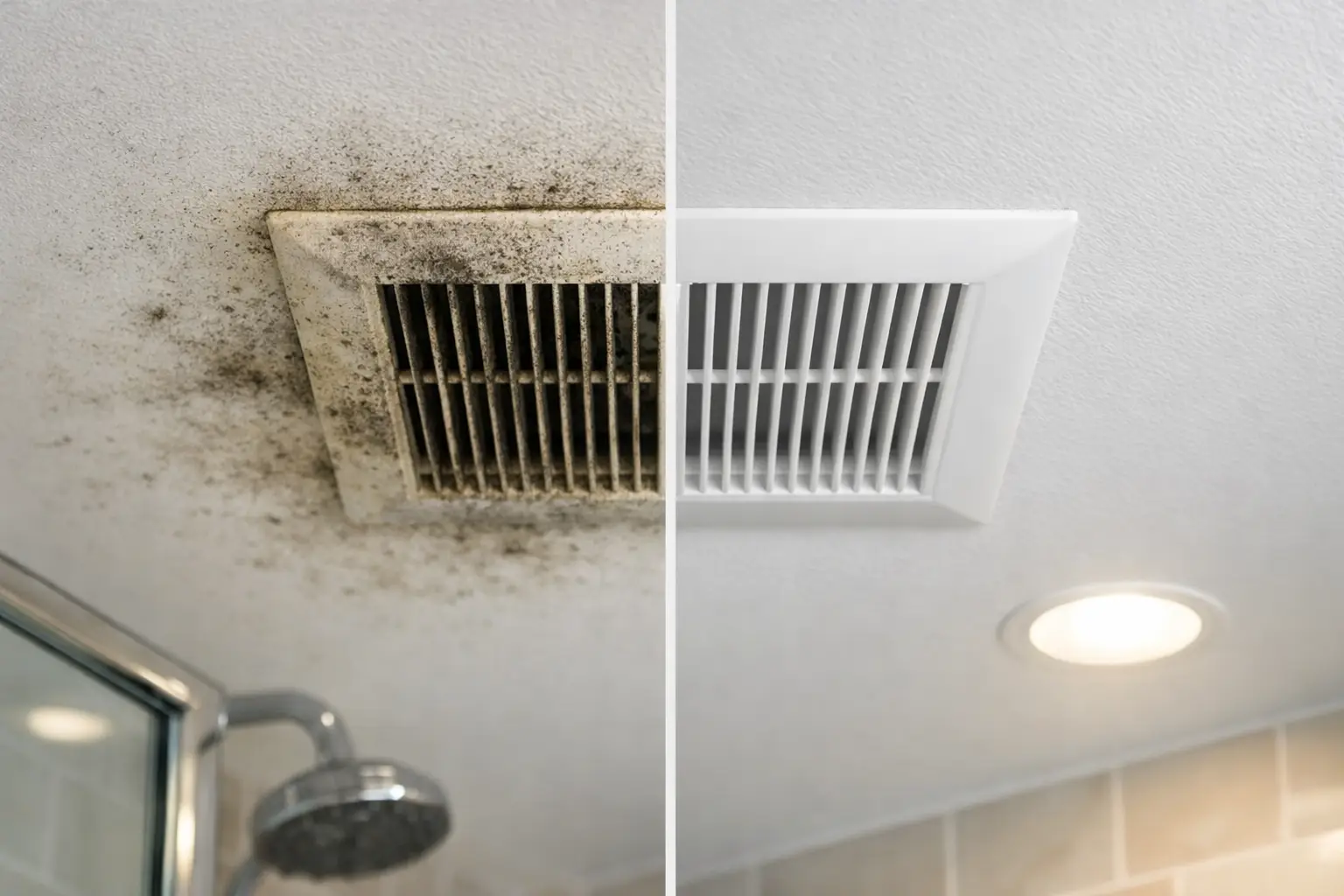
A moldy bathroom vent before after result can be startling. What looked like a few dark spots around the grille may reveal moisture buildup inside the housing, a clogged duct run, or an exterior termination that is no longer releasing humid air properly. The visible change matters, but the real value is correcting the conditions that allowed mold to grow in the first place.
For homeowners, landlords, and facility managers, a bathroom exhaust fan is not just a convenience. It is a moisture-control system. When it cannot move humid air out of the room, that moisture settles on ceilings, walls, insulation, framing, and the vent itself. The result can be recurring mildew odors, peeling paint, stained drywall, and a bathroom that never feels fully dry.
What a Moldy Bathroom Vent Before After Service Should Show
A professional before-and-after service should provide more than a freshly cleaned vent cover. The exterior grille may look cleaner after service, but a complete result also addresses the fan housing, blower components, duct connection, interior duct pathway, and outside vent cap where accessible.
Before cleaning, technicians often find lint, dust, hair, and moisture-bound debris restricting airflow. These materials give mold a surface to collect on, especially when the bathroom is used frequently or the fan is undersized for the space. In rental properties and commercial restrooms, the problem can develop faster because the fan may run constantly without being properly maintained.
After a proper service, the fan and vent path should be clear of accumulated debris, the airflow should be assessed, and visible mold residue should be treated with appropriate cleaning methods. If the duct is crushed, disconnected, leaking, excessively long, or blocked at the termination point, cleaning alone is not the final answer. Repair or replacement may be necessary to prevent the same issue from returning.
At Pro Air Cleaners, trained technicians use professional equipment, HEPA-filtered cleaning methods, and baby-safe green solvents when appropriate to support a cleaner, healthier indoor environment. A free video inspection can also provide visible proof of the vent condition and the work completed.
Why Mold Develops Around Bathroom Exhaust Vents
Bathroom mold is usually a moisture problem before it becomes a cleaning problem. Every hot shower adds water vapor to the air. A working exhaust fan pulls that moisture outside before it can condense on cool surfaces. A weak, dirty, or improperly vented fan leaves it behind.
Several issues can contribute to a moldy vent. The fan may be full of dust and unable to move enough air. The duct may have sagged, creating a low point where condensation collects. In other cases, the vent may terminate in an attic, crawlspace, soffit, or other unsuitable location rather than outdoors. That allows moisture to remain in the building envelope, where it can create more extensive damage.
Exterior vent caps also deserve attention. A stuck damper, bird nest, insect activity, leaves, or accumulated lint can restrict the final exit point. During cold weather, condensation inside uninsulated ductwork can make the problem worse. This is why the condition of the entire system matters more than the appearance of the bathroom grille alone.
The Health and Property Concerns Behind Visible Mold
Not every dark mark is the same type of mold, and a visual inspection cannot identify a species or determine exposure levels. Still, visible growth and persistent musty odors are clear signs that moisture management needs attention.
For families with allergies, asthma, or respiratory sensitivities, damp bathroom conditions can be especially frustrating. Moisture also supports dust mites and can make the air feel stale. Even when no one has immediate symptoms, recurring mold around a vent often signals an underlying ventilation issue that can affect adjacent rooms, ceilings, and insulation over time.
Property owners should also consider the cost of delay. A small stained vent cover is relatively simple to address. Moisture damage that spreads into drywall, framing, or attic materials can require larger repairs. In multi-unit buildings, one poorly vented bathroom may also affect neighboring spaces, especially where ducts share congested pathways or maintenance has been postponed.
Cleaning vs. Repair: What Your Bathroom Vent May Need
The right service depends on what an inspection finds. Surface residue on a grille and dust inside a working fan may respond well to professional bathroom vent cleaning. However, airflow restrictions, damaged ducting, failed fan components, or improper termination require a more complete solution.
A technician should evaluate whether the fan is exhausting effectively, whether the duct is intact and routed correctly, and whether humid air is reaching the exterior. If the fan runs loudly but the bathroom stays foggy long after a shower, the issue may be a blockage or failing motor. If there is little sound at all, electrical or mechanical repair may be needed.
Replacement is often the better investment when a fan is old, undersized, corroded, or no longer capable of handling the bathroom’s moisture load. A properly selected and installed unit can reduce lingering humidity, help protect finishes, and make the room more comfortable. The trade-off is upfront cost, but continuing to clean a system that cannot perform may lead to repeat service and preventable property damage.
Why Professional Service Makes a Difference
Bathroom vent cleaning can involve hidden duct runs, electrical components, contaminated debris, and access challenges above ceilings or behind walls. Attempting a surface-only solution may make the grille look better while leaving the airflow problem untouched.
Professional service focuses on the system as a whole. Experienced technicians can remove buildup from the fan assembly and duct pathway, inspect connections, identify damaged or disconnected sections, and verify that the vent is exhausting where it should. This approach helps separate cosmetic cleaning from actual moisture control.
For commercial properties, reliable bathroom ventilation also supports tenant comfort and building maintenance. Musty restroom odors, stained ceiling tiles, and recurring moisture complaints can affect how customers, employees, and residents view the property. Scheduled inspections and maintenance help property managers address small issues before they become disruptive repairs.
Signs It Is Time to Schedule an Inspection
A bathroom vent does not have to be visibly covered in mold to need service. Watch for recurring black or green spotting around the grille, a musty smell after bathing, peeling paint near the ceiling, heavy mirror fog that lingers, weak airflow, rattling fan noise, or moisture stains near the vent path.
If you have cleaned the cover repeatedly and discoloration comes back, the source is likely deeper than the cover itself. Likewise, if a bathroom has no working exhaust fan, vents into an improper location, or has a fan that has not been serviced in years, an inspection is a practical next step.
Protecting the Bathroom After Service
Once the vent is cleaned or repaired, regular use is essential. Run the exhaust fan during bathing and long enough afterward to remove remaining humidity. Keep the bathroom door positioned to support airflow when practical, and address plumbing leaks quickly. These everyday habits work best when the fan, duct, and exterior termination are already in good condition.
A clean-looking vent is reassuring, but dependable ventilation is what protects the room day after day. If mold, odors, or lingering humidity keep returning, arrange a professional assessment before a small bathroom problem becomes a larger indoor air quality or property maintenance concern.