
Table of Contents
- Where House Dust Actually Comes From
- How to Reduce Dust in Your House Naturally: 8 Steps That Work
- Step 1: Change HVAC and Furnace Filters on Schedule
- Step 2: Dust Top to Bottom with a Damp Microfiber Cloth
- Step 3: Vacuum Carpets and Upholstery Twice a Week
- Step 4: Wash Bedding Weekly in Hot Water
- Step 5: Place Doormats at Every Entry Point
- Step 6: Groom and Bathe Pets Regularly
- Step 7: Declutter Surfaces to Eliminate Dust Traps
- Step 8: Control Humidity and Improve Airflow Naturally
- Best Air Filters for Dust Reduction
- How Often to Clean Air Ducts to Reduce Dust
- How to Maintain Indoor Air Quality After Cleaning
- Natural and Eco-Friendly Cleaning Solutions for Dust Control
- Conclusion
Last Updated: August 25, 2026
Where House Dust Actually Comes From
House dust is a mixture of airborne particles shed continuously by people, pets, and materials inside your home. The primary contributors include dead skin cells, pet dander, textile fibers, pollen, lint, and dust mites. Older homes may have additional particulate matter from deteriorating insulation and aged ductwork.
Homes with poorly maintained HVAC systems and clogged furnace filters consistently show heavier dust accumulation because the air handling system circulates contaminated air rather than filtering it.
Two factors drive most dust accumulation: generation rate (how many people and pets live in the home, what materials are present, and outdoor air infiltration) and the home’s ability to capture and remove particulate matter before it settles. Address both, and you will see a measurable difference.
According to the EPA Indoor Air Quality guidance, indoor air can contain two to five times more pollutants than outdoor air, largely because homes trap and recirculate particulate matter without adequate filtration or ventilation.
How to Reduce Dust in Your House Naturally: 8 Steps That Work
The most effective way to reduce dust naturally is to combine source control, better filtration, and consistent cleaning habits. These eight steps address dust at every stage, from generation to airborne transport to surface settlement.
Step 1: Change HVAC and Furnace Filters on Schedule
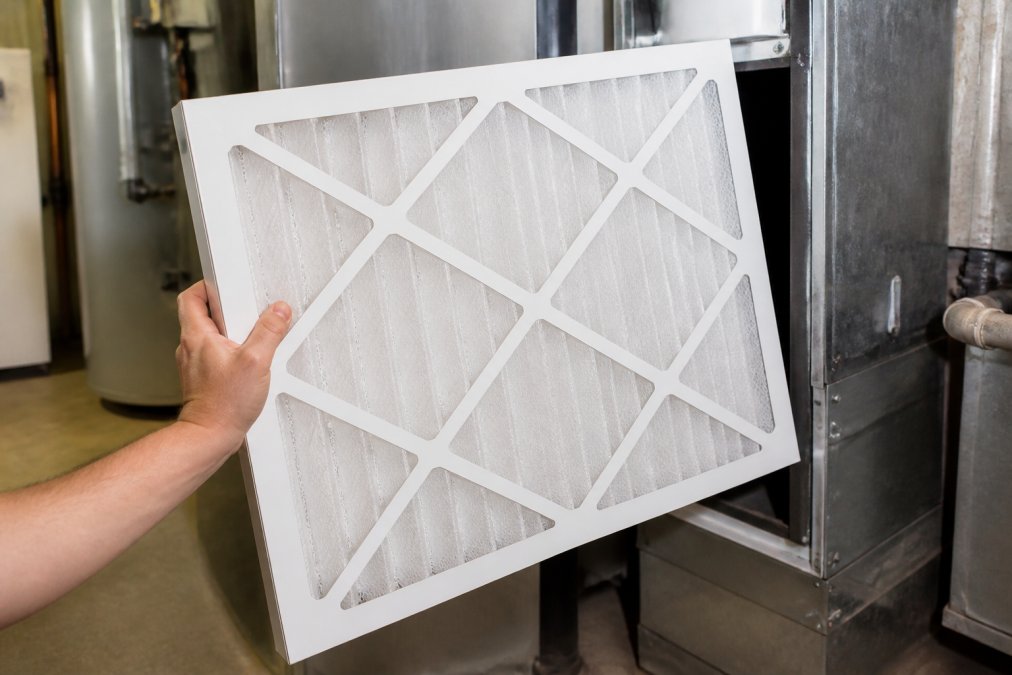
The furnace filter is your home’s first line of defense against circulating dust. A clogged filter restricts airflow and forces the HVAC system to work harder.
For most households, replace filters every 60 to 90 days. Homes with pets, allergy sufferers, or high foot traffic should replace filters every 30 to 45 days. Look for filters rated MERV 8 through MERV 13. A MERV 8 filter captures most larger dust particles, while MERV 11 or 13 captures finer particulate matter including pet dander and pollen without restricting airflow.
Write the replacement date on the side of the filter in marker when you install it. You will never have to guess when it was last changed.
Step 2: Dust Top to Bottom with a Damp Microfiber Cloth
Dry dusting displaces dust into the air, where it stays suspended for hours. Wet dusting with a damp microfiber cloth captures particles on contact.
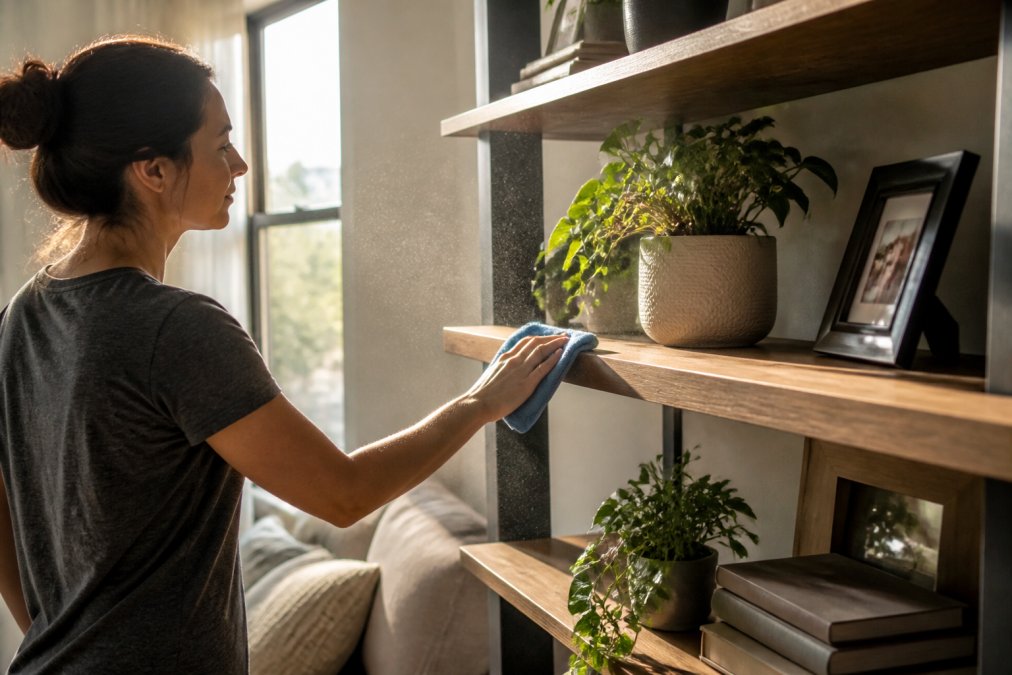
Use a top-to-bottom cleaning sequence: dust ceiling fans, shelves, and cabinet tops first, then work down to furniture surfaces, window sills, and baseboards. Vacuum after dusting, never before. For blinds and drapes, a damp microfiber glove works better than a cloth.
Step 3: Vacuum Carpets and Upholstery Twice a Week
Carpet fibers act as a reservoir for dust, dust mites, pet dander, and allergens. Vacuuming twice a week keeps the reservoir from overflowing.
Use a vacuum with a HEPA filter to prevent fine particles from exhausting back into the room. Without a HEPA filter, vacuuming can worsen air quality by expelling ultra-fine particulate matter. Apply the same attention to upholstery using the upholstery attachment in slow, overlapping passes.
Step 4: Wash Bedding Weekly in Hot Water
Bedding is one of the densest concentrations of dust mites in any home. Wash sheets, pillowcases, and duvet covers weekly in water at 130°F or above to kill mites and remove the dander they feed on.
A dust mite-proof mattress encasement adds a physical barrier. Wash the encasement monthly. If you have a down comforter, wash it every two to four weeks.
Washing bedding in warm water instead of hot water does not kill dust mites. The temperature threshold matters. Confirm the hot water cycle reaches at least 130°F.
Step 5: Place Doormats at Every Entry Point
A significant portion of indoor dust originates outdoors. Coarse-fiber doormats placed outside each entry point scrape soil, pollen, and particulate matter from shoe soles. A second, absorbent mat inside the door captures what the outer mat misses.
Shake or vacuum both mats twice a week. A no-shoes-inside policy amplifies the impact significantly, particularly during pollen season.
Step 6: Groom and Bathe Pets Regularly
Pet dander is one of the most persistent allergen sources in homes with animals. Brush pets outside at least twice a week to remove loose hair and dander before it enters the home. Bathe dogs every two to four weeks with gentle shampoo. For cats, use a damp grooming glove weekly.
Designate pet-free zones in bedrooms where possible to reduce dander concentration in areas where you spend the most time.
Step 7: Declutter Surfaces to Eliminate Dust Traps
Every horizontal surface and decorative item creates a landing zone for airborne particles. Keep surfaces clear enough that a single pass with a damp microfiber cloth covers the entire area. Closed storage for infrequently used items and returning objects to their place immediately makes a measurable difference in dust accumulation.
Step 8: Control Humidity and Improve Airflow Naturally
Dust mites cannot survive in environments where relative humidity stays below 50%. Keep indoor humidity between 40% and 50% using a dehumidifier in summer and a humidifier during dry winters. Open windows on low-pollen days to flush stale indoor air. Cross-ventilation, achieved by opening windows on opposite sides of the home, moves air through the space more effectively.
According to the ASHRAE Indoor Air Quality position document, proper ventilation is one of the most effective controls for maintaining acceptable indoor particulate levels.
Best Air Filters for Dust Reduction
The right air filter does more work than any other single tool in a dust-reduction plan. Air filters for residential HVAC systems are rated using the MERV scale, which measures how effectively a filter captures particles of different sizes.
For most homes, MERV 8 to MERV 13 represents the practical range:
| Filter Rating | Particle Size Captured | Best For | Replacement Frequency |
|---|---|---|---|
| MERV 8 | Large dust, pollen, lint | Standard households | Every 90 days |
| MERV 11 | Pet dander, mold spores | Pet owners, mild allergies | Every 60 days |
| MERV 13 | Fine dust, bacteria, smoke | Asthma, severe allergies | Every 30-45 days |
| HEPA (standalone unit) | 99.97% of particles ≥0.3 microns | Bedrooms, high-sensitivity areas | Per manufacturer |
HEPA filters are the gold standard for standalone air purifiers placed in individual rooms. A HEPA-equipped air purifier in a bedroom provides continuous filtration, particularly valuable for children with asthma or adults with chronic respiratory sensitivities.
Do not install a MERV 16 or higher filter in a standard residential HVAC system unless the system is specifically rated for it. Filters that are too dense restrict airflow and damage the blower motor.
For most homes with allergy or asthma concerns, a MERV 11 filter in the HVAC system combined with a HEPA air purifier in the bedroom delivers the best practical outcome.
How Often to Clean Air Ducts to Reduce Dust
Air duct cleaning depends on the home’s age, occupancy, and history, not a fixed calendar schedule.
The EPA guidance on duct cleaning recommends cleaning ducts when there is visible mold growth, evidence of pest infestation, or when ducts are clogged with debris actively being released into the living space. For most homes, a professional inspection every three to five years is reasonable. Homes with pets, smokers, recent renovations, or residents with respiratory conditions may benefit from more frequent cleaning.
An inspection tells you whether cleaning is necessary. A reputable duct cleaning company will assess your system before recommending service. If you have recently purchased an older home, a duct inspection is worth taking. Older ductwork can harbor years of accumulated debris and deteriorated insulation that sheds fibers into the airstream. Pro Air Cleaners, with over 30 years of experience, uses state-of-the-art equipment to assess and clean duct systems properly.
How to Maintain Indoor Air Quality After Cleaning
Maintaining indoor air quality after a deep clean requires a shift from reactive cleaning to consistent maintenance. A thorough cleaning resets the baseline. What you do in the weeks after determines whether that baseline holds.
Your Weekly and Monthly Maintenance Checklist
Weekly Tasks:
- Vacuum carpets, rugs, and upholstered furniture with a HEPA-filter vacuum
- Wipe all horizontal surfaces with a damp microfiber cloth, top to bottom
- Wash bedding (sheets and pillowcases) in hot water at 130°F or above
- Empty and clean vacuum canister or replace bag
- Shake out or vacuum entry doormats
- Brush pets outside; wipe paws before re-entry
- Check and empty dehumidifier reservoir if running
Monthly Tasks:
- Replace or inspect HVAC furnace filter
- Clean ceiling fan blades with a damp cloth
- Wipe down window blinds and drapes
- Wash mattress encasement
- Clean bathroom exhaust fans and kitchen range hood filters
- Inspect air purifier pre-filter and HEPA filter
- Wipe down baseboards and door frames
Quarterly Tasks:
- Deep clean carpets with a steam cleaner or professional service
- Wash all throw pillows and decorative cushion covers
- Clean dryer vent to prevent lint buildup
- Inspect ductwork for visible debris or mold at accessible registers
- Declutter storage areas
Natural and Eco-Friendly Cleaning Solutions for Dust Control
Most commercial cleaning sprays leave a residue that attracts dust. A damp microfiber cloth and plain water handles the vast majority of surface dusting.
White vinegar solution: Mix equal parts white vinegar and water in a spray bottle for hard floors and tile. Do not use on natural stone or hardwood without testing first.
Beeswax wood polish: For wood furniture, natural beeswax polish applied monthly creates a smooth surface that dust slides off more easily and eliminates static charge that attracts particles.
Baking soda for carpets: Sprinkle baking soda on carpets, let it sit for 15 minutes, then vacuum thoroughly. Baking soda absorbs odors and loosens embedded debris.
Avoid essential oil diffusers, which add fine particulate matter to the air. For households managing asthma or allergies, a HEPA air purifier removes particles rather than adding them.
Dust accumulation is a continuous process. Households that maintain genuinely low dust levels address the problem at the source: better filtration, consistent mechanical capture, and controlled humidity. If your ductwork is circulating years of accumulated debris, surface cleaning alone will not keep up. Pro Air Cleaners specializes in professional duct cleaning, dryer vent cleaning, and HVAC system maintenance for residential and commercial properties, using state-of-the-art equipment backed by over 30 years of experience. Get a Free Estimate and find out whether your duct system is working for you or against you.
Frequently Asked Questions
Does an air purifier actually reduce dust in your home?
Yes, an air purifier with a true HEPA filter captures airborne particles as small as 0.3 microns, including dust, dander, and pollen. Placed in bedrooms or high-traffic rooms, it continuously pulls particulate matter from the air. An air purifier works best as part of a broader plan that includes regular vacuuming, filter changes, and wet dusting, it is not a standalone fix, but it makes a measurable difference in air quality, especially for people with asthma or allergies.
How often should you clean air ducts to reduce dust?
The EPA recommends cleaning air ducts every 3 to 5 years for most homes. Homes with pets, recent renovations, older construction, or residents with respiratory conditions may need cleaning every 2 to 3 years. Signs you need it sooner include visible dust blowing from vents, musty odors when the HVAC runs, or noticeably faster dust buildup on surfaces after cleaning. A professional inspection can confirm whether your system needs attention before the standard interval.
What naturally pulls dust out of the air in a house?
Ventilation and filtration are the two most effective natural methods. Opening windows when outdoor air quality is good flushes stale, particle-laden air out. HVAC systems with high-MERV filters trap dust as air circulates through them. Air purifiers with HEPA filters add another layer of filtration. Houseplants have a modest effect on air quality but are not reliable dust removers on their own. Keeping humidity between 40 and 50 percent also prevents dust mites from thriving.
What is the best way to dust without spreading dust around?
Use a lightly dampened microfiber cloth instead of a dry duster. Dry dusters and feather dusters push airborne particles back into the air, where they resettle minutes later. A damp microfiber cloth traps particles on contact. Always work from the highest surfaces down to the floor so falling dust gets picked up last by your vacuum. For drapes, blinds, and upholstery, a vacuum with a brush attachment removes embedded dust without redistributing it.
This article was written using GrandRanker