
Table of Contents
- How Often Should Air Ducts Be Cleaned: The Baseline Rule
- Signs Your Air Ducts Need Cleaning Right Now
- What Happens During a Professional Air Duct Cleaning
- Benefits of Professional Air Duct Cleaning for Health and Efficiency
- DIY vs. Professional Cleaning: What You Can and Cannot Do
- Air Duct Cleaning Cost: What Shapes the Price
- How Air Duct Cleaning Fits Into Broader HVAC Maintenance
- Conclusion
Last Updated: August 24, 2026
How Often Should Air Ducts Be Cleaned: The Baseline Rule
Knowing how often should air ducts be cleaned is one of those home maintenance questions most people never ask until something goes wrong. At Pro Air Cleaners, we’ve answered this question for homeowners across the region for over 30 years, and the honest answer is more nuanced than the generic "every 3-5 years" advice found almost everywhere.
The National Air Duct Cleaners Association (NADCA) standards recommends inspecting ductwork at least once a year and cleaning it every 3 to 5 years under typical conditions. However, "typical conditions" describes fewer homes than you’d think. The 3-to-5-year rule assumes no pets, no allergy sufferers, no recent construction, and no moisture problems. Change any one of those variables and the timeline shifts significantly.
Below, we’ll walk through exactly how to assess your specific situation, what warning signs to watch for, and how to confirm that any cleaning you pay for was actually done correctly.
Factors That Push Cleaning Frequency Higher
Several real-world conditions shorten the interval between cleanings:
- Pets that shed: Pet dander and fur accumulate in ductwork quickly, reducing airflow efficiency and circulating allergens. Homes with two or more shedding pets often benefit from cleaning every 2 to 3 years.
- Household members with asthma or allergies: Airborne pollutants that accumulate in ducts recirculate through your ventilation system continuously. For families managing respiratory conditions, more frequent inspection is worth prioritizing.
- Recent home renovation: Construction debris, drywall dust, and particulate matter from renovation work enter the duct system easily. A post-renovation cleaning is generally recommended regardless of when the last one occurred.
- Older homes: Properties built in the 1970s often have ductwork that has never been professionally cleaned and may contain decades of dust accumulation, insulation fragments, or microbial growth.
- Visible mold growth or pest activity: These situations require immediate attention.
Climate-Specific Considerations
Climate plays a larger role in duct cleanliness than most homeowners realize. Homes in humid climates face higher risk of mold growth inside ductwork, particularly if the HVAC system lacks adequate dehumidification. When warm, moist air contacts cooler duct surfaces, condensation develops, creating conditions where mold takes hold.
Homes in drier climates tend to accumulate fine dust and particulate matter faster. If your home runs its HVAC system heavily for extended periods, the volume of air cycling through accelerates contaminant buildup.
Signs Your Air Ducts Need Cleaning Right Now
The clearest signs your air ducts need cleaning don’t require special equipment to spot. Your home will usually tell you before a scheduled inspection does.
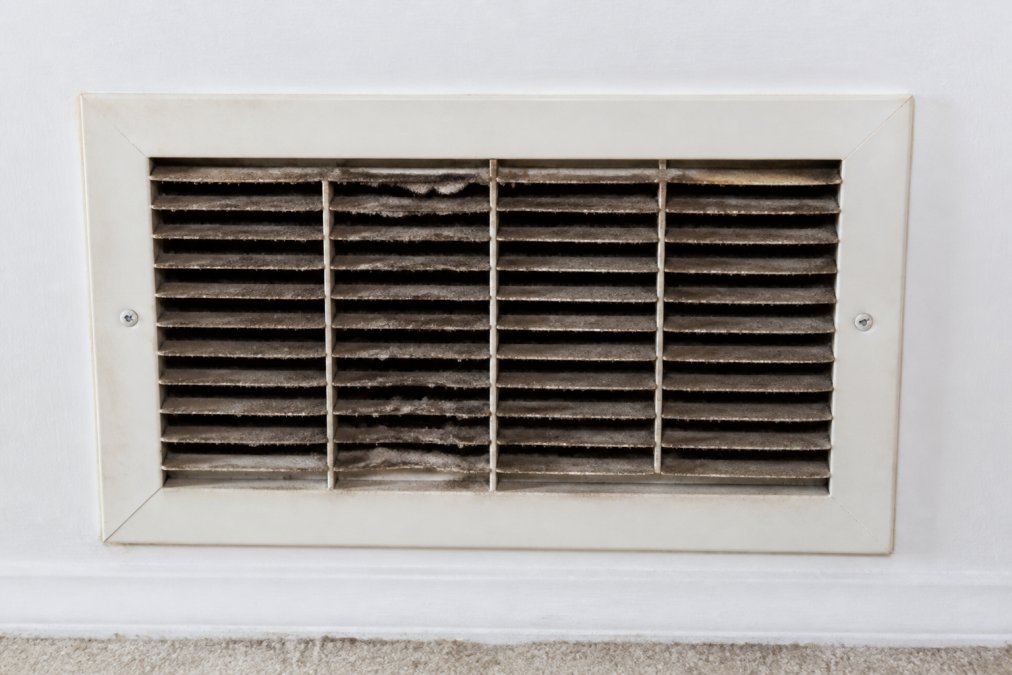
Watch for these indicators:
- Visible dust around supply vents: If you notice dust blowing out of registers when the system starts, or dark discoloration around vent covers, that’s a clear signal.
- Musty or stale odors when the HVAC runs: This often points to mold growth or accumulated organic debris inside the duct system.
- Uneven airflow between rooms: Restricted airflow in certain areas can indicate blockages or significant dust accumulation.
- Worsening allergy or asthma symptoms indoors: When respiratory issues flare up consistently at home but improve when you leave, the ventilation system warrants investigation.
- Visible debris or insulation fragments inside vents: This is particularly common in older homes where duct insulation has degraded.
- Recent pest infestation: Rodents and insects leave behind debris, droppings, and nesting material inside ductwork that must be removed.
How to Inspect Your Own Air Ducts
A basic ductwork inspection doesn’t require professional tools:
- Remove a supply vent cover and shine a flashlight inside. Look for visible dust buildup, debris, or dark spotting that could indicate mold.
- Check the air handler and blower compartment for dust accumulation around the unit.
- Inspect the area around your return air vents. Heavy dust framing suggests the filter isn’t capturing everything before air enters the system.
- Smell the airflow. Run the system briefly and stand near several vents. Musty, dusty, or chemical odors warrant professional evaluation.
- Look at your filter. A filter completely clogged within a few weeks of replacement suggests unusually high particulate matter.
A DIY inspection tells you whether to schedule professional cleaning or whether routine filter replacement is sufficient. Skipping this step leads to either unnecessary expense or compounding air quality issues.
What Happens During a Professional Air Duct Cleaning
Professional air duct cleaning is a multi-step process. Understanding it helps you verify the job was done correctly.
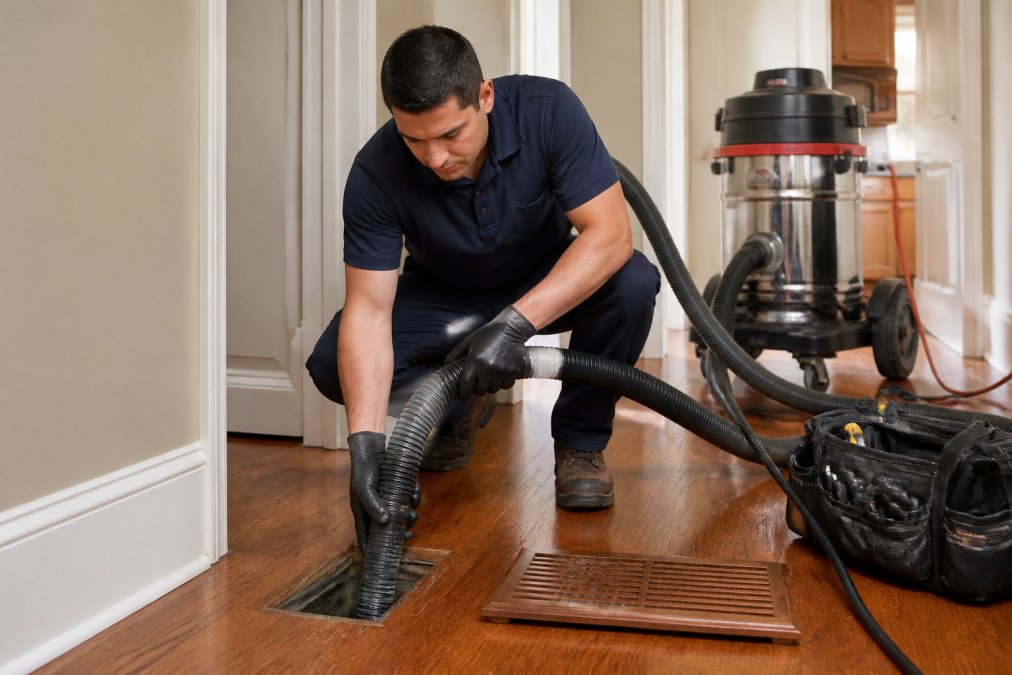
A properly conducted cleaning following NADCA standards typically includes:
- System inspection: A technician inspects accessible ductwork, the air handler, blower, and coils before beginning work.
- Negative pressure setup: A high-powered vacuum system is connected to the duct network to create negative pressure, preventing dislodged debris from escaping into the living space.
- Mechanical agitation: Brushes, air whips, and compressed air tools dislodge dust, debris, and contaminants from duct walls.
- Debris extraction: The vacuum system captures dislodged material. Professional-grade equipment typically uses HEPA filtration to prevent fine particles from recirculating.
- Component cleaning: The air handler, blower motor, evaporator coil, and drain pan are cleaned as part of thorough service.
- Sanitization (if applicable): In cases involving mold growth or microbial contamination, an EPA-registered sanitizing agent may be applied.
The U.S. Environmental Protection Agency guidance on duct cleaning notes that cleaning effectiveness depends heavily on equipment used and technician thoroughness, which is why choosing an insured provider with documented experience matters.
Post-Cleaning Verification: How to Confirm the Job Was Done Right
After the service, verify the following:
- Request before-and-after photos of accessible duct sections. A professional provider should document the work.
- Check the return air vents and supply registers for any residual debris or dust.
- Inspect the area around the air handler for signs of disturbed dust that wasn’t contained.
- Run the system and check airflow at multiple registers. Cleaned ducts typically show noticeably improved airflow consistency.
- Ask for documentation of what was cleaned, what equipment was used, and whether any issues were found.
Ask your technician whether the cleaning covered the evaporator coil and blower compartment specifically. Many low-cost services clean only accessible duct runs and skip these components, which are often the biggest contributors to reduced HVAC performance.
Benefits of Professional Air Duct Cleaning for Health and Efficiency
The benefits of professional air duct cleaning fall into two categories: health outcomes and mechanical performance.
Removing accumulated dust, pet dander, allergen particles, and potential mold from the duct system reduces the volume of airborne pollutants that circulate through your home every time the HVAC runs. For households with children managing chronic respiratory sensitivities, this matters significantly. Indoor air quality can be substantially worse than outdoor air quality in homes with contaminated ductwork, according to EPA’s indoor air quality resources.
On the efficiency side, clean ductwork directly affects HVAC performance. Dust accumulation on blower components, coils, and duct walls forces the system to work harder to move the same volume of air. This increases energy consumption and accelerates wear on the system. Preventative maintenance that includes duct cleaning can extend equipment life and reduce utility costs.
| Benefit | What It Addresses | Who Benefits Most |
|---|---|---|
| Allergen reduction | Pet dander, pollen, dust mites | Allergy and asthma sufferers |
| Mold remediation | Microbial growth in ductwork | Homes in humid climates |
| Airflow efficiency | Blockages and buildup | Older homes, heavy HVAC use |
| Energy consumption | Overworked system components | All homeowners |
| Odor removal | Accumulated organic debris | Homes with pets or renovation history |
Clean ducts reduce the mechanical load on your HVAC system, which translates to lower energy bills and fewer repair calls over time.
DIY vs. Professional Cleaning: What You Can and Cannot Do
Most homeowners can handle surface-level duct maintenance without professional help.
What you can do yourself:
- Replace air filters on schedule (every 1 to 3 months depending on filter type and household conditions)
- Clean vent covers and grilles with a damp cloth
- Vacuum visible dust from accessible supply and return registers
- Monitor for early warning signs and schedule professional inspection accordingly
What requires professional equipment:
- Cleaning the interior duct runs beyond the first few inches of a register
- Accessing and cleaning the air handler, blower, and evaporator coil
- Performing mold remediation inside ductwork
- Applying EPA-registered sanitizing agents safely and effectively
- Sealing duct leaks that contribute to contamination and energy loss
The limitation of DIY cleaning is reach. A household vacuum and brush can address the immediate register area, but the bulk of dust accumulation occurs further into the duct system, in the main trunk lines, and around the air handler components. Attempting deeper cleaning without proper negative pressure equipment risks pushing debris further into the system rather than removing it.
Avoid hiring any provider who cannot demonstrate professional-grade vacuum equipment with HEPA filtration. Without negative pressure containment, cleaning can worsen indoor air quality temporarily by dislodging debris without capturing it.
Air Duct Cleaning Cost: What Shapes the Price
Pricing for professional duct cleaning varies based on several factors. Understanding them helps you evaluate quotes accurately.
The main variables include:
- Home size and number of vents: Larger homes with more supply and return vents require more labor and time.
- System configuration: Homes with multiple HVAC zones, complex duct layouts, or hard-to-access ductwork require additional effort.
- Degree of contamination: Heavily soiled systems, those with mold growth, or post-renovation cleanings require more thorough work.
- Additional services: Dryer vent cleaning, bathroom ventilation cleaning, and coil cleaning are typically priced separately.
- Geographic market: Labor costs vary by region.
For current pricing specific to your home and system, request a detailed estimate. Pro Air Cleaners provides free estimates, which allows you to understand exactly what the scope of work covers before committing to a service.
A common red flag: unusually low flat-rate quotes that don’t account for home size or system complexity. These often indicate limited scope that skips critical components like the air handler and blower.
How Air Duct Cleaning Fits Into Broader HVAC Maintenance
Air duct cleaning is one component of a complete HVAC maintenance strategy, not a standalone fix.
A complete preventative maintenance approach includes:
- Regular filter replacement: This is the single most impactful thing a homeowner can do between professional cleanings. A clean filter protects the entire system from particulate matter ingestion.
- Annual HVAC system evaluation: A qualified technician should inspect refrigerant levels, electrical connections, coil condition, and overall system performance each year.
- Ductwork inspection for leaks and sealing: Air duct sealing addresses leaks that reduce airflow efficiency and allow unconditioned air to enter the system. The Department of Energy guidance on duct sealing and insulation estimates that leaky ducts can reduce system efficiency significantly in typical homes.
- Dryer vent cleaning: Often overlooked, lint buildup in dryer vents is a documented fire hazard. This service is separate from HVAC duct cleaning but equally important for home safety.
- Dehumidification management: In humid climates, controlling indoor moisture levels reduces the risk of mold growth inside ductwork and throughout the home.
The question of how often should air ducts be cleaned is best answered in the context of this broader maintenance picture. A home with current filters, sealed ducts, and annual HVAC service may legitimately go 4 to 5 years between cleanings. A home with deferred maintenance, pets, and no filter changes may need attention sooner.
Pro Air Cleaners handles residential and commercial duct cleaning, dryer vent cleaning, and bathroom ventilation services. With over 30 years of experience and fully insured technicians using professional-grade equipment, the team can assess your specific system and give you an honest recommendation, not a one-size-fits-all schedule.
Frequently Asked Questions
Is air duct cleaning really necessary?
For most homes, yes, on an as-needed basis rather than on a rigid schedule. Dust accumulation, pet dander, mold growth, and home renovation debris can all compromise indoor air quality over time. The EPA does not recommend routine cleaning without cause, but when visible contamination, persistent odors, or worsening respiratory issues are present, professional cleaning delivers clear benefits. Homes with allergy or asthma sufferers, pets, or older HVAC systems typically need it more often than the average household.
How do I know if my air ducts need to be cleaned?
Check your supply and return vents for visible dust buildup or dark discoloration. Remove a vent cover and shine a flashlight inside, heavy debris, matted dust, or any sign of microbial growth means cleaning is overdue. Other reliable indicators include musty odors when the HVAC system runs, noticeably reduced airflow from vents, and a spike in allergy or asthma symptoms among household members. A professional ductwork inspection can confirm what a visual check cannot reach.
Can dirty air ducts make you sick?
Contaminated ducts can circulate airborne pollutants, including mold spores, pet dander, dust mite debris, and particulate matter, throughout your home every time the HVAC system runs. For people with asthma, allergies, or other respiratory issues, this constant exposure can worsen symptoms. Mold growth inside ductwork poses a more serious health risk and typically requires professional mold remediation, not just standard cleaning. Healthy adults may notice little effect, but vulnerable household members are at greater risk.
What is the best time of year to have air ducts cleaned?
Spring and early fall are the most practical times. Scheduling before peak heating or cooling season means your ventilation system is clean when it runs hardest, maximizing airflow efficiency and HVAC performance. Spring cleaning also addresses any mold or moisture issues that developed over winter. That said, if you notice the signs that cleaning is needed, heavy dust, odors, or worsening air quality, schedule it immediately rather than waiting for a particular season.
Figuring out how often should air ducts be cleaned is less about following a universal calendar and more about reading your home’s actual conditions. Pets, renovation history, humidity, HVAC runtime, and the health needs of your household all shift the calculus. Get a free estimate from Pro Air Cleaners to have your system evaluated by technicians with the experience and equipment to give you a straight answer.
This article was written using GrandRanker