
What if a stuffy room needs more than a fan to feel comfortable? If you’re wondering how to improve home air flow, first identify whether air needs to circulate within the room, fresh air needs to enter the home, or a vent or duct may be restricting its path. These issues can feel similar, but they call for different solutions.
Uneven temperatures, lingering odors, and rooms that feel stale can be frustrating, especially when you’re not sure which fixes are safe to try. Clearing a blocked vent or using a ceiling fan may help air move around, but these steps don’t necessarily bring fresh air indoors or resolve a duct problem.
This guide explains the difference between circulation and ventilation, shares practical room-by-room checks, and outlines signs that basic adjustments may not be enough. You’ll also learn when duct or vent cleaning, repair, or replacement may help with persistent airflow concerns, so you can make informed choices without assuming every stuffy room points to a major HVAC problem.
Key Takeaways
- Learn how to improve home air flow by distinguishing room circulation, fresh-air ventilation, and HVAC air distribution.
- Use simple, reversible checks to spot blocked vents or other visible airflow obstacles without taking apart HVAC equipment.
- Choose between open windows, exhaust fans, and circulation fans based on what the room needs and current outdoor conditions.
- Notice when recurring uneven temperatures or weak airflow may call for a closer look at ducts, vents, or HVAC operation.
- Follow a practical next-step plan and note where and when airflow feels poor to make a duct or vent assessment more useful.
How to Improve Home Air Flow by Identifying the Real Problem
Before changing how air moves, identify what feels wrong and where. A room can feel uncomfortable because air isn’t circulating well, fresh air is limited, or conditioned air isn’t reaching the space as expected. These concerns are related, but they aren’t interchangeable. Understanding the difference helps you choose a sensible first check instead of assuming the entire HVAC system has a problem.
Airflow is the movement of air; ventilation is the exchange of indoor and outdoor air. Circulation moves air already in a room, while ventilation brings outdoor air in and allows indoor air to leave. HVAC air distribution delivers heated or cooled air through the home.
A ceiling fan, for example, moves existing room air and can make it feel less stagnant, but it doesn’t necessarily bring in outdoor air. An open window can provide natural ventilation when conditions are suitable, while the HVAC system distributes conditioned air through supply and return pathways. The Ventilation (architecture) overview describes natural and mechanical approaches to exchanging indoor and outdoor air.
Air circulation, ventilation, and HVAC airflow: what is the difference?
Supply registers deliver conditioned air into rooms, and return grilles provide pathways for air to flow back toward the system. Furniture, closed doors, and other obstacles can interfere with these paths and affect how air moves through a space. A fan can help circulate room air, but it doesn’t correct every air-distribution issue or replace outdoor-air ventilation.
What can uneven or stuffy airflow feel like?
Pay attention to what you can observe: a room that stays stuffy, a temperature difference between rooms, or weaker airflow at one register than at others. These symptoms point to different things to examine, but no single sign confirms a cause. A blocked pathway, a vent concern, or a duct issue may contribute, among other possibilities.
- Stuffy feeling: Consider whether the concern relates to room circulation or the exchange of indoor and outdoor air.
- Uneven comfort: Note which rooms feel different and whether the pattern changes when the HVAC system runs.
- Weak airflow at a register: Look for visible obstructions nearby, but don’t remove vent covers or enter ductwork to investigate.
One uncomfortable room doesn’t automatically mean the whole system is failing. If you’re learning how to improve home air flow, start by distinguishing the symptom from its possible cause. Record where and when the issue occurs, then use that information to guide simple checks or a closer look at the ducts and vents if the concern persists.
How to Improve Home Air Flow with Safe Room-by-Room Checks
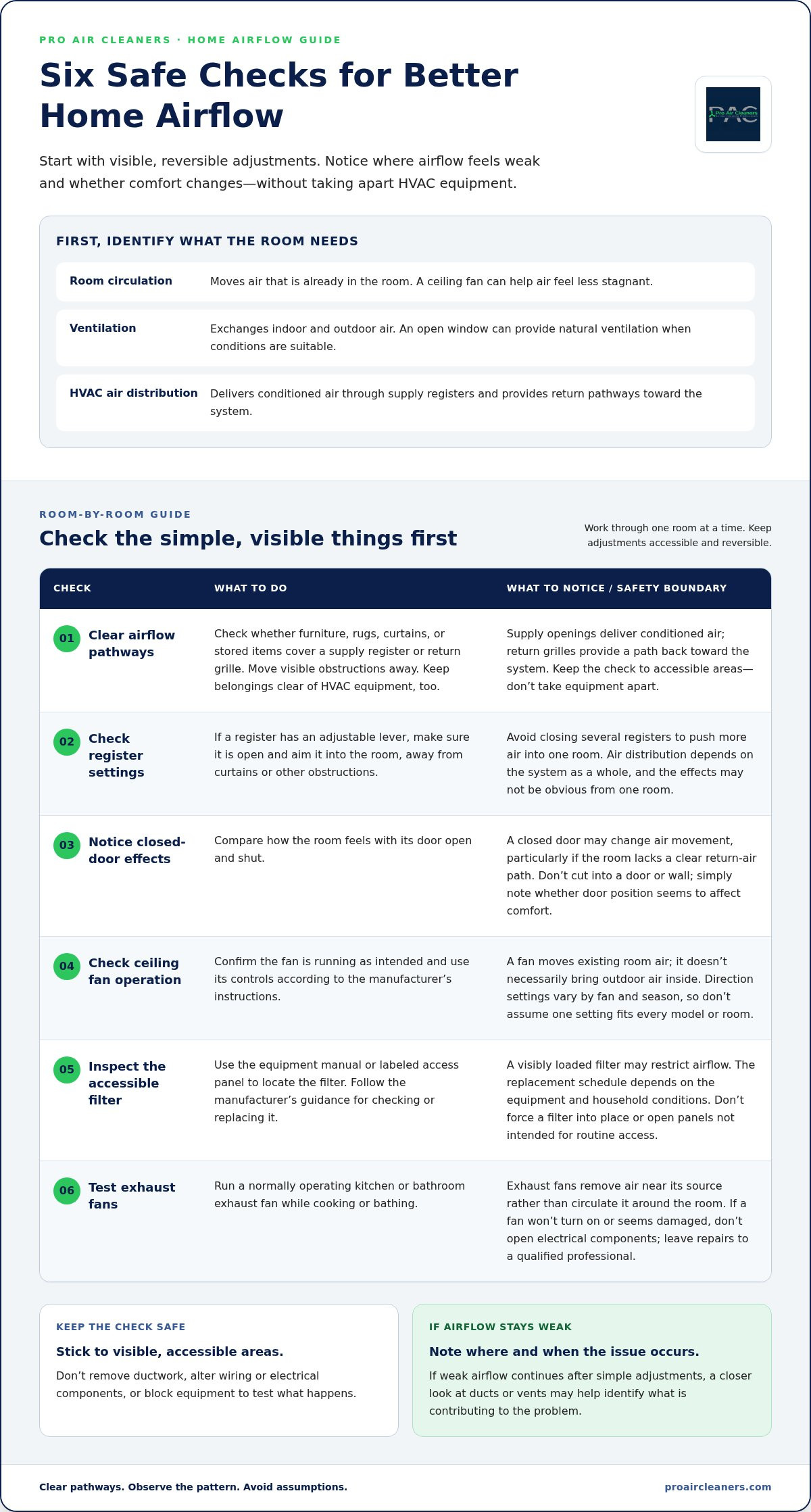
A consistent, low-risk check can reveal simple obstacles before you consider a duct or vent concern. Keeping supply and return openings clear is a useful first step. Move through the home one room at a time, make only visible adjustments, and notice whether comfort changes. These steps can help you understand how to improve home air flow without taking apart equipment or making permanent changes.
- Clear the airflow pathways. Check whether furniture, rugs, curtains, or stored items cover a supply register or return grille. Move obstructions away so air has room to enter or leave. Keep boxes, clothing, and other belongings away from HVAC equipment, too.
- Check register settings. If a register has an adjustable lever, make sure it’s open and direct it into the room, not behind a curtain or toward another obstruction. Avoid closing several registers to push more air into one room. Air distribution depends on the system as a whole, so closing multiple openings may affect its balance in ways that aren’t obvious from one room.
- Notice the effect of closed doors. If a room feels different when its door is shut, compare how it feels with the door open. A closed door may change how air moves, particularly if the room doesn’t have a clear return-air path. Don’t cut into a door or wall to create an opening; simply note whether the door position seems to affect comfort.
- Check ceiling fan operation. A fan can move existing air and make a room feel more comfortable, but it doesn’t necessarily bring outdoor air inside. Confirm that the fan is running as intended, and use its controls according to the manufacturer’s instructions. Direction settings vary by fan and season, so don’t assume one setting suits every model or room.
- Inspect the accessible HVAC filter. Locate the filter using the equipment manual or labeled access panel, then follow the manufacturer’s guidance for checking or replacing it. A visibly loaded filter may restrict airflow, but the appropriate replacement schedule depends on the equipment and household conditions. Don’t force a filter into place or open equipment panels that aren’t intended for routine access.
- Test kitchen and bathroom exhaust fans. Run an exhaust fan while cooking or bathing if it’s operating normally. These fans remove air near its source rather than circulate it around the room. If a fan doesn’t turn on or seems damaged, don’t open its electrical components. Leave repairs to a qualified professional.
Keep checks to visible, accessible areas. Don’t remove ductwork, alter wiring or electrical components, or block equipment to test what happens. If weak airflow continues after these adjustments, a closer look at the ductwork or vents may help identify what’s contributing to the problem. Professional duct and vent service can address persistent concerns without requiring you to investigate inside the system yourself.
When to Open Windows, Run Fans, or Adjust Airflow in Connecticut
Choose an airflow method based on what you want to change. Opening a window can exchange indoor air with outdoor air, an exhaust fan removes air near its source, and a circulation fan moves air already inside. These methods serve different purposes, and none automatically corrects a restriction in a duct or vent.
In Connecticut, outdoor conditions can shift with the season and from day to day. Before opening windows, consider the temperature, outdoor air quality, pollen, and humidity. The best choice depends on those conditions and the home’s existing ventilation and exhaust systems.
When does opening windows help ventilate a home?
Opening windows in separate parts of the home may create a path for outdoor air to move through, especially when there’s a breeze. Try this when outdoor conditions feel suitable, and close the windows if pollen, humidity, air quality, or temperature makes the incoming air uncomfortable. Window ventilation can be useful, but it isn’t a universal substitute for mechanical ventilation in homes that rely on it.
When should you use bathroom and kitchen exhaust fans?
Run a kitchen or bathroom exhaust fan while cooking or bathing to remove air near the source, including cooking odors and moisture. The fan needs a clear exhaust route to work as intended. If it’s noisy, weak, or seems to discharge air into an unexpected area, the vent path may need attention. Pro Air Cleaners provides bathroom vent cleaning and replacement to address vent concerns, though cleaning alone can’t resolve every airflow issue.
A circulation fan is different: it can make air feel less stagnant by moving it through a room, but it doesn’t bring outdoor air inside. Use the comparison below to match the method to your goal.
| Method | Useful situation | Caution |
|---|---|---|
| Open windows | Outdoor air is comfortable and you want to exchange indoor air. | Consider pollen, humidity, temperature, and outdoor air quality. |
| Kitchen or bathroom exhaust fan | You want to remove moisture, cooking odors, or air near its source. | A clear exhaust route matters; investigate weak or unusual operation. |
| Circulation fan | You want to move existing room air and improve perceived comfort. | It doesn’t provide outdoor-air ventilation or fix a duct restriction. |
Adjusting a register’s direction may help guide supply air into the usable part of a room, but don’t treat closed registers as a shortcut for redistributing air throughout the home. If you’re deciding how to improve home air flow, match the method to the symptom: ventilation for exchanging air, exhaust for removing air at its source, or circulation for moving indoor air. If a vent fan remains weak after visible obstructions are cleared, examining its vent path may be more useful than simply running it longer.
How to Tell Whether Poor Air Flow Needs More Than a DIY Fix
Basic room-level checks are a sensible starting point, but recurring symptoms may call for a closer look at the ducts, vents, or HVAC operation. A single weak register or a dusty room doesn’t confirm a particular cause. Look for patterns instead: note which rooms are affected, whether the issue continues while the system runs, and whether it comes and goes.
Signs that a duct or vent pathway may need attention
Consider further assessment if airflow stays weak after you clear visible obstructions, a bathroom exhaust fan doesn’t seem to remove air effectively, or a vent or duct component appears damaged. These observations can help identify where to investigate, but they don’t prove that cleaning or repair is needed. A fan issue, an obstructed pathway, or another factor may produce similar signs.
Keep a brief record before seeking help. Include the room or vent, what you noticed, when it happens, and any simple checks you tried. For example, “the bedroom register seems weak whenever the system runs” is more useful than “the house has bad airflow.” Persistent or recurring symptoms may warrant professional attention, especially when the concern appears connected to a duct or vent. If you’re weighing next steps, this guide to air duct repair and replacement explains why the condition of the component matters.
Cleaning, repair, and replacement solve different problems
Cleaning addresses accumulated debris within duct or vent systems. It may be appropriate when buildup is the concern, but cleaning alone won’t correct a damaged component or guarantee that every comfort or air-quality issue will be resolved. For more background on this maintenance, explore ductwork cleaning for old houses.
Repair addresses a damaged or disconnected component when restoring the existing part is suitable. Replacement may be considered when a vent or duct component is damaged beyond practical repair or isn’t suitable for its intended use. These options aren’t interchangeable: removing debris won’t reconnect a disconnected duct, and replacing a part isn’t automatically necessary just because a room feels stuffy.
Dust or allergy symptoms deserve careful interpretation. They can have many possible contributors, so they don’t establish that ducts are dirty or that airflow is the cause. Focus on what you can observe about movement through specific registers and vents, and share that pattern during an assessment. If simple checks haven’t helped, schedule professional duct or vent service to investigate the concern and determine whether cleaning, repair, or replacement is appropriate. Understanding how to improve home air flow starts with matching the response to the condition, not assuming one service fits every symptom.
Improve Home Air Flow with a Clear, Practical Next-Step Plan
A repeatable process makes it easier to tell whether a room-level adjustment helped or an airflow concern keeps returning. Start with what you can observe, check only accessible components, choose ventilation that suits current conditions, then reassess. This measured approach to how to improve home air flow gives you useful information without requiring you to alter equipment or guess at a cause.
A simple airflow troubleshooting checklist for homeowners
Before making changes, record the affected rooms, what feels or sounds different, when the issue occurs, and any recent changes to the home or HVAC use. That record can reveal patterns and gives a professional a clearer starting point if the concern persists.
- Observe the pattern. Note whether the concern is weak airflow at one register, uneven comfort between rooms, or a bathroom fan that doesn’t seem to clear air effectively. Include whether it happens consistently or only at certain times.
- Check accessible openings. Look for furniture, curtains, or stored items blocking registers and return grilles. Check the accessible filter according to the equipment maker’s guidance, and observe whether kitchen or bathroom exhaust fans turn on and seem to operate normally.
- Try a suitable adjustment. Clear visible obstructions, set adjustable registers open, or use a fan or window ventilation when outdoor conditions and the room’s needs make it appropriate. Follow manufacturer instructions for the equipment.
- Reassess and record the result. After allowing time for the adjustment to affect the room, note whether comfort or airflow changed. If the symptom remains, returns, or affects additional rooms, keep the notes rather than making more extensive system changes.
Keep the process within visible, accessible areas. Don’t remove ductwork, adjust electrical components, or change system settings beyond the manufacturer’s guidance. A clear record of what you observed and tried is more useful than repeated adjustments that make it harder to identify a pattern.
When professional duct or vent maintenance may help
If basic checks don’t resolve a recurring concern, a professional assessment can help identify the condition of relevant ducts and vents. Pro Air Cleaners provides air duct cleaning, repair, and replacement, as well as bathroom vent cleaning and replacement. These services address different conditions, so the appropriate next step depends on what the assessment finds. Cleaning isn’t a guaranteed solution to every airflow or indoor air quality concern.
For a bathroom fan that seems weak or ineffective, the vent pathway may deserve particular attention. Learn what to expect from bathroom vent cleaning services when that exhaust route is part of the concern. Bringing notes about the fan, affected room, timing, and changes you’ve tried can help focus the assessment.
With a clear record and a careful first check, you can take the next step with more confidence. Explore Pro Air Cleaners’ duct and vent services for support with persistent duct or vent concerns.
Make Your Next Airflow Decision with Confidence
A more comfortable home often starts with a clearer picture of what’s happening, not a major adjustment. Keep track of changes as seasons shift or rooms are used differently. A pattern over time can make it easier to decide whether a simple adjustment is enough or a duct or vent deserves a closer look. That’s a practical way to approach how to improve home air flow without guessing at the cause.
For homeowners in Connecticut, Pro Air Cleaners provides duct and vent cleaning, repair, and replacement from New Britain. A focused assessment can help identify whether a duct or vent concern needs attention and keep the next step matched to the issue.
Explore Pro Air Cleaners’ duct and vent services and take the next step toward a home that feels more comfortable and works better for your household.
Frequently Asked Questions
Why is the airflow weak in one room but normal in the rest of the house?
Weak airflow in one room can relate to conditions near that room, not necessarily a problem throughout the home. A partly closed register, a door that changes the room’s air path, or a duct concern are possible factors, but one symptom can’t confirm the cause. Compare the affected register with others while the system is running, and note whether the difference changes with the door open or closed.
Can closing vents in unused rooms improve airflow elsewhere?
Usually, closing vents isn’t a reliable way to redirect air to other rooms. A forced-air system is designed to distribute air through its connected pathways, and shutting several registers can change how air moves through the system rather than simply sending more to one spot. Keep registers open unless the equipment guidance says otherwise, and record which rooms feel uncomfortable before considering further adjustments.
Should interior doors stay open for better airflow?
Not necessarily. Whether a door affects comfort depends partly on how air can return from the room when the door is shut. If you notice a difference, compare the room with the door open and closed while the system operates, then note what changes. This simple observation can help describe the issue, but it doesn’t identify a specific defect or mean doors must always remain open.
Do air purifiers improve airflow throughout a home?
No. A portable air purifier is intended to filter air in the area it serves, not deliver conditioned air through the home’s registers or balance room temperatures. Its fan may move some nearby air, but that doesn’t make it a substitute for a circulation fan or a functioning HVAC air-distribution system. Consider an air purifier for a filtration need, and assess persistent weak register flow separately.
Can opening windows improve airflow when it is humid outside?
Opening windows can exchange indoor air, but humid outdoor air may make rooms feel damp or uncomfortable, particularly if the home is already humid. In Connecticut, conditions vary by day and season, so consider the outdoor humidity and comfort before opening windows. If bringing in outdoor air worsens the room, close them and use an appropriate exhaust fan or another suitable ventilation method instead.
How often should I replace my HVAC air filter to maintain airflow?
There isn’t one replacement interval that suits every filter and home. Follow the equipment or filter maker’s instructions, and check the filter as directed. A filter that looks heavily loaded may be a reason to inspect it sooner, but appearance alone doesn’t establish the right schedule. Use the correct filter type and size for your equipment, and install it in the direction indicated.
Does cleaning air ducts always fix poor airflow?
No. Duct cleaning may address accumulated debris, but it won’t necessarily correct a disconnected, damaged, or unsuitable duct, or another issue affecting system operation. The useful first step is to identify where airflow seems weak and describe when it happens. That information can help determine whether cleaning, repair, replacement, or a different investigation is appropriate. Cleaning alone can’t guarantee that every airflow concern will be resolved.