A bedroom can look spotless and still hold the conditions that trigger sneezing, itchy eyes, coughing, or asthma symptoms. The top causes of indoor allergens are often hidden in fabrics, HVAC components, damp spaces, and the ventilation systems that move air from room to room. For homes, rental properties, and commercial buildings, finding the source matters more than simply masking odors or wiping visible dust away.
The top causes of indoor allergens
Dust mites in soft surfaces and settled dust
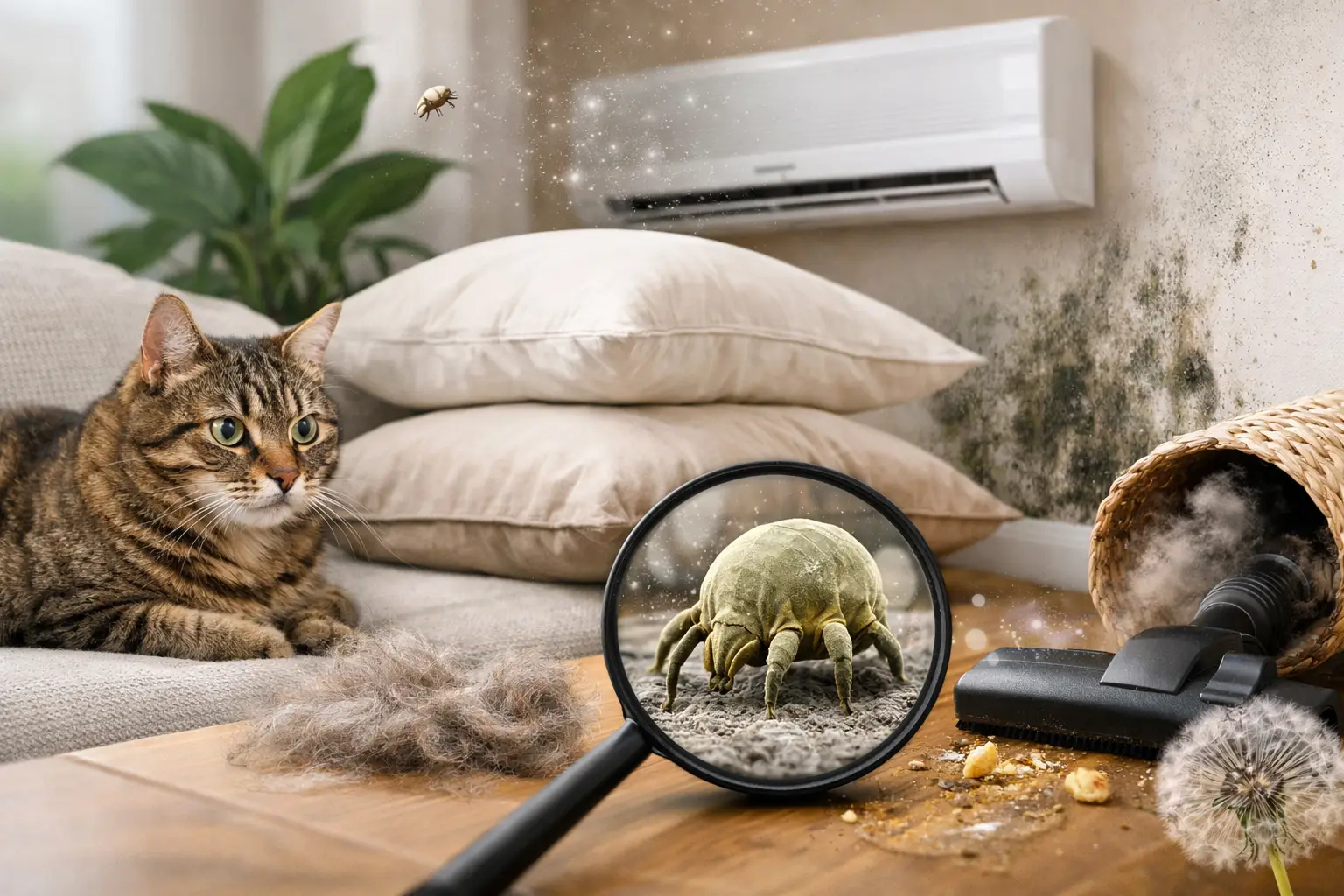
Dust mites are among the most common indoor allergy triggers. These microscopic pests feed on skin flakes and thrive where warmth and humidity are present. Bedding, upholstered furniture, carpeting, curtains, area rugs, and stuffed items can all collect the dust that supports them.
The allergen is not the mite itself but proteins found in mite waste and body fragments. Once disturbed by walking, sitting, changing sheets, or air movement from the HVAC system, those particles can become airborne. That is why symptoms may be worse first thing in the morning, after vacuuming, or in rooms with heavy fabric surfaces.
Dust also settles inside supply and return vents. A duct system does not create dust mites, but accumulated dust and debris in the system can be redistributed each time heating or cooling runs. Professional duct cleaning with HEPA-filtered equipment removes built-up contaminants from areas ordinary household cleaning cannot reach.
Pet dander that travels beyond the pet area
Pet dander is made up of tiny flakes of skin, along with proteins in an animal’s saliva and urine. It is lightweight, sticky, and easily carried on clothing, furniture, bedding, and air currents. A pet does not need to be in a particular room for dander to be there.
This is also why a home can retain pet-related allergens long after an animal has moved out. Dander may remain in carpets, upholstered surfaces, wall-to-wall ventilation pathways, and return-air areas. Regular surface cleaning helps, but properties with persistent odors, visible buildup around vents, or recurring allergy complaints may need a closer inspection of the HVAC system.
For landlords and property managers, this can be especially relevant between tenants. Cleaning the visible living space without addressing contaminated air pathways may leave the next occupant with the same lingering issue.
Moisture, mold, and poorly ventilated areas
Mold spores are naturally present outdoors, but excessive indoor moisture gives mold a place to grow. Bathrooms, basements, laundry rooms, kitchens, crawl spaces, and areas around roof or plumbing leaks are frequent trouble spots. Unlike dust mites, mold is not always obvious. It can grow behind walls, beneath flooring, inside insulation, or around vents where condensation has formed.
A bathroom exhaust fan that is weak, clogged, disconnected, or venting improperly can allow humidity to stay trapped after showers. Over time, that moisture may encourage mold growth on ceilings, drywall, grout, fan housings, and nearby framing. A musty smell, peeling paint, dark spotting, or condensation that lingers long after bathing are signs that ventilation deserves attention.
Mold can trigger allergic reactions in sensitive individuals, but not every dark mark is mold and not every mold concern has the same cause. A proper assessment should identify where moisture is coming from first. Cleaning without correcting a leak, damaged vent, or failed exhaust system only allows the problem to return.
Outdoor pollen brought inside
Pollen is often thought of as an outdoor problem, yet it enters homes and businesses through open windows, doors, shoes, clothing, pets, and fresh-air intake points. During high-pollen seasons, it can settle on floors, furniture, window coverings, and HVAC filters. Each time air circulates, some of that settled material can move again.
Buildings near busy roads, construction activity, wooded areas, or heavily landscaped properties may also collect more outdoor particulate matter. Keeping windows closed during peak pollen periods can reduce exposure, but it is only one part of the equation. A neglected filter, dirty return grille, or dust-filled duct system can continue circulating particles already inside the building.
For commercial spaces, pollen and dust buildup can be more noticeable near entryways, reception areas, loading zones, and high-traffic corridors. These are practical places to inspect when employees or visitors regularly complain about stale air or allergy symptoms.
Dirty HVAC filters, ducts, and air returns
An HVAC system should support cleaner, more comfortable air. When filters are overdue for replacement or the system has accumulated dust, dander, construction debris, or other contaminants, it can become a pathway for particles to travel through the property.
Filters are designed to capture airborne material, but their effectiveness depends on the right fit, proper installation, and regular replacement. A filter that is heavily loaded can restrict airflow, place added strain on equipment, and allow comfort problems to develop. Choosing a filter with a higher rating is not always the answer either. Some systems cannot handle highly restrictive filters without airflow issues, so the correct option depends on the equipment and building needs.
Ductwork also requires a different level of attention than changing a filter. Visible dust around registers, debris blowing from vents, persistent odors when the system starts, recent renovation work, pest activity, or unexplained buildup inside return areas may justify a professional video inspection. Duct cleaning is most valuable when there is a clear contamination concern, not as a substitute for fixing moisture problems or maintaining the HVAC equipment itself.
Dryer lint and bathroom vent buildup
Dryer vents and bathroom vents are not usually the direct source of allergy proteins, but blocked or poorly maintained vents can create conditions that affect indoor air quality. A dryer vent restricted by lint may hold excess heat and moisture while creating a serious fire hazard. A clogged bathroom vent can leave humid air indoors, raising the risk of mildew and mold growth.
Vent covers, ducts, and exterior terminations can also become damaged, crushed, disconnected, or blocked by nesting material. In those cases, cleaning alone may not be enough. Repair or replacement may be necessary to restore proper airflow and send moist air safely outdoors.
Why allergy problems can feel worse in offices and multi-unit buildings
In commercial facilities and multi-unit properties, air quality concerns are rarely limited to one room. Shared HVAC equipment, maintenance delays, tenant turnover, high foot traffic, cleaning chemicals, damp utility areas, and uneven ventilation can all contribute to recurring complaints.
A property manager may notice that one suite smells musty while another has constant dust near vents. A business owner may hear that staff members feel congested only after the heat or air conditioning turns on. Those details are useful because they point toward patterns in airflow, moisture, or system maintenance rather than a vague air-quality complaint.
When professional inspection makes sense
If allergy symptoms are persistent indoors, start by looking for patterns. Do they worsen in a specific room, after the HVAC system runs, after showering, or near a particular vent? Are there visible dust deposits, moisture stains, weak exhaust airflow, musty odors, or unusually high energy bills? These clues can help determine whether the concern involves source control, ventilation repair, duct cleaning, or more than one issue.
Professional service is particularly valuable when the work requires access to concealed ductwork, dryer vent runs, bathroom exhaust paths, or HVAC components. Experienced technicians can inspect the system, document conditions, and use specialized equipment to remove debris without spreading it through the property. Pro Air Cleaners uses HEPA-filtered cleaning methods, green solvents, and post-cleaning inspection practices to help homeowners and facility operators see the condition of their ventilation systems clearly.
Cleaner air is rarely the result of one quick fix. It comes from controlling moisture, maintaining the equipment that moves air, and addressing the hidden buildup that keeps allergens circulating where people live and work.