
Table of Contents
- What a Legitimate Duct Cleaning Company Actually Does
- Why NADCA Certified Duct Cleaners Are the Benchmark
- Signs of Duct Cleaning Scams and How to Avoid Them
- How to Use an Air Duct Cleaning Cost Estimator
- Alternatives to Standard HVAC Air Filters Worth Knowing
- Post-Cleaning Verification: How to Confirm the Job Was Done Right
- How to Choose a Good Duct Cleaning Company: A Step-by-Step Checklist
- Conclusion
Last Updated: August 26, 2026
Choosing the wrong duct cleaning company wastes money and can leave your ventilation system in worse shape than before. At Pro Air Cleaners, we’ve spent over 30 years watching the industry evolve, and questionable operators remain common. This guide provides a practical framework for evaluating any duct cleaning company before you book, covering certification verification to post-cleaning inspection. We’ll show you what separates legitimate service from bait-and-switch operations and how to protect yourself at every stage.
What a Legitimate Duct Cleaning Company Actually Does
A legitimate duct cleaning company follows documented industry standards, uses commercial-grade equipment, and provides a written scope of work before touching your HVAC system. The duct cleaning industry has a low barrier to entry, a van, shop vac, and website can make almost anyone look credible. What separates professionals from weekend operators is process, equipment, and accountability.
The Professional Cleaning Process Step by Step
Professional air duct cleaning follows a structured sequence:
- Pre-inspection: A technician inspects accessible ductwork, registers, and the air handler to assess dust accumulation, mold presence, and physical damage.
- System isolation: The HVAC system is set to negative air pressure mode, containing loosened debris inside the ductwork.
- Mechanical agitation: Rotary brush cleaning tools or pneumatic whips dislodge debris from duct walls.
- Vacuum extraction: A truck-mounted or high-powered portable HEPA-filtered vacuum collects dislodged material at the main trunk line.
- Register and grille cleaning: Each supply and return register is removed, cleaned, and reinstalled.
- Post-cleaning inspection: The technician confirms debris removal and checks for system damage.
A job that skips steps two or three is partial service sold at full price.
Equipment That Should Be on the Job
Professional air duct cleaning crews should have:
- A truck-mounted or high-capacity portable vacuum with HEPA filtration
- Flexible rotary brush systems sized for residential or commercial ductwork
- Inspection cameras or mirrors for post-cleaning verification
- Negative air pressure equipment to prevent cross-contamination
- Proper access tools for sealed duct sections
A technician arriving with only a standard shop vacuum and single flexible hose will deliver superficial cleaning at best.
Why NADCA Certified Duct Cleaners Are the Benchmark
NADCA certified duct cleaners represent the professional standard in air duct cleaning. The National Air Duct Cleaners Association sets the ACR (Assessment, Cleaning, and Restoration) standard, the most widely recognized benchmark for professional duct cleaning in the United States. Companies trained and tested to this standard have demonstrated knowledge of proper cleaning methods, equipment requirements, and safety protocols.
NADCA certification requires ongoing education, adherence to documented procedures, and carries a code of ethics. When you hire a NADCA-certified company, you have a clear recourse path if something goes wrong. Use certification as your minimum filter, not your final decision.
How to Verify Credentials Before You Book
Verification takes less than five minutes and eliminates a large share of fraudulent operators.
- NADCA membership: Search the NADCA member directory at nadca.com to confirm current listing.
- State contractor licensing: Check your state’s contractor licensing board database to confirm the company’s license is active and in good standing.
- Insurance: Ask for a certificate of general liability insurance and workers’ compensation. Legitimate companies provide this without hesitation.
- Better Business Bureau: Search the company’s name at bbb.org to check complaint history and accreditation status.
- Background checks: Ask whether the company conducts background checks on technicians.
Ask specifically for the technician’s NADCA ASCS (Air Systems Cleaning Specialist) certification number, not just the company’s membership. Individual technicians carry the certification.
Signs of Duct Cleaning Scams and How to Avoid Them
The duct cleaning industry has one of the highest rates of consumer complaints among home services. Scam tactics follow predictable patterns.
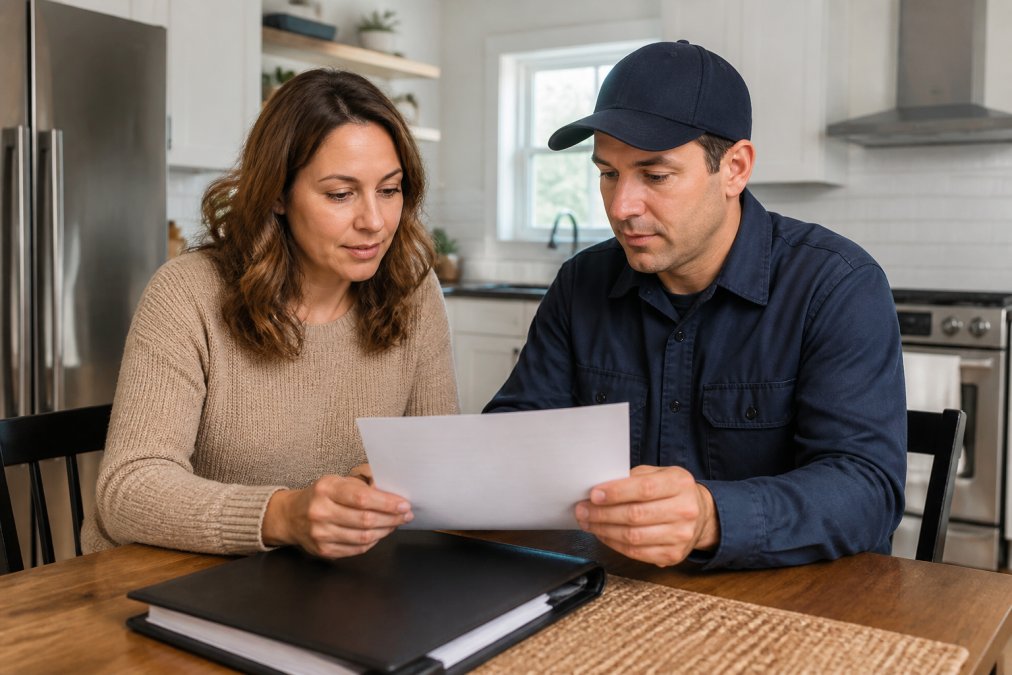
The most common scheme is the bait-and-switch: a company advertises an extremely low whole-house cleaning price, arrives on site, and immediately identifies "serious contamination" or "mold" requiring additional treatments at dramatically higher cost. According to the Federal Trade Commission’s consumer protection guidance, high-pressure upselling and vague verbal estimates are hallmarks of deceptive contractor practices.
Red Flags in Pricing and Sales Tactics
Watch for these specific warning signs:
- Unusually low advertised prices: Professional equipment, labor, and proper time on site have real costs.
- Pressure to decide immediately: Legitimate companies don’t manufacture urgency.
- Verbal-only estimates: Any company unwilling to put scope and price in writing before starting work should be avoided.
- Mold claims without testing: A technician diagnosing mold by looking at a vent cover and recommending immediate remediation without independent testing is upselling.
- Unlicensed or uninsured status: If a company can’t produce proof of insurance or a contractor’s license number, stop the conversation.
Never pay the full cost of a duct cleaning job upfront. A standard deposit is reasonable; full payment before work begins removes your recourse if the job is incomplete or substandard.
What a Written Estimate Should Include
A professional written estimate should contain:
- Total price with no "subject to change" language
- Specific number of supply and return vents to be cleaned
- Equipment to be used (vacuum type, brush system)
- Whether dryer vent cleaning is included or separate
- Any exclusions (e.g., mold remediation, duct repair)
- Estimated time on site
- Company name, license number, and insurance information
- Cancellation and warranty terms
If any of these are missing, ask for them in writing before work begins.
How to Use an Air Duct Cleaning Cost Estimator
An air duct cleaning cost estimator calculates a price range based on your home’s square footage, number of vents, duct material type, and add-on services. Most reputable companies offer one on their website or over the phone.
Key variables affecting pricing include:
| Factor | Why It Affects Cost |
|---|---|
| Number of vents | More vents mean more labor and time on site |
| Duct material | Flexible ductwork requires different tools than sheet metal |
| System age | Older systems may need more careful handling |
| Add-on services | Dryer vent cleaning, sanitization, and mold treatment are separate |
| Property type | Commercial properties have larger systems and higher labor requirements |
Use any estimate as a comparison baseline, not a guaranteed price. Be skeptical of any company quoting a firm price without seeing your system. For current pricing from Pro Air Cleaners, request a free estimate through the website.
Alternatives to Standard HVAC Air Filters Worth Knowing
Duct cleaning addresses accumulated debris inside your ventilation system, but your HVAC air filter prevents that debris from building up in the first place. Alternatives to standard filters include:
- MERV 11-13 pleated filters: Capture finer particles including dust mite debris, mold spores, and pet dander, directly affecting indoor air quality for households managing asthma or allergies.
- HEPA-rated media filters: Designed for high-efficiency particle capture; confirm your HVAC system can handle the additional airflow restriction.
- Electrostatic filters: Washable and reusable, using static charge to attract particles.
- UV germicidal lights: Installed inside the air handler, targeting biological contaminants like mold and bacteria.
According to the EPA’s guidance on indoor air quality, improving filtration and maintaining clean ductwork together produce better indoor air quality outcomes than either approach alone.
Upgrading your filter without cleaning your ducts is like mopping the floor without sweeping first. A professional cleaning followed by a higher-MERV filter is the most effective sequence.
Post-Cleaning Verification: How to Confirm the Job Was Done Right
Most homeowners have no way to verify whether a duct cleaning was thorough or superficial. Post-cleaning verification confirms that debris has been removed from accessible duct sections and the system functions as expected.
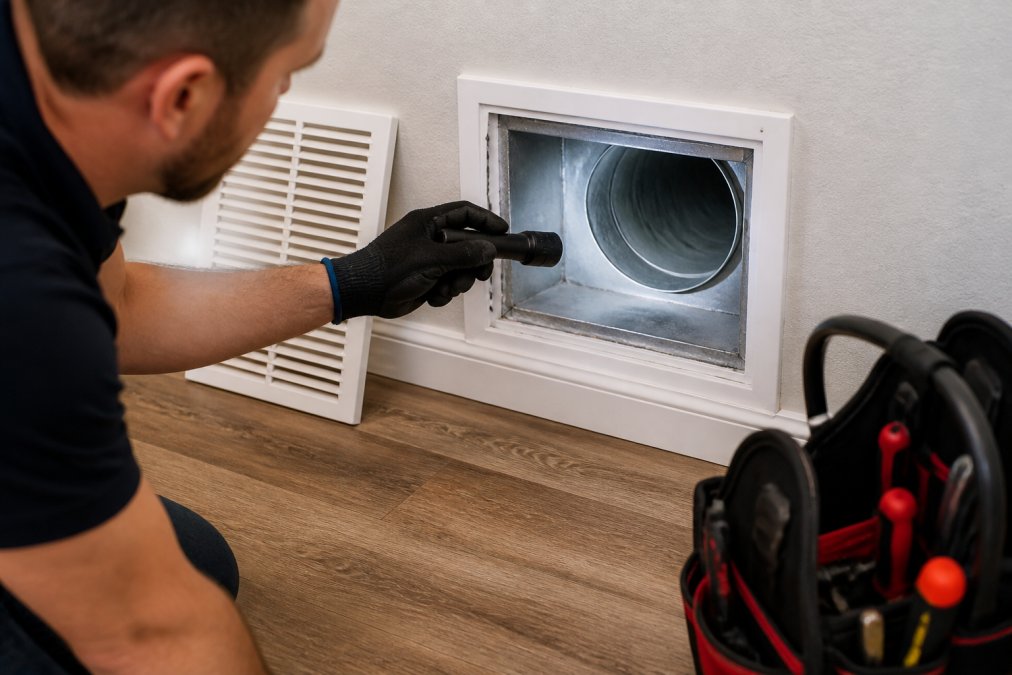
Here’s what to check after any duct cleaning service:
- Inspect accessible registers: Remove a supply register and use a flashlight to look at the first foot or two of ductwork. You should see clean metal or duct lining, not visible dust coating.
- Check the air handler compartment: The area around the blower motor and coil should be noticeably cleaner. Ask the technician to show before and after photos.
- Run the system and check airflow: Airflow should feel consistent and unobstructed at several supply registers.
- Look for disturbed debris: Check floors and surfaces near registers for dust suggesting inadequate vacuum containment.
- Request a job completion report: A professional company provides written documentation of what was cleaned.
If a company refuses to allow post-cleaning inspection or can’t produce documentation, escalate in writing immediately.
How to Choose a Good Duct Cleaning Company: A Step-by-Step Checklist
Use this checklist to evaluate any company you’re considering.
Before You Book:
- Confirm NADCA membership via the official member directory
- Verify state contractor license is active
- Request a certificate of insurance (general liability and workers’ comp)
- Check BBB rating and complaint history
- Ask whether technicians undergo background checks
- Get a written estimate with full scope of work
During the Job:
- Confirm the technician uses HEPA-filtered vacuum equipment
- Verify negative air pressure is established before cleaning begins
- Ask to see the rotary brush or agitation equipment being used
- Confirm all supply and return registers are being cleaned
After the Job:
- Inspect at least two accessible duct sections with a flashlight
- Confirm airflow is consistent across all registers
- Request written documentation of the work performed
- Review the invoice against the original written estimate
For households where a family member has asthma, allergies, or chronic respiratory sensitivities, the American Lung Association’s guidance on indoor air recommends prioritizing both duct cleanliness and filtration quality as part of a broader indoor air quality strategy.
Hiring the wrong duct cleaning company wastes money and can leave your HVAC system in worse condition. Pro Air Cleaners brings over 30 years of experience, state-of-the-art equipment, and fully insured service to every residential and commercial job, with a documented cleaning process and transparent estimates. Get a free estimate from Pro Air Cleaners and find out exactly what your system needs.
Frequently Asked Questions
What certifications should a reputable duct cleaning company have?
The most recognized credential in the industry is NADCA (National Air Duct Cleaners Association) certification. NADCA-certified technicians must pass exams covering HVAC system knowledge and cleaning standards. Beyond NADCA, look for a company that is licensed in your state, bonded, and carries general liability insurance. These credentials protect you if something goes wrong during the cleaning. Always ask for proof before scheduling, a legitimate duct cleaning company will share documentation without hesitation.
How can I tell if a duct cleaning company is a scam?
The clearest sign of duct cleaning scams is an unusually low advertised price, often $49 to $99 for a whole-house cleaning, used to get a technician into your home. Once inside, they pressure you into add-ons like mold remediation or sealant treatments that can cost hundreds more. Other red flags include no written estimate, no proof of insurance, refusal to show credentials, and vague descriptions of what the service actually covers. Always get a detailed written estimate before any work begins.
How often should air ducts be professionally cleaned?
NADCA recommends having your air ducts inspected annually and cleaned every three to five years under normal conditions. However, certain situations call for more frequent cleaning: if you have family members with asthma or allergies, if you've recently completed a renovation, if you've moved into an older home, or if you notice visible dust accumulation around your vents. Dryer vent cleaning should happen at least once a year regardless, since lint buildup is a leading cause of residential fires.
Are there any downsides or risks to professional duct cleaning?
Professional duct cleaning carries minimal risk when performed by a qualified duct cleaning company using proper equipment. The main concern is hiring an unqualified provider who uses inadequate tools or damages ductwork during the process. Poorly sealed connections after cleaning can reduce HVAC efficiency. This is why post-cleaning verification matters: ask the technician to walk you through what was done, check that all access panels are resealed, and confirm that airflow feels consistent across all vents before the crew leaves.
This article was written using GrandRanker