Does an overgrown Connecticut lot need targeted brush clearing, broader land clearing, or simply debris removal? The right land clearing services Connecticut property owners need depend on the site’s condition and how they plan to use it. Choosing a scope that fits the property can make it easier to maintain or prepare without treating every project the same way.
If brush, small trees, or accumulated material are making your property difficult to use, start by identifying what needs attention and what you want the area to become. Vegetation, access, and local requirements can all affect project planning. This guide explains the differences between common clearing needs, what to assess before work begins, and how to describe your project. Pro Air Cleaners provides land clearing and dump removal for residential and commercial properties. Based in New Britain, the company serves customers across Connecticut and brings more than 30 years of experience to property cleanup and preparation. Use the steps below to plan your Connecticut property project.
Key Takeaways
- Match the clearing approach to the goal: addressing brush, preparing a larger area, and removing accumulated debris are different needs.
- When comparing land clearing services Connecticut property owners can use, consider vegetation, the area involved, site access, and the land’s intended use.
- Before discussing the work, define your goal, note visible site conditions, and identify how the work area can be reached.
- Local requirements can vary, so check with your municipality and relevant authorities before disturbing the land.
- Pro Air Cleaners provides land clearing and dump removal for residential and commercial properties.
What Do Land Clearing Services in Connecticut Include?
Land clearing prepares or reclaims outdoor property by addressing unwanted vegetation or material that interferes with its intended use. The work may focus on one overgrown section or cover a wider area, depending on the property’s condition and your goal. In geography, clearing may describe the process by which native vegetation is permanently removed. For a property project, define the specific work needed rather than relying on a broad label.
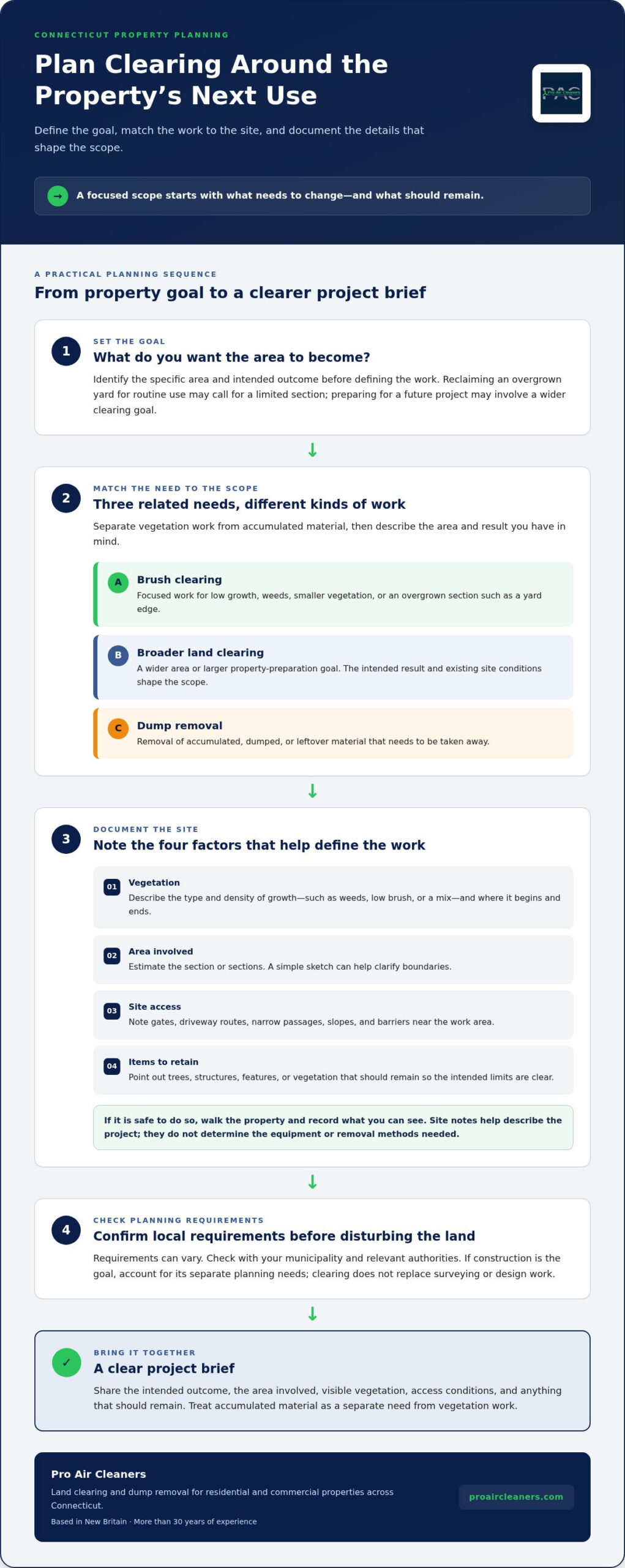
Brush clearing, broader land clearing, and dump removal are related but distinct. Brush clearing focuses on smaller vegetation and overgrowth. Broader land clearing addresses a wider area or a larger property-preparation goal. Dump removal handles accumulated material that needs to be taken away. Separating these needs helps you explain what is limiting the property and what you want to accomplish.
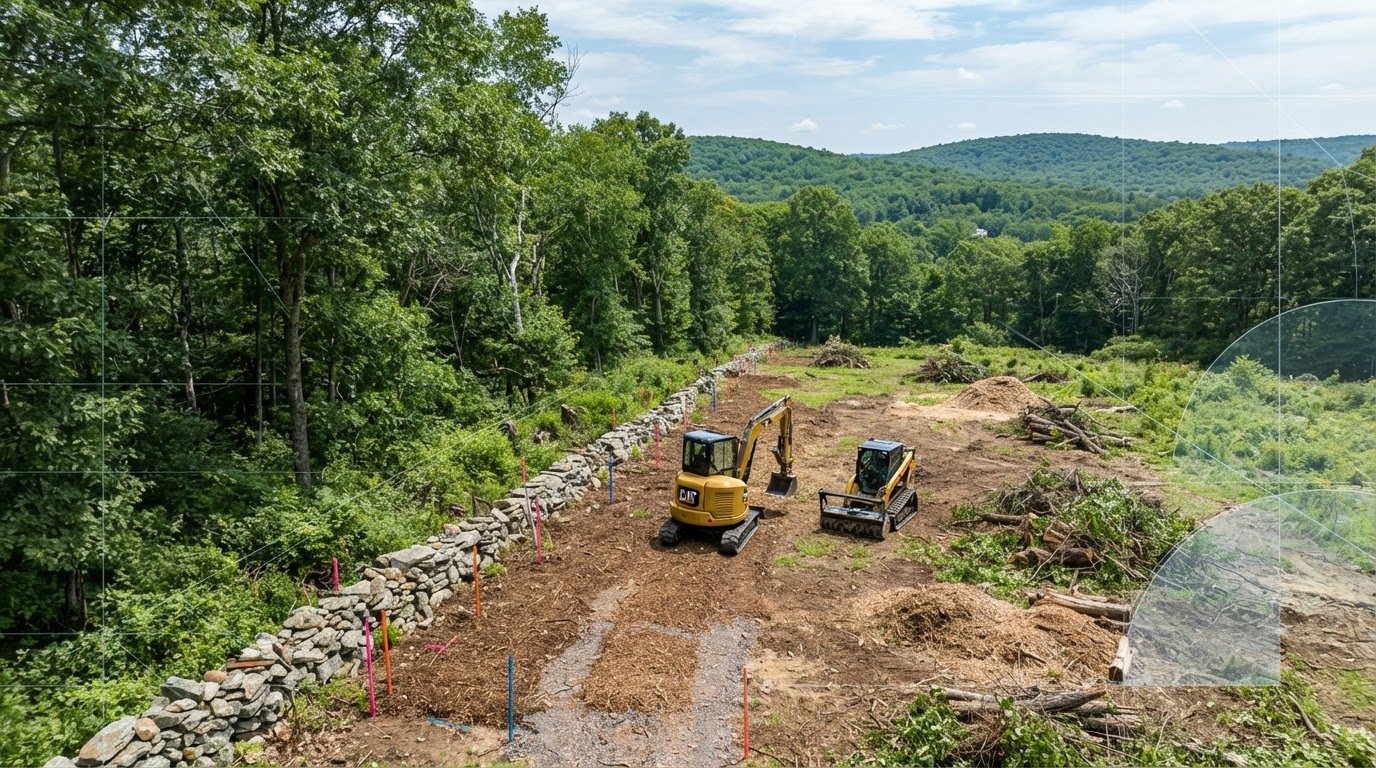
Set the clearing scope around the property’s next use: identify what needs to change and what should remain.
How Is Brush Clearing Different from Full Land Clearing?
Brush work is generally suited to areas dominated by low growth, weeds, or smaller vegetation. It can be a focused option when you want to reclaim a yard edge or make an overgrown section more usable. Broader land clearing involves a larger area or a wider property-preparation goal. It is not a fixed checklist: the intended result and existing site conditions shape the scope.
When Can Connecticut Property Owners Need Clearing?
Residential property owners may consider clearing when overgrowth makes part of a yard difficult to access, maintain, or use. Commercial property owners may need to address vegetation or accumulated material as part of property upkeep or preparation for a planned use. In either case, identify the specific area and outcome you have in mind before defining the work.
Construction-related preparation may involve planning beyond clearing itself. If construction is your goal, account for the separate planning needs of that project as you define the clearing area and intended outcome.
Pro Air Cleaners provides land clearing and dump removal for residential and commercial properties. Consider vegetation work and accumulated material as separate needs when describing your project. With more than 30 years of experience, Pro Air Cleaners can help you discuss the scope that fits your property.
How Do Connecticut Site Conditions Shape a Land Clearing Project?
A clearing plan starts with the property, not a one-size-fits-all list of tasks. Connecticut properties vary, so the type and density of vegetation, available access, area involved, and intended use all help define the work. A brush-covered corner with driveway access presents different planning considerations from a larger area with limited entry.
Vegetation, property size, site access, and intended use are the main factors to document when planning land clearing. Record these details before discussing land clearing services Connecticut projects may need. This gives you a clearer way to describe the area and the result you want.
What Should You Note About Vegetation and Access?
Walk the property if it is safe to do so, and record what you can see. Note whether the growth is mostly weeds, low brush, or a mix, and estimate the area affected. Point out obstacles such as fences, structures, stored materials, or trees you want to preserve. These observations help describe the site, but they do not determine the equipment or removal methods needed.
- Vegetation: Describe the type and density of the overgrowth, and mark where it begins and ends.
- Area: Estimate the section or sections involved. A simple sketch can clarify boundaries.
- Access: Note gates, driveway routes, narrow passages, slopes, and barriers near the work area.
- Items to retain: Identify features or vegetation that should remain, so the intended limits are clear.
Access notes matter even if they do not determine how the work will be carried out. A closed gate, steep section, or narrow route can affect project planning, so include these details rather than assuming they are minor.
Why Does the Property’s Intended Use Matter?
The right scope depends on what you want the property to become. Reclaiming an overgrown area for routine outdoor use may involve a limited section, while preparing a property for a future project may call for a wider clearing goal. In either case, explain what should remain and what needs attention. The intended end state helps keep the scope focused.
Land clearing prepares the property, but it does not replace surveying or design work. If a future project depends on precise boundaries or a planned layout, address those separately as part of the project’s preparation.
Bring your site notes and intended outcome together before discussing the work. Explore Pro Air Cleaners’ land clearing services as you plan the next steps for your Connecticut property.
Which Land Clearing Approach Fits Your Connecticut Property?
Start with the problem you want to solve. A homeowner reclaiming an overgrown yard area may need a different scope from a business preparing a larger part of its property for future use. Accumulated dumped or leftover material is a separate concern. Use the comparison below to organize your goals and observations; it is not a substitute for assessing the full site.
| Project goal | Likely scope | Details to document |
|---|---|---|
| Address localized overgrowth | Brush-focused clearing in a defined section | Where the growth is, what it looks like, the approximate area, and what you want to use the space for |
| Prepare a wider area for a planned property use | Broader land clearing shaped by site conditions and the intended outcome | Area boundaries, visible obstacles, access points, and what should remain |
| Remove accumulated dumped or leftover material | Dump removal, separate from addressing unwanted vegetation | Material location, approximate amount, and whether vegetation also needs attention |
When Is Brush-Focused Clearing the More Relevant Option?
Brush-focused work may fit a smaller overgrown area when the goal is to reclaim outdoor space. For example, a Connecticut homeowner might want to make a yard edge easier to maintain or explore expanding a lawn. A business may want to address growth in a defined part of its property. These are possible goals, not guaranteed outcomes. Visible conditions and the area involved help determine the appropriate scope.
When Should Clearing Be Considered Alongside Debris Removal?
Vegetation and accumulated material are different issues. Brush, weeds, or other unwanted growth call for a clearing discussion, while dumped or leftover material may call for heavy duty dump removal. Some residential or commercial properties have both, such as an overgrown area with debris mixed in. Describe each need separately so the project discussion accounts for what is present rather than grouping everything under “clearing.”
Pro Air Cleaners provides land clearing and dump removal for residential and commercial properties. If you are considering land clearing services Connecticut property owners can use for maintenance or a planned project, identify the main goal first, then note any separate debris-removal needs. That distinction helps clarify the project scope.
How Can You Prepare for Land Clearing in Connecticut?
Preparation helps turn a general request into a clear project discussion. Before discussing land clearing services Connecticut property owners may need, organize your goal, visible site conditions, access details, and any local questions that could affect the work. You do not need a technical site assessment to get started. Straightforward notes, photos, or a simple sketch can help explain what you see.
What Project Details Should You Gather First?
Start with the property location and approximate area you want addressed. Describe the intended use, such as reclaiming an overgrown outdoor area or preparing land for a future project. Record visible vegetation, accumulated debris, access limits, and any features or areas you want to preserve.
A short checklist can keep the details together:
- Goal: What do you want the property or work area to be like afterward?
- Area: Which part of the property is involved, and roughly how large is it?
- Conditions: What vegetation or debris is visible, and where?
- Access: Are gates, driveways, slopes, or other obstacles relevant?
- Preservation: Are there areas, structures, or vegetation you want to remain undisturbed?
Photos from safe, accessible viewpoints can show how conditions vary across the site. A simple sketch marking the work area, access points, and features to retain can also make your description more precise. These materials help explain the project, but they do not replace an in-person assessment when one is needed.
What Local Checks Could Affect a Connecticut Project?
Local requirements depend on the property and proposed work, so do not assume that one set of approvals applies statewide. Depending on the site and scope, municipal land-use or zoning rules, wetlands considerations, or other environmental requirements may be relevant. Contact the appropriate municipal office, such as planning and zoning or the local wetlands authority, to ask what applies to your property. Connecticut Department of Energy and Environmental Protection guidance may also help identify relevant state-level considerations.
Keep local checks separate from defining the clearing scope. Confirm applicable requirements with the relevant municipality or authority before work begins, and include any guidance you receive in your project notes. If ground disturbance is planned, include underground utility marking in your preparation and verify current requirements through the appropriate Connecticut guidance.
Once you have gathered your goal, site notes, access details, and local questions, you have a more useful starting point for planning. Discuss your Connecticut property clearing needs with Pro Air Cleaners, a New Britain-based provider of land clearing and dump removal for residential and commercial properties.
How Pro Air Cleaners Supports Land Clearing in Connecticut
Planning land clearing is easier when you can clearly describe the project goal and the property’s current condition. Pro Air Cleaners provides land clearing in New Britain, CT and dump removal for residential and commercial properties across Connecticut. Based in New Britain, the company proudly serves customers throughout the Constitution State and brings more than 30 years of experience to property cleanup and preparation needs.
Land clearing and dump removal address related but different concerns. Clearing focuses on unwanted vegetation, while dump removal handles accumulated material. If both are present, describe each separately to explain what you want addressed. This distinction can help a homeowner reclaim an overgrown area or a business organize a property for planned use.
What Can You Include in a Project Inquiry?
Share the property location, your goal, and the approximate area involved. Then describe what you can see and how the work area can be reached. Clear, everyday observations are more useful than technical terms you may not know.
- Project goal: Explain how you hope to use the property or area after the work.
- Site conditions: Describe overgrowth, accumulated debris, and visible access limits.
- Work area: Identify the approximate boundaries and any areas you want preserved or excluded.
Photos or a simple sketch can help show where conditions change across the property. For example, mark an overgrown section separately from a spot with leftover material, or note a narrow entrance leading to the area. These details support a clear discussion of the project without assuming in advance what work it requires.
How Does Local Experience Help Property Owners?
Pro Air Cleaners brings more than 30 years of experience to its work with property owners. Its New Britain base and service across Connecticut make the company a local provider of residential and commercial land clearing and dump removal. Clear project details help keep the discussion focused on your property and the outcome you have in mind, rather than a one-size-fits-all description.
If you are ready to discuss your property, explore land clearing services with Pro Air Cleaners. A concise description of the location, goal, approximate area, and visible conditions is a useful way to begin.
Take the Next Step Toward a More Usable Property
The right clearing plan starts with a clear goal. Brush-focused work, broader land clearing, and dump removal address different needs, while vegetation, access, site size, and intended use help shape the scope. Recording these details and checking which local requirements apply can make planning more straightforward.
For land clearing services Connecticut property owners can use, Pro Air Cleaners offers land clearing and dump removal for residential and commercial properties. Based in New Britain and serving customers across Connecticut, the company brings more than 30 years of experience to property cleanup and preparation needs.
Start with the outcome you want, then describe the area and conditions that matter. Explore land clearing services with Pro Air Cleaners to discuss your Connecticut property project.
Frequently Asked Questions
What do land clearing services in Connecticut typically include?
Land clearing services Connecticut property owners use can address unwanted vegetation or material to prepare or reclaim outdoor space. The scope depends on the site’s condition and intended use. Work may focus on a limited overgrown area or involve broader property preparation. Dump removal is a related but distinct service for accumulated material, so describe vegetation and debris separately when explaining what you want addressed.
How do I know whether my property needs brush clearing or land clearing?
Brush clearing may fit when the concern is smaller vegetation or overgrowth in a defined area. Broader land clearing may suit a wider property-preparation goal. Consider the area involved, visible growth, access, and what you want the space to be used for. Reclaiming a yard edge, for example, differs from preparing a larger section for planned use. Site conditions help determine the appropriate scope.
Do I need a permit for land clearing in Connecticut?
Permit or approval requirements depend on the property, location, and proposed work, so there is not one answer for every Connecticut site. Local zoning or land-use rules, wetlands considerations, or environmental requirements may be relevant. Before work begins, check with the municipality’s appropriate planning, zoning, or wetlands office and consult Connecticut Department of Energy and Environmental Protection guidance when relevant. Confirm which requirements apply to your project.
What should I consider before clearing a wooded or overgrown property?
Start by defining the area and what you want it to become. Note vegetation type and density, property boundaries as you understand them, access points, visible obstacles, and features or areas you want preserved. Consider whether the goal is routine outdoor use or preparation for a future project. If local land-use or environmental considerations may apply, include them in your planning before deciding on the clearing scope.
Can land clearing include dump or debris removal?
Land clearing and dump removal address different conditions, but both may be relevant on the same property. Clearing concerns unwanted vegetation, while heavy duty dump removal addresses accumulated dumped or leftover material. If an overgrown area also contains debris, describe both needs and where they occur. Pro Air Cleaners provides land clearing and dump removal for residential and commercial properties across Connecticut.
How should I prepare to request land clearing service?
Gather the property location, your project goal, and an estimate of the area involved. Describe visible vegetation, accumulated debris, access conditions such as gates or narrow driveways, and anything you want left undisturbed. Photos or a simple sketch can help show the work area and its boundaries. You can also note local requirements you have identified, so the project discussion starts with a clear picture of your property.
Does Pro Air Cleaners provide land clearing in Connecticut?
Yes. Pro Air Cleaners provides land clearing and dump removal for residential and commercial properties across Connecticut. Based in New Britain, the company serves customers throughout the state and brings more than 30 years of experience to property cleanup and preparation needs. To discuss a project, share the property location, intended use, approximate area, and visible site conditions, including any debris or areas you want preserved.